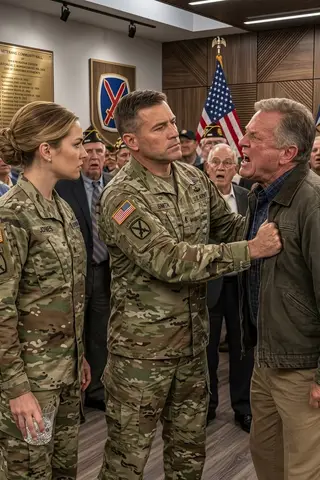
 The Retired Sergeant Called His Daughter "Little Puppy" at His Party
Chapter 87
The Strategic Reserve
In early December, our bipartisan Congressional advisory panel met in the Rayburn House Office Building to review the first full year of industrial base reforms.
Tom Henderson, the House Appropriations staff director, sat at the head of the conference table, reviewing the comprehensive oversight binder Marcus and I had assembled. Representatives from the Office of the Secretary of Defense, the Defense Logistics Agency, and the military service branches filled the remaining seats.
"The bottom-line numbers are undeniable, Morgan," Henderson said, tapping the summary page with his pen. "The domestic microelectronics fast-track authority has cut weapon-system parts shortages by forty-two percent. And the pilot program Derek Vance initiated in Central Texas has reduced tier-three supplier certification backlogs from nine months to twenty-eight days."
Dr. Arthur Wallace, the Principal Deputy Under Secretary of Defense for Acquisition and Sustainment, leaned forward, nodding in agreement. "The Secretary of Defense briefed the President on this yesterday morning. The White House intends to make these emergency procurement authorities permanent in the upcoming budget submission."
Marcus leaned over to me and whispered, "That’s five years of authorization locked in, Morgan. We did it."
I looked across the table at the gathered leaders—men and women who had spent decades wrestling with the sluggish machinery of federal bureaucracy. For twenty-two years in uniform, I had lived on the receiving end of those supply chains, watching soldiers wait for critical repair kits while procurement officers debated contractual language in distant offices.
"This is only the beginning, gentlemen," I addressed the committee, keeping my tone measured, calm, and direct. "Legislation creates the authority, but human vigilance sustains it. We have over four hundred small machine shops, foundries, and microchip assembly facilities now certified across seven states. If we don't maintain direct, deck-plate communication with those shop floors, the supply lines will atrophy just as quickly as they did after the Cold War."
"What do you recommend for the oversight cadence, Colonel?" Dr. Wallace asked, instinctively using my rank.
"An annual national readiness review," I answered without hesitation. "Led jointly by civilian industry analysts and military depot commanders. We bring the people who turn the wrenches into the same room with the people who allocate the capital. That is how we prevent another hollow force."
Henderson smiled, scribbling a note in the margin of the bill draft. "Consider it included in the committee print, Colonel Vance."
After the hearing adjourned, I walked out of the Rayburn building onto Independence Avenue. A light dusting of snow was falling over Capitol Hill, settling silently on the green lawns and the stone statues of Washington, Grant, and Marshall.
My phone rang. The caller ID showed a Pentagon extension: Major Elena Torres.
"Colonel Vance," Elena said, her voice energetic. "I just wanted to let you know that my first joint policy memorandum cleared the J5 front office this morning. We’ve formally integrated your industrial reserve model into the Arabian Peninsula contingency sustainment plan."
"Congratulations, Elena," I said, watching the snow swirl in the cold air. "How does it feel to see your work on the Chairman's desk?"
"It feels like we're finally looking at the whole board, ma'am," Elena replied. "No blind spots."
"That’s the goal," I said. "Keep your eyes on the horizon."
***
The End









