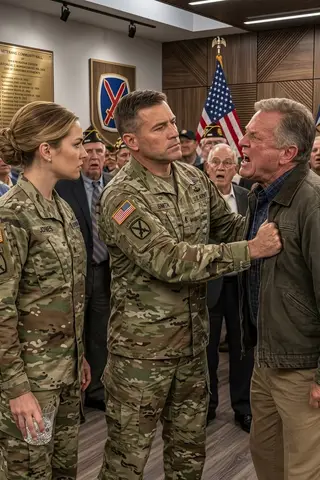
 The Retired Sergeant Called His Daughter "Little Puppy" at His Party
Chapter 39
The Table in the Garden
In early July, during the long Independence Day weekend, Derek and I returned to Buda for what had become an unspoken tradition: dinner on Eleanor's back porch.
The Texas heat had broken slightly after a late-afternoon thunderstorm, leaving the air fresh with the scent of damp earth, cedar, and wet limestone. Richard had spent the early summer building a cedar pergola over the patio, trailing flowering wisteria along the wooden rafters. Underneath hung a low-RPM ceiling fan that kept the air circulating smoothly.
Eleanor had set the wooden table with white ceramic plates, a pitcher of iced hibiscus tea, and a large platter of grilled lemon-herb chicken with roasted summer squash from her newly irrigated garden.
"Derek got an 'A' on his midterm economics paper," Eleanor announced proudly, setting down a bowl of sweet corn salad.
"Introduction to Microeconomics," Derek said, grinning as he poured tea for everyone. "Turns out, understanding supply lines in Kuwait translates pretty well to supply-and-demand curves."
"Don't get cocky," Richard said from the head of the table. But the words lacked bite; his tone was mild, almost teasing. "Macroeconomics is where they try to confuse you with federal debt math."
"Dad," Derek said, raising an eyebrow. "You couldn't balance your checkbook without Mom until 2004."
Eleanor laughed out loud—a bright, unrestrained sound that filled the shaded patio. Richard shook his head, looking down at his plate, but a faint, undeniable smirk tugged at the corner of his weathered mouth.
"I had logistics sergeants for that," Richard grumbled, though there was zero heat behind it.
He looked over at me. "How's that transit corridor working out in Europe, Morgan? Saw a piece on the news about NATO expanding rail terminals in Romania."
"It's moving forward, Dad," I said, cutting into a piece of chicken. "The bilateral treaties were signed last week. Supplies are moving thirty percent faster through the port."
Richard chewed slowly, nodding his head with quiet satisfaction. "Good. If the rear echelon can't move the brass, the boys in the foxholes don't have a prayer. You always understood the whole board, Morgan."
The words hung in the warm summer air—simple, unforced, and completely devoid of rivalry.
I looked at my father. The deep, defensive lines that had once framed his brow had softened into the natural creases of age. His hands, though scarred, rested quietly on the table. He didn't need to dominate the room anymore. He didn't need to diminish his daughter to feel tall, nor did he need to force his son into a mold that didn't fit.
"Thanks, Dad," I said softly.
Eleanor caught my eye across the table. She raised her glass of tea in a tiny, private gesture of shared victory.
The sun slipped below the cedar ridge, casting long, purple shadows across the yard. The crickets began their steady evening chorus in the tall grass beyond the fence. We sat together around that table—an old Master Sergeant, an artist, a young corporate logistician, and a retired Colonel—not as ranks on a battlefield, but as a family that had finally survived its own peace.
***
The End









