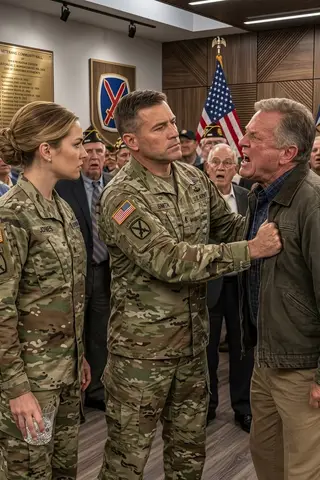
 The Retired Sergeant Called His Daughter "Little Puppy" at His Party
Chapter 75
The Defense Appropriations Mark
By early June, the Capitol had entered its seasonal fever pitch.
The Senate Armed Services Committee had completed its markup of the National Defense Authorization Act, incorporating sixty-five pages of statutory reforms based on our independent industrial base assessment. The critical test now lay across the corridor in the House Committee on Appropriations, where fiscal conservatives and defense hawks clashed over budget allocation ceilings.
Jack Albright and I arrived at the Longworth House Office Building at seven in the morning for an informal prep session with the defense subcommittee staff director, Tom Henderson.
"The good news, Morgan," Henderson said, setting three thermal cups of black coffee on his paper-strewn desk, "is that the authorization language sailed through. The bad news is the fiscal hawks are looking for an offset. They want to cut forty percent of the regional vendor certification grants to balance the weapons procurement account."
"If they cut the vendor certifications, the whole structure collapses," I said, leaning forward and resting my forearms on the desk. "You can authorize all the advanced missiles you want, Tom, but if the machine shop in Dayton or the electronics assembler in Round Rock doesn't have certified test equipment, the production lines sit dead. You're building a sports car and refusing to pay for the fuel pump."
Jack Albright nodded in agreement. "We have the data from the ninety-day pilot. In the sectors where the supplier network was pre-certified, production schedules ran three weeks ahead of delivery targets. Where the vendors were uncertified, lead times ballooned by twelve months."
"I know the math, Jack," Henderson sighed, rubbing his tired eyes. "The members understand the math, too. But the full committee chair faces an election in November, and he wants to show deficit reduction without sacrificing frontline ship count."
"Then show him the operational savings," I said, pulling an eight-page summary table from my folder. "Derek Vance's logistics framework in Round Rock demonstrated that certifying local second-tier suppliers saved forty-two million dollars in freight and rework costs across a single airframe maintenance contract. Scale that across the five industrial hubs we identified, and the program pays for itself in eighteen months."
Henderson skimmed the numbers, his eyebrows lifting slightly as he read Derek's cost-variance models. "This contractor data from Texas... it's audited?"
"Audited, verified, and adopted as standard operating practice by Army Futures Command," I answered firmly. "The lead analyst was an E-5 supply sergeant who served six years in Cavazos before earning his master's in logistics. He knows the difference between theoretical savings and real money on the flight line."
Henderson looked up at me, a faint grin breaking through his exhaustion. "You run a tight perimeter, Colonel."
"I was raised by a Master Sergeant, Tom," I smiled. "We don't leave gaps in the wire."
Henderson closed the folder and stood up, extending his hand. "Leave these briefing sheets with me. I'll take them into the member-level huddle before the noon vote. If this data holds up under scrutiny, we'll keep the funding intact."
When Jack and I stepped out onto the sunlit plaza of the Capitol four hours later, my phone vibrated with a text from Henderson:
*Vendor certification grants retained in full. Floor vote next week. Outstanding work.*
I looked up at the great cast-iron dome rising pristine against the azure summer sky. Another battle won, not with rifles or artillery, but with facts, integrity, and unyielding persistence.
***
The End









