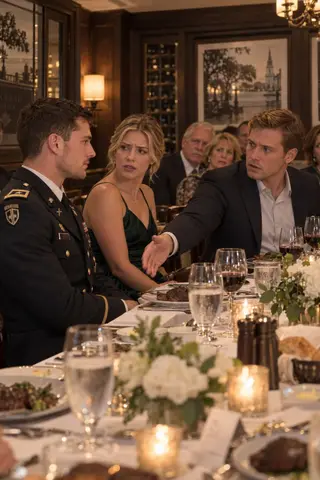
 My Sister Called Me a "Fake Soldier" at Her Engagement Dinner
Chapter 45
A Mother’s Guard
Back in Macon, news of Dad’s collapse had traveled quickly through the quiet, suburban grapevine of our parents' old neighborhood.
On a rainy Tuesday afternoon, Mom attended the monthly meeting of the Middle Georgia Ladies' Heritage Guild at the historic antebellum clubhouse in downtown Macon. For thirty years, this had been her primary social circle—a collection of corporate wives, country club committee chairs, and women who measured the quality of their families by social club memberships and debutante balls.
Mom sat near the back of the tea room, wearing a simple wool cardigan and pearl earrings, sipping black tea while the other women discussed upcoming spring charity galas.
Across the linen-draped table sat Eleanor Vance—the mother of Julian Vance, Maya’s former corporate boss from Atlanta—and Brenda Henderson, whose husband had once been Dad’s corporate rival.
“Barbara, darling,” Eleanor began, leaning forward with an expression of performative, theatrical sympathy that dripped with condescension. “We were so devastated to hear about poor Tom’s collapse at that... what is it called? That workshop near the railroad tracks? It must be simply dreadful for you.”
Mom set her teacup down on the saucer with a quiet, precise click. “Tom is recovering well, Eleanor. Thank you for asking. The doctors expect him back on his feet by next week.”
Brenda Henderson chimed in, adjusting an expensive diamond tennis bracelet. “Well, of course he collapsed, Barbara! A man his age, retired from senior management, spending his golden years doing manual labor with former convicts and destitute soldiers in an old warehouse. We all know you’re trying to put on a brave face, but surely you can convince him to leave that sort of charity to municipal agencies. It’s so... unseemly.”
The table fell quiet. Several other women looked over, waiting to see if Mom would offer the usual apologetic, flustered excuses she had relied on for twenty-five years to avoid social conflict.
Mom looked at Eleanor. She looked at Brenda.
In her mind, she saw the thick stack of letters tied with green parachute cord that had sat in Dad’s study for years. She saw Staff Sergeant Davis standing in Chris’s kitchen in Savannah, thanking her for raising a son who had saved his life under fire. She saw Maya standing in the mud outside an Atlanta shelter holding the hand of an airborne grunt who had nowhere else to turn.
Mom’s spine straightened with the unmistakable, steel-backed posture of a mother who had walked through the fire and left all her shame behind.
“Brenda,” Mom said, her voice dropping into a clear, steady cadence that silenced three neighboring tables. “The men working in that warehouse are not 'destitute soldiers.' They are the men who bled in dirt trenches on the other side of the world so you and your husband could sleep in air-conditioned comfort and play golf on Saturday mornings.”
Brenda’s mouth parted in shock. Eleanor blinked, her polite smile freezing into an awkward grimace.
“For thirty years,” Mom continued, her eyes locking onto Eleanor’s with unwavering strength, “I sat in this room and listened to you brag about your sons' corporate salaries, their imported cars, and their partnerships at law firms. I let you make me feel inadequate because my son Christopher chose to wear combat boots and my daughter Maya wasn't married to an investment banker.”
Mom picked up her cloth napkin, placed it neatly on the table, and stood up.
“My son is a decorated combat medic who has pulled twenty dying boys from burning vehicles,” Mom said, her voice ringing across the chandelier-lit room like a bell. “My son-in-law is an infantry officer who took shrapnel in Syria saving his sergeant’s life. My daughter feeds fifty homeless veterans every week. And my husband... my husband finally has work that honors God instead of corporate spreadsheets.”
Mom picked up her leather handbag, looking around the circle of stunned socialites with calm, majestic pity.
“I used to care what you thought of my family,” Mom finished softly. “Now, I simply thank God every day that my children grew up to be real human beings. Good afternoon, ladies.”
Mom turned on her heel and walked out of the clubhouse into the Georgia rain, her chin high, her heart completely free, leaving the shallow parlor of her past behind forever.
The End









