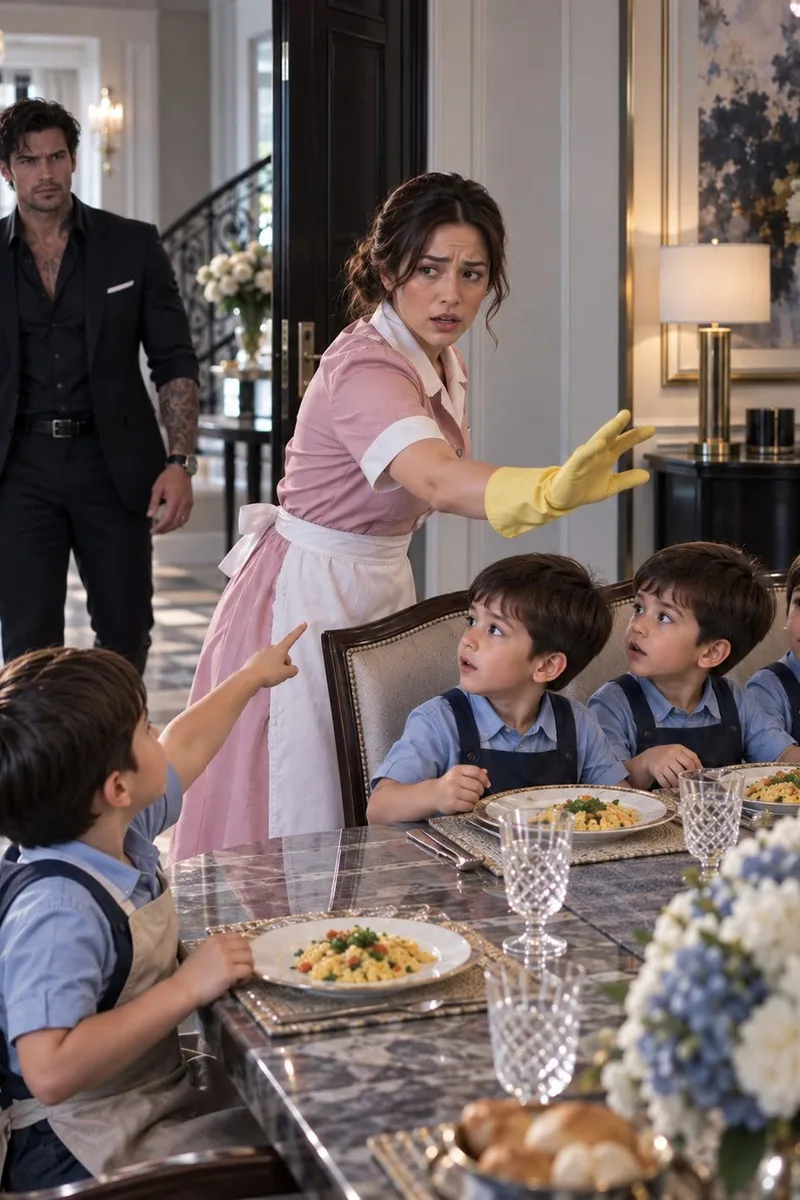
 When Four Little Boys Who Looked Like Me Appeared in My Mansion, Sofia's Warning Finally Made Sense
Chapter 9
The Hearing That Wasn't a Victory
The legal hearing concerned the trust and the disputed authorization, not an immediate transfer of four children from one family to another. Nadia reminded me of that as we entered the courthouse. Cora and Peter sat nearby with their attorney, and I was grateful the boys had not been brought into a room full of adult uncertainty.
The matter involved documents created before and after Sofia's death, and questions about who had the authority to make decisions affecting the stored embryos and later arrangements. I wanted a simple answer. The court could only examine evidence and apply the law.
The records showed that Sofia had intended to create a path for the embryos to be used under specific conditions, but there were gaps and disputed signatures in the authorization history. A clinic representative described its procedures without claiming every step had been followed correctly. The trust administrator explained how funds had supported the boys' care. Martin Vale's attempted interference with confidential information was addressed through separate proceedings and protective measures. There were no dramatic confessions, only documents that clarified some facts and made other questions harder.
I listened as an attorney explained that genetic connection, consent, guardianship, and day-to-day care were different legal issues. I had spent my life treating a fact as something that gave me leverage over whoever knew less. Here, the facts were divided among people who had each played a part in the boys' lives.
None of us could simply declare ourselves the whole story. Cora looked pale, and Peter kept his hands folded tightly in his lap. I wondered how much they'd feared I would use my resources to make their years of care disappear.
When I was asked about my intentions, I told the truth as carefully as I could. I wanted to understand my biological relationship to the boys and the circumstances of the embryo transfer. I also wanted to preserve their stability and their relationship with Cora and Peter. I did not intend to demand immediate custody or disrupt the home they'd always known. The words were recorded, and I knew they could shape what happened next. For once I was glad my choices were being heard by people I couldn't command.
Afterward Nadia said the process would continue, with additional review of the disputed records. It wasn't a victory or a defeat. I felt disappointed anyway. I had hoped to leave knowing exactly how Sofia's plan had been carried out and who had failed to secure proper authorization. Instead I had a clearer picture of the questions. Nadia reminded me that the boys were not waiting in suspension while adults sorted out forms. They were going to school, losing mittens, and arguing about breakfast. The legal pace was slow because the lives involved were real.
Outside the courthouse Cora approached me. She thanked me for stating that the boys would remain in their home while the questions were addressed. I asked whether she had believed I might try to take them. She nodded. Her honesty hurt, but I couldn't fault her.
She had heard stories about the way I solved problems, some of them true. I told her I understood why she had worried and that I would keep working through counsel rather than surprise her with demands. Peter joined us and said the boys had asked when they'd see me again.
The next visit took place at a children's museum. I had never been to one. The boys moved from room to room, pressing buttons and building improbable towers. Leo tried to make a model river flow backward. Nico argued with the instructions on a mechanical exhibit.
Mateo wanted to read every sign. Tomas stood beside a window and watched a train pass. I followed their pace instead of making a plan for how the afternoon should unfold. When I became tired, I asked Cora where the nearest bench was. She smiled at the ordinary question.
Near the end, Tomas asked why Sofia couldn't come to the museum. I knelt beside him and said she had died before he was born. I told him she had cared about him before he came into the world and had left photographs and letters because she wanted him to know that.
He asked whether she would have liked the trains. I said yes, though I admitted I couldn't know for sure. Sofia had once spent an entire afternoon watching trains with me on a trip to Wisconsin. I told him that story, and he listened with his head tilted.
Mateo asked whether I was sad when Sofia died. I told him I was. He asked whether I was still sad now. I looked at the boys, at Cora and Peter waiting by the exit, and said yes, but that meeting them had brought new feelings alongside the sadness. He seemed satisfied. Children didn't demand grief obey a schedule. They asked a question and went on to the next thing they needed. I wished I had learned that sooner.
Back in Chicago, Rafael told me the business changes were taking longer than expected. There were contracts that couldn't be canceled without consequences and records that required review by authorities. I told him to keep following the lawful process. He asked whether I regretted giving up influence. I thought about the museum, where four boys had let me carry their jackets for an hour. "I regret what the influence cost," I answered. It wasn't a statement that made the past disappear. It was a decision about the next day.
That night I met with Nadia and asked what more I could do to support the boys without attaching conditions to help. She suggested discussing appropriate contributions through the caregivers and the children's attorney, ensuring that funds couldn't be used as leverage. I agreed. We also reviewed my estate plan so that any lawful provision for them would be clear and not burden them with control of my businesses. Nadia warned that legal arrangements would require careful drafting and review. I told her I wanted that care.
The final question remained the one Sofia had written across the photograph. Had she been right to keep them safe from me? I couldn't answer no simply because I had spent a few months behaving differently. I had been a man whose name made people afraid. I was still responsible for that history.
But the boys had seen me make pancakes, fail at a game, and listen when Peter told me to wait. They were beginning to know a person rather than a reputation. I hoped the person they met would continue to deserve their trust when nobody was watching.
The End









