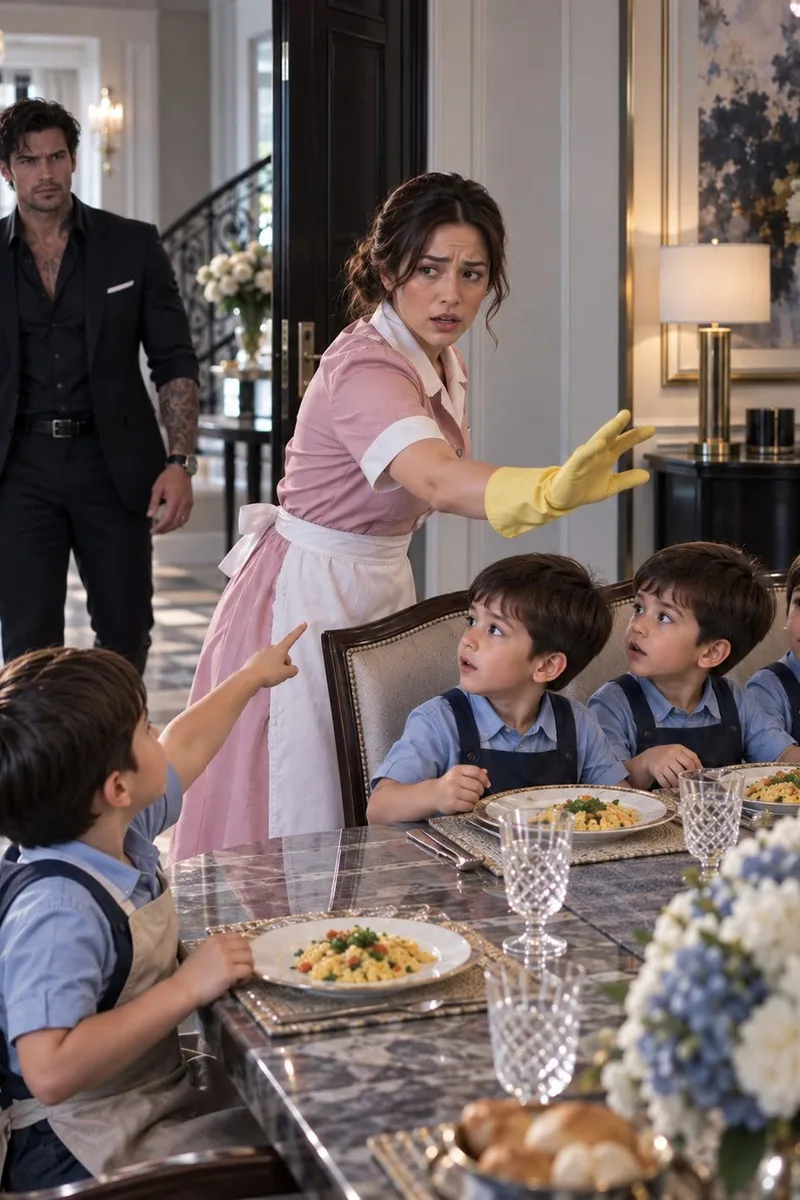
 When Four Little Boys Who Looked Like Me Appeared in My Mansion, Sofia's Warning Finally Made Sense
Chapter 5
The Name on the Form
The meeting took place at Nadia's office, not in my mansion. Cora and Peter sat together on one side of the conference table, with Elena beside them. I sat across from the people who had spent four years raising children I might have helped create. The arrangement felt deliberate. No one could mistake my house or the men outside it for authority over the conversation. Nadia introduced the children's attorney, who had been asked to review their interests separately from everyone else's wishes.
Cora brought a thick folder of photographs, medical notes, and school papers. She placed it between us without offering it as a gift. "Before we discuss genetics," she said, "you need to know who they are.
" She described Mateo's habit of checking that everyone had a blanket, Leo's fascination with water, Nico's endless questions, and Tomas's dislike of sudden noises. Peter added that the boys still woke at night when they had bad dreams. I listened, aware that I had once thought four identical faces meant four versions of one story.
Then the attorneys explained the records. Sofia had initiated plans involving embryos we created during our marriage, and the clinic had documentation of consent discussions before her death. But the records concerning a later transfer were disputed. A signature attributed to me appeared on one authorization.
I recognized the shape of my name, then saw a difference in the second letter. I could not honestly say it was mine. Nadia said a qualified review would be needed. Even if the transfer had proceeded improperly, the boys' well-being could not be treated as a reversible administrative error.
I felt anger rise again, this time with a place to land. Someone had made choices about potential children without a clear record of my consent. I asked whether the law office had been aware of the disputed signature.
The children's attorney said there were conflicting accounts and that the question would be addressed through appropriate procedures. He reminded us that none of the boys had chosen how they were conceived. I looked at their photographs and made myself breathe. They were here. Any dispute about documents belonged to adults who could read them.
Cora told me the boys had been born early after a medically difficult pregnancy. She had spent weeks visiting them in neonatal care, learning each child's habits, and worrying about whether they would all come home. Her husband had slept in a chair beside the incubators when he could. She wasn't telling me the story to claim a prize. She was telling me what it had cost to become their family. I thanked her, unsure how much gratitude could carry when I was also grieving years I hadn't known existed.
The proposed DNA testing had been discussed with the appropriate professionals, and the caregivers had agreed to proceed in a way that protected the children. Results would take time. Nadia asked us not to build conclusions around resemblance alone. Peter said the boys had already begun asking about the man at the mansion.
He wanted to answer honestly without making them afraid of losing their home. I said they should be told that adults were learning more about their history, not that someone new was coming to claim them. Peter nodded for the first time since we'd met.
We discussed the threatening approaches. Cora had saved messages from Martin Vale, and Nadia's team had reviewed the trust dispute with the appropriate professionals. Vale had no recognized right to demand the boys' whereabouts, and any further improper contact would be documented and reported. I asked whether the children needed additional safety arrangements.
Cora said they needed routines more than armed guards. She wanted the school run to remain boring and the house to remain a place where the boys could leave toys on the floor. I understood that my usual definition of protection might make their ordinary lives harder.
Then the children's attorney asked me a question I had not prepared for. "If the results establish a genetic relationship, what do you want?" I opened my mouth to say I wanted my sons, my family, the years Sofia had hidden from me. Instead I looked at Cora's hands resting on the photographs.
She and Peter were the people the boys called when they woke frightened. I couldn't make four years disappear because biology might give me a name. "I want to know them," I said. "I want to contribute to their safety and care. I don't want to take them from the people they trust."
Elena began to cry. I felt embarrassed by the attention, but I didn't withdraw the words. Nadia asked whether I would agree to any future contact being planned with the caregivers and professionals rather than through my staff. I said yes. Cora asked whether I could avoid telling business associates about the boys while the legal questions were being resolved. I agreed again. She studied me for a long moment, then said she was willing to consider short visits if they were appropriate and the boys remained comfortable.
We did not settle every question. The genetic testing was pending, the consent documents required further scrutiny, and the trust dispute still needed formal handling. But we had agreed on something more important than a quick conclusion: the boys would remain in the stable home they knew while the adults gathered facts and arranged contact carefully. I asked whether I could write them a letter. The children's attorney suggested a simple note without promises or demands. I said I could do that.
After the meeting I walked beside Elena to the elevator. She asked why I hadn't demanded they come live with me. I looked at her, remembering the photograph and the warning in Sofia's handwriting. "Because I finally heard what you were protecting them from," I said. She looked tired, then relieved. I wasn't sure whether I'd passed some imagined test. I only knew the answer had cost me something. I would not have the immediate family reunion I'd pictured when the boys entered my dining room.
That night I wrote four short notes. I thanked Mateo for showing me Sofia's photograph, Leo for asking about the garden, Nico for reminding me that questions matter, and Tomas for the picture he had drawn. I didn't sign them Dad. I signed my name and let Elena review the wording before we sent them through the caregivers. I placed the pen down and felt the shift: four children might be connected to my blood, but a relationship would be offered to them, not imposed.
The End









