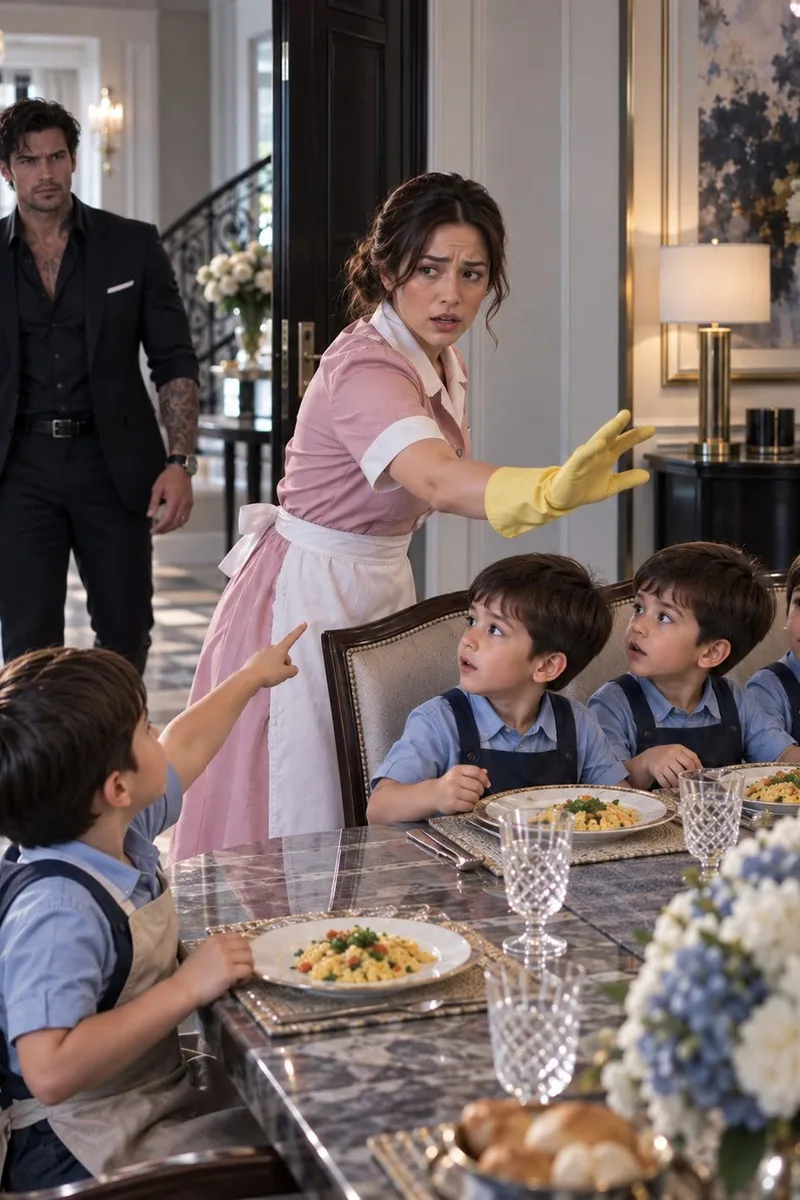
 When Four Little Boys Who Looked Like Me Appeared in My Mansion, Sofia's Warning Finally Made Sense
Chapter 4
The Last Letter
Nadia found the missing correspondence through the law office that had handled Sofia's estate. The file arrived in a secure packet with copies of clinic records and a letter Sofia had written during her final illness. Some pages were incomplete, and the consent history would require further verification. Nadia warned me again that documents could explain intent without automatically resolving legal parentage. I agreed. By then I was less interested in claiming four sons than in understanding why their lives had been built around keeping me outside them.
I opened Sofia's letter in Nadia's presence. She wrote that she loved me, but that she had become frightened by the way my business followed us home. She described an evening when a man had threatened one of our household staff and I had answered with a threat of my own, believing I was protecting us. She had watched the staff member begin trembling whenever my phone rang. Sofia wrote that she did not want children growing up believing fear was the natural language of love.
She also described the fertility treatments. When her illness became serious, she had asked the clinic to explain options for the stored embryos and had discussed a gestational carrier with counsel. She knew the arrangement would require valid authorization from everyone whose consent the law required. She had not written that I had agreed to every future step. Instead she left questions and requests for the professionals involved. I was relieved by the honesty and ashamed that I had expected a single page to settle everything.
Near the end she wrote that she wanted any children born from the embryos to know they had been loved before their lives began. She wanted them raised by people who could say no to me without fearing punishment. That was the sentence that hurt most.
I had thought of my willingness to provide as evidence I was a good husband. Sofia had wanted a home where generosity wasn't tied to obedience. I remembered arguments about employees, security, and the way I had tried to make all her worries vanish by issuing orders. I had mistaken control for care.
Nadia asked whether I wanted to continue. I did. The last paragraph addressed me directly. Sofia wrote that if I ever met the children, I should not demand they love me. I should earn the right to be in their lives by helping keep them safe and honoring the people who had cared for them. There was no promise that the children would become mine in the way I wanted. There was only the possibility of a relationship built slowly enough to be real.
I sat with the letter until the light changed. Elena brought tea and waited at the door. I asked whether she'd known about its contents. She said Sofia had read parts aloud near the end, but not all of them.
She had been asked to help Cora and Peter after the births and to keep the children away from the people who might use my name for leverage. I asked why she'd remained employed in my house. "Because Sofia loved you," she said. "And because somebody needed to see whether you might become the man she hoped you could be."
The answer made me angry. I had been judged without knowing there was a test. I told Elena that, and she let the feeling stand. Then she said she had watched me spend five years preserving Sofia's rooms while doing nothing to change the life that had frightened her.
I wanted to remind her of the loyalty I'd shown employees and the money I'd spent supporting families. She wasn't interested in a ledger of good deeds. She asked whether the people who received my help felt free to refuse it. I couldn't answer honestly.
That afternoon I called Rafael into my study and told him the boys were not to be discussed with anyone in our business network. Any legitimate security concern would be handled through counsel and law enforcement. He nodded but asked whether I intended to find out who sent the SUVs.
I said Nadia was working on it. He reminded me there were faster methods. I knew there were. I also knew those methods had helped make Sofia afraid. "Not this time," I said. "If someone threatens children, we bring evidence to the people whose job it is to investigate."
Rafael looked at the letter on my desk and seemed to understand that the change was not a temporary mood. He said he would review our staff policies and make sure employees knew they could report concerns without retaliation. I asked him to put the promise in writing and have an independent person evaluate it. He raised an eyebrow. "You want someone outside the organization to judge us?" "I want to know whether the rules work for people who can't afford to disagree with me," I answered.
Nadia called that evening with news from the trust administrator. Martin Vale had been seeking information about the boys and had no verified authority to contact them. A former business associate of mine was involved in a financial dispute with the trust, but the evidence did not yet show a direct threat of violence. The administrators were reviewing whether information had been improperly released. Nadia recommended legal action to protect confidential records and continued coordination with the children's caregivers. I told her to proceed through the proper channels.
I asked whether DNA testing could establish biological parentage. Nadia said it could provide relevant evidence if performed appropriately and with the necessary permissions, but that biology wouldn't automatically decide the children's legal status or the care they needed. Cora and Peter had agreed to discuss the question with their attorney.
I wanted an answer immediately. Instead I asked Nadia to arrange a meeting where everyone could speak without being rushed. The words tasted strange in my mouth. I had built a career around making people respond quickly. Now I was asking for patience.
Before bed I reread Sofia's letter. It didn't absolve her of the difficult choices she'd made, and it didn't explain every document in the file. I still wished she'd trusted me enough to speak. But I also knew she had tried, in the language of arguments I had refused to hear.
I placed her letter beside the crayon drawing from the dining room. Four crooked faces smiled up at the ceiling. I wondered whether I would ever learn the things that made each one of those boys laugh, and whether the first step toward knowing them was accepting that I might have to hear no.
The End









