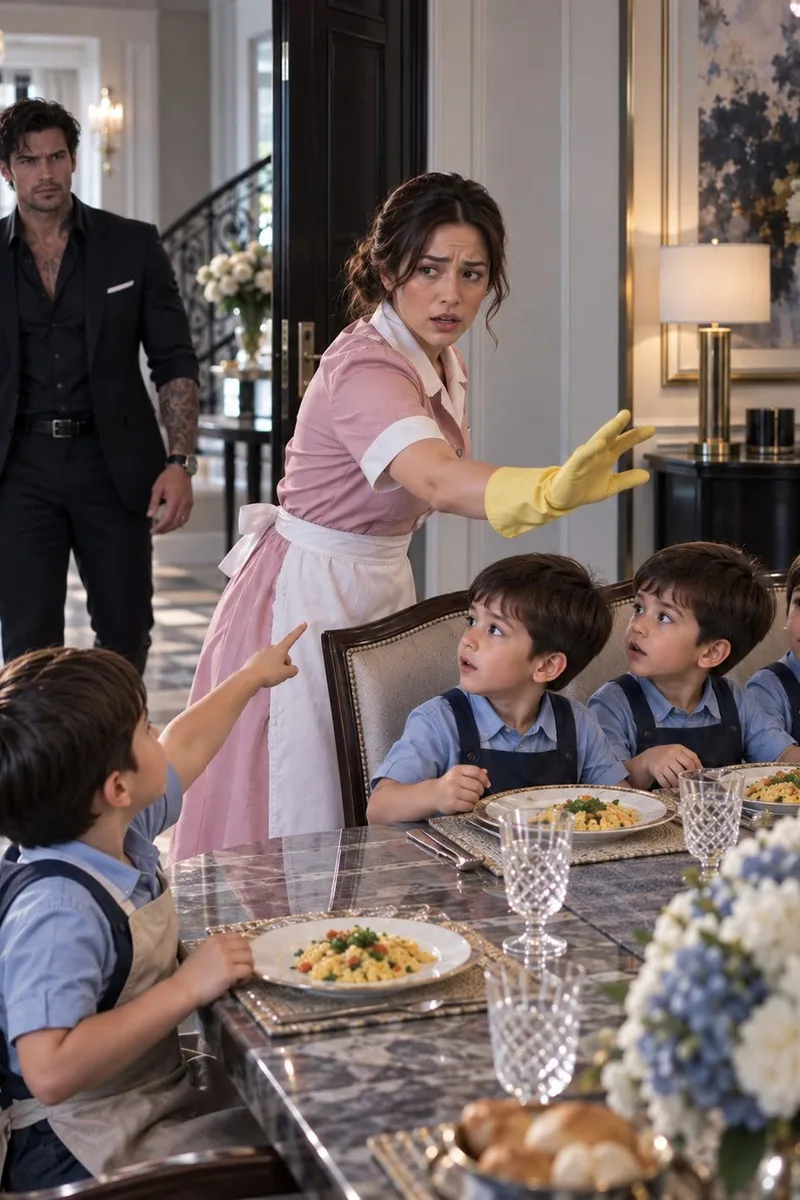
 When Four Little Boys Who Looked Like Me Appeared in My Mansion, Sofia's Warning Finally Made Sense
Chapter 8
What I Could Give
The independent review of my legitimate businesses produced a report thick enough to keep me occupied for a week. It identified contracts that needed clearer oversight, employees who had been pressured to accept instructions outside their roles, and records that required careful legal review. Some findings embarrassed me. Others frightened me because I could see how easily I had let loyalty become a substitute for accountability. I asked the advisers to prioritize protecting workers and complying with lawful processes, even where that meant reducing my authority.
Nadia warned that a report would not undo past wrongdoing. She was right. I had spent twenty years building systems that made my decisions difficult to question. Changing them would require independent oversight, cooperation with lawful inquiries, and financial consequences I could not control. I told her I wasn't asking for a certificate proving I was safe. I wanted practical changes that the boys' caregivers could evaluate over time, whether or not they ever invited me further into the children's lives.
Cora agreed to another visit after the incident near the school had been reviewed and the immediate concern had eased. This time the boys asked whether we could meet at a park with a small playground. The professionals involved approved the arrangement, with Cora and Peter present.
I arrived carrying a picnic basket Elena had helped pack. The boys ran toward the swings, and I stood beside Peter for a few minutes watching them. He told me which child preferred to be pushed high and which one grew anxious when the ground looked too far away.
"How do you remember all of it?" I asked. Peter smiled. "You live with them," he said. The answer was neither cruel nor meant to exclude me. It was simply true. For four years he had learned their fears and preferences through mornings, illnesses, tantrums, and bedtime stories. I had spent those years making decisions about men who knew my reputation. I couldn't recover Peter's experience by looking at photographs or reading a file. I could only begin collecting my own memories if the boys wanted me there.
Leo asked me to help build a dam in the shallow water near the playground. I said we could move stones where the park rules allowed, and he looked disappointed that a grown man needed to ask permission. Nico argued that a dam would make the water go faster.
Mateo tried to organize the stones into neat rows. Tomas watched from the grass with Cora, then came to put one small pebble beside the others. We worked together until the water went around our construction as if nothing had happened. The boys laughed at our failure.
After lunch Mateo asked whether I was their father. The question arrived without drama, as children often ask the thing adults have spent weeks preparing to explain. I looked toward Cora and Peter. We had agreed on language with the children's professional adviser.
I said that tests showed I was connected to the beginning of their lives, and that Sofia and I had wanted children years ago. I told them Cora and Peter were the people who had raised and cared for them, and none of that would change because they were learning about me.
"So we have two dads?" Nico asked. Peter answered that families could look different and that what mattered was knowing who would care for them. I added that I hoped to become someone they could trust, but they did not have to decide anything today.
Tomas asked if he could still call Peter Dad. "Of course," I said. He turned back to his sandwich as though the question were settled. I felt an ache of gratitude and loss. The word I had imagined hearing from four mouths belonged to someone who had earned it long before I arrived.
On the drive back to Chicago I thought about Sofia's letter. She had asked that the boys be raised by people who could say no to me. At the park I'd watched Cora say no to a second dessert, Peter say no to a dangerous jump, and the boys accept those limits because they were familiar. I had once imagined fatherhood as a chance to protect children from every threat. I was beginning to understand it also meant creating a world where they could trust ordinary boundaries.
At home I signed the next set of compliance instructions and asked Rafael to schedule staff meetings without armed escorts or intimidating displays. He complained that employees would talk. I said they needed to talk if we expected them to report problems. I also told him that any continued criminal conduct would be addressed through lawful channels, not hidden behind the company's name. He asked whether I was prepared for the consequences of that choice. I told him I had been avoiding those consequences for too long.
The trust dispute moved forward through counsel. Nadia reported that Martin Vale's attempts to obtain confidential information had been documented and that steps were being taken to restrict further improper access. The process was slower than the kind of confrontation I'd once preferred, but the records were becoming clearer. There was no dramatic arrest that settled every accusation. There were meetings, orders, and professionals responsible for determining what could be proved. I learned to accept that safety sometimes looked like paperwork rather than force.
Cora sent a photograph of the boys asleep in their car seats after the park. Four heads leaned at different angles, the same dark hair catching the light. I smiled, then asked whether I might keep the picture privately. She said yes. I printed one copy and placed it beside the crayon drawing in my study. It was the first photograph of them I'd been given after both caregivers understood why I wanted it. The permission mattered more than the glossy paper.
That evening I invited Elena to sit with me in the dining room. We ate a simple meal at the table where I'd first found the boys. I asked whether she thought Sofia would have approved of the choices I'd made. Elena said she couldn't speak for the dead.
Then she added that Sofia had always hoped I would learn how to ask rather than command. I looked at the empty chairs and thought about the possibility of four boys sitting there again, not because they were hidden from me or brought to prove something, but because they had chosen to visit.
I wrote to Cora and Peter that night, thanking them for the park visit and asking what I could do that would actually help. I didn't offer a new house, a private school, or a financial arrangement that might make them feel obligated. I asked whether there were expenses or tasks I could discuss through the proper channels and whether the boys wanted another visit. It was the least grand proposal I'd made in decades. I hoped it might be the first one they could accept without fear.
The End









