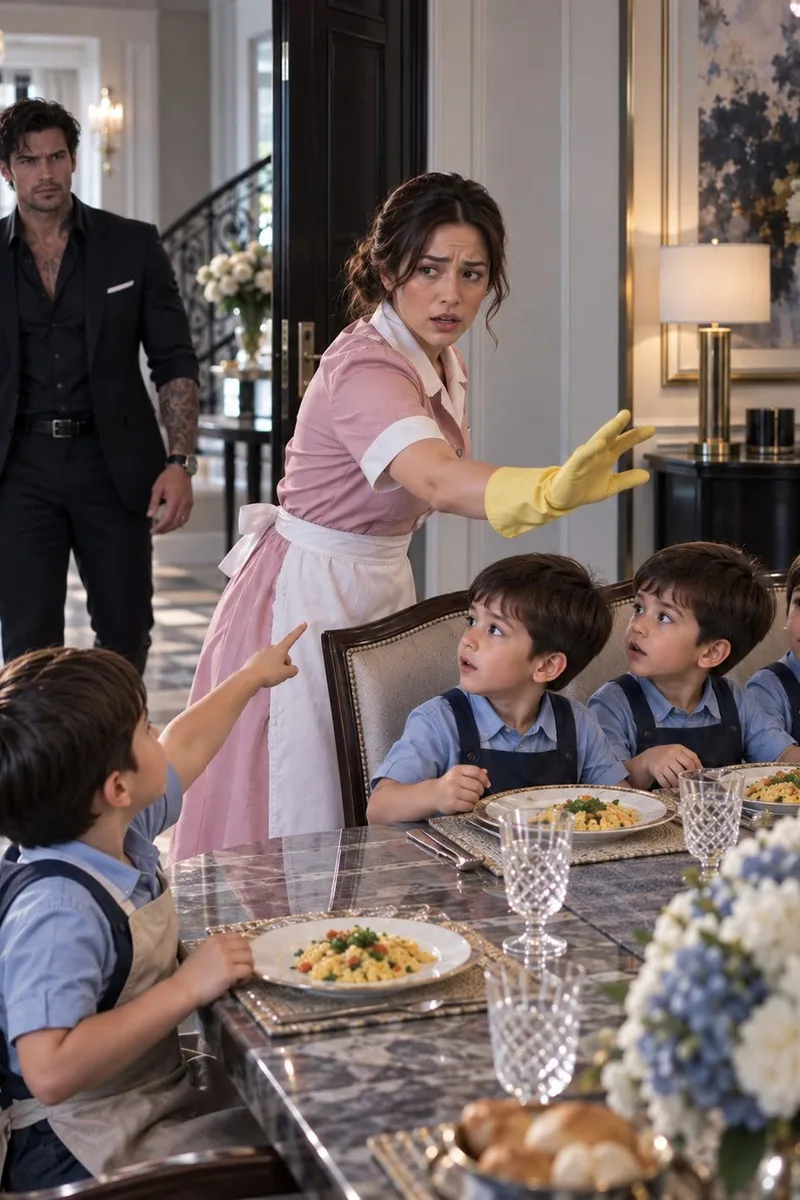
 When Four Little Boys Who Looked Like Me Appeared in My Mansion, Sofia's Warning Finally Made Sense
Chapter 7
The Cost of a Name
The first consequence of changing my business arrived as a letter from a former associate. He accused me of abandoning obligations and demanded a meeting about property and money that had once passed through my organization without proper scrutiny. The letter mentioned the trust connected to Sofia and claimed that assets intended for the boys belonged to people who had funded the original arrangements.
Nadia read it with me and said the claim would need documentary support. I knew the author, and I knew he had used threats before. I also knew that answering in kind would place me back inside the life I was trying to leave.
We sent the letter to counsel handling the dispute and provided copies of the relevant communications to the authorities where appropriate. I directed Rafael not to contact the former associate privately. He disliked the instruction. "You're letting him think you're weak," he said. I looked at the crayon drawing on my desk and wondered whether strength could be measured without an audience. "He can think whatever he likes," I answered. "We document what he does. We don't give him another reason to frighten children."
The decision was not free. A business partner withdrew from a legitimate project after hearing I was reviewing old practices. Employees worried about their jobs. My accountant told me I might have to sell assets to meet obligations as operations changed. I spent several afternoons meeting with advisers and staff, hearing difficult facts without demanding reassurance. I had once believed power meant never needing to explain myself. Now I was learning that people could only make reliable decisions when they understood what I intended to do and what risks remained.
Cora called with a concern. A stranger had appeared near the boys' school asking whether they belonged to the Moretti family. Staff had followed their procedures, and the person left without contact. The incident was reported. I felt the old urge to put men on every corner, but Cora asked for something different: help understanding which information might have been disclosed and support for the measures the school already had. Nadia coordinated with the appropriate professionals. I offered resources without insisting the boys' daily lives be remade around my fears.
Peter asked whether I could refrain from visiting for a week while the family dealt with the attention. I said yes. The word hurt, but I had promised to follow their lead. I spent that week learning the names of the boys' teachers from the information Cora volunteered, reading the picture books they'd liked, and making pancakes with my kitchen staff's patient advice.
I ruined the first batch. Elena watched me scrape them from the pan and laughed so hard she had to sit down. For a moment the house sounded like a home rather than a place waiting for orders.
I asked Elena whether she regretted bringing the boys to the mansion. She said she regretted frightening them and creating uncertainty for Cora and Peter. She did not regret that I had finally learned they existed. I told her I'd been angry about the years I'd lost. She nodded.
Then she asked whether I understood how often she'd imagined telling me and seen the possible consequences. I couldn't honestly say I knew. I apologized for making her afraid of the truth. She didn't offer immediate forgiveness, but she accepted that I was trying to say something specific.
Nadia arranged a meeting about the disputed transfer consent. The clinic's records included a copy of an authorization that appeared to have been processed after Sofia's death. The parties did not agree about whether the form met the applicable legal requirements. An investigation into the document's origin was ongoing, and no one could responsibly turn the meeting into a trial of Sofia's motives. I felt betrayed by the uncertainty, yet the boys remained real. Their lives could not be folded back into storage because adults had mishandled paperwork years earlier.
I told Nadia I would pursue the truth through appropriate procedures but would not use the dispute to destabilize the children's home. She asked me to put that position in writing so the caregivers and their attorney could rely on it. I signed a letter describing my intentions and acknowledging that questions of legal status remained unresolved. It was not a surrender of any lawful rights. It was a commitment not to treat my anger as permission to disrupt four young lives. I felt a strange calm after signing it.
Rafael came to me that evening with news that several men had left the organization rather than comply with new rules. He warned that losing them could make our remaining legitimate businesses vulnerable. I asked whether the employees who stayed had a safe way to report threats or coercion.
He admitted the policy was still being reviewed. I told him to finish it with the outside adviser. If we couldn't protect ordinary workers without relying on fear, we hadn't changed enough. Rafael looked at me as if he was seeing a stranger. Perhaps he was.
The boys sent a package the next day. Inside were four paper pancakes cut from yellow construction paper, each labeled with a name. Mateo's was the largest, Leo's had blue scribbles that he said were blueberries, Nico's carried a question mark, and Tomas's had a careful smile.
Cora included a note saying they remembered my promise to learn how to cook. I placed the paper pancakes beside my failed recipe and felt a joy so disproportionate that it frightened me. I wanted to go to Wisconsin immediately. Instead I wrote a thank-you note and asked whether they wanted to see a photograph of my next attempt.
The reply came through Cora: yes, but only if I made real pancakes next time. I spent Saturday morning practicing. Elena supervised from a stool, offering advice only when I asked. I sent a photograph of four slightly uneven pancakes on a plate. That afternoon Mateo called with permission from his caregivers. He said they looked better than before. Nico asked whether they tasted good. I admitted I'd burned one. The boys laughed, and the sound traveled through my phone into the empty dining room.
After the call I sat alone for a while. I had lost money, influence, and the easy obedience of people who once feared me. I still had a long way to go before I could say what sort of man I was becoming.
But I had gained something I couldn't buy: four boys who were beginning to ask ordinary questions because I had stopped demanding extraordinary trust. The cost of changing my name's meaning was real, and for the first time I was willing to pay it without asking anyone to thank me.
The End









