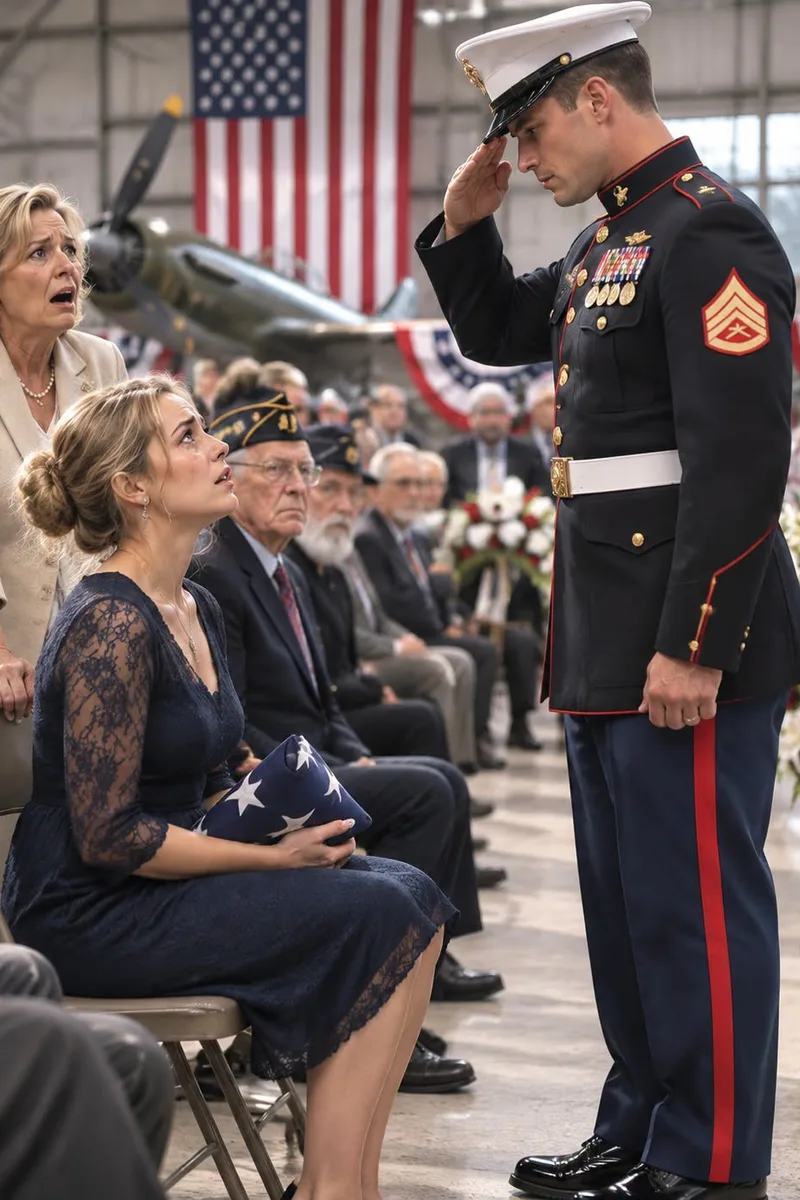
 When a Navy Officer Saluted Me at My Father's Ceremony, My Stepmother's Story Collapsed
Chapter 9
The Cost of Being Seen
The photograph on Dad's hallway shelf caused a problem neither of us expected. A visitor from the veterans' association took a picture of it during a planning meeting and posted it online with a caption celebrating the family's military legacy. Within hours, strangers began asking questions about my current assignment and whether the salute at the church ceremony had indicated some secret honor. I knew better than to feed the speculation, but I was angry that an ordinary family photograph had become another piece of public material. Dad called as soon as he learned about the post.
"I didn't know she was taking pictures," he said. He sounded frightened that he'd violated my trust again. I reminded him that the photograph itself wasn't restricted, but that I'd asked not to have my service turned into a promotional mystery. The visitor had probably intended a compliment. Intent mattered, and so did consequence. Dad offered to contact the association and request that the post be removed. I accepted. He did it within the hour and sent me the editor's confirmation. The response was quick, clear, and free of excuses. I noticed that the old version of our relationship would have required three days of explaining why I was upset.
Evelyn called later to tell me she had already spoken with the volunteer who posted the picture. The woman had apologized. "I told her your work is yours to discuss," Evelyn said. I thanked her. She paused, then admitted she'd almost written a long defense of the post before remembering what had happened at the ceremony. "I still want people to think well of us," she said. "That's going to take longer to change." It was the first time she'd named the habit without asking me to pretend it was harmless. I told her that I appreciated her correcting it before it spread farther.
A week later Dad asked whether I would come to town for the anniversary of my mother's death. We had rarely marked the day together since Evelyn entered his life. Some years I'd called and found him distracted; other years I'd avoided the subject because I didn't want Evelyn to feel excluded. This time Dad wanted to visit the cemetery, then have dinner at home. He said Evelyn was willing to give us private time if we wanted it. I checked my schedule and arranged leave. Returning for a quiet family day felt more difficult than attending another ceremony. There would be no audience to remind us how to behave.
I arrived in the late afternoon and found Dad waiting by the front door. The photograph was on the shelf exactly where he'd promised. Beside it stood a smaller picture of my mother in the garden, laughing with her head tilted back. Dad had taken that one before I was born. We stood looking at both for a while. Then he said, "I think I've spent years being grateful that someone helped me after she died, and guilty that I was still lonely. I let both feelings make decisions for me." He didn't look toward the kitchen to see whether Evelyn was listening. It was a private truth he had chosen to say himself.
At the cemetery, we brought a small bunch of flowers and stayed longer than we'd planned. Dad told me stories I hadn't heard: my mother's impatience with badly organized meetings, her habit of writing shopping lists on the backs of envelopes, her fear of sailing despite marrying a sailor. I laughed and cried within a few minutes. When he asked whether I'd ever resented Evelyn for arriving too soon, I answered carefully. "I resented being expected to pretend Mom had never lived here," I said. "I don't think you meant to make me feel that way. But sometimes it did." He rested a hand on the stone and said, "I wish I'd asked."
Over dinner, Evelyn kept her promise to give us room. She prepared soup and bread, then joined us only after asking whether we'd like company. Dad said yes. We talked about ordinary matters: a neighbor's new dog, the workshop volunteers, my plans for the next holiday. When Evelyn mentioned an upcoming luncheon, she asked rather than assumed whether I would be interested. I declined because I had work. She said she understood and changed the subject. The conversation wasn't warm enough to erase the past. It was gentle enough to be real.
After dinner Dad showed me the letters he'd begun keeping in a small desk organizer. There were envelopes addressed to him, receipts he needed to review, and a folder containing the contact information for people he helped through the veterans' association. He had asked Evelyn to teach him the system instead of letting her remain the only person who knew it. He looked pleased with himself, then embarrassed to be pleased. "I know this isn't remarkable," he said. I told him it was important because it meant the system would continue even if one of them was sick, busy, or simply needed a day off.
Before bed, Evelyn stopped me in the hall. "I used to think your visits were a judgment on me," she said. "If he spent time with you, I worried that meant I hadn't been enough." I considered how to respond. I could feel sympathy for that fear without offering to make myself smaller to relieve it. "A daughter seeing her father isn't a vote against his wife," I said. "You shouldn't have had to compete with me. I shouldn't have been made to compete with you." Evelyn nodded. Her eyes were wet, but she didn't ask for comfort. I went to my old room and sat for a long time with the light off.
The following morning Dad walked me to my car. He asked whether the weekend had been all right. I said it had been difficult and good. He smiled sadly. "Both can happen." Then he told me he wanted to come to Norfolk when my schedule allowed, not for a ceremony but simply to see the place where I lived. He suggested a weekend when we could visit a museum, eat somewhere without assigned seating, and take a walk. I told him I'd check the calendar. He added, "You can say no if the timing is wrong." I hugged him. That final sentence might have been the most important invitation he'd made.
On the drive away I thought of the officer in dress whites standing before me, his hand raised in a salute. The public surprise had exposed a lie, but it couldn't tell me whether Dad would be someone I could trust again. Only weeks of small decisions had begun to answer that question. One remained: when we were alone in my city, outside the rituals that had shaped our relationship, would he still know how to be my father without needing me to play a part?
The End









