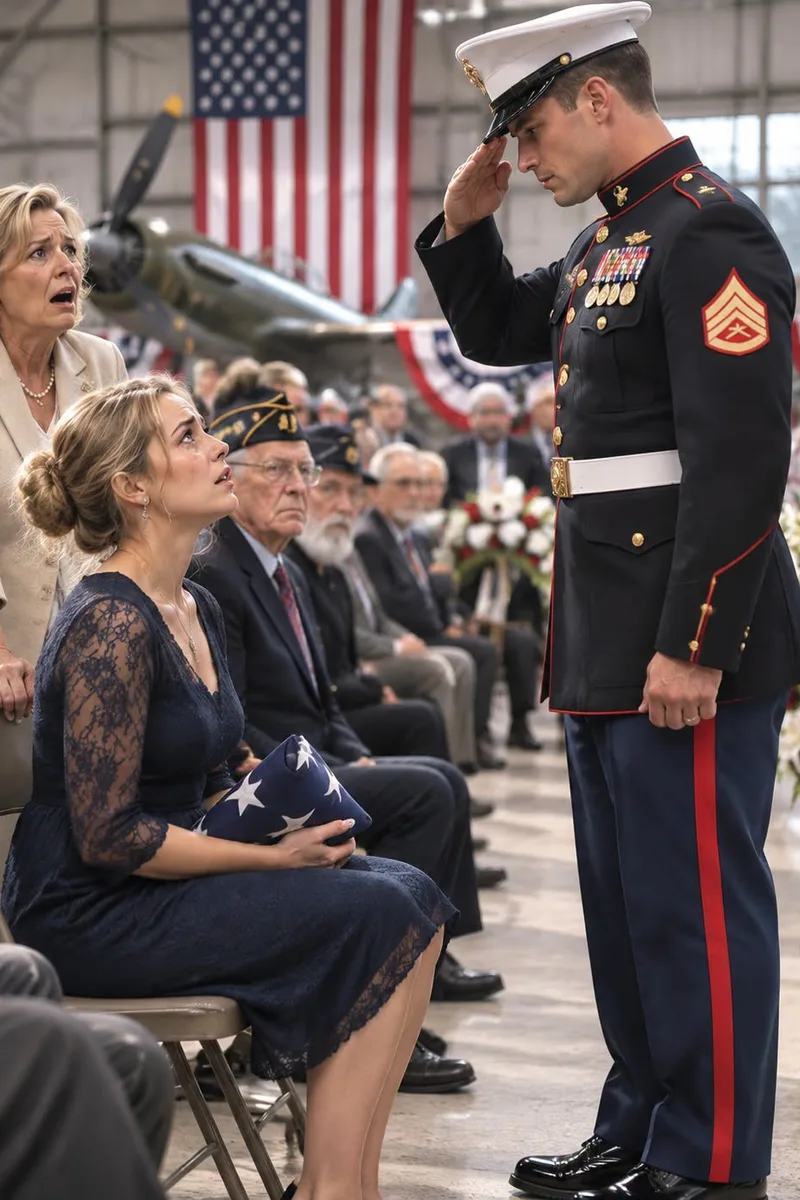
 When a Navy Officer Saluted Me at My Father's Ceremony, My Stepmother's Story Collapsed
Chapter 5
What an Apology Can Reach
Dad didn't ask me to report every word of Evelyn's call. That was new. He began by telling me what she'd said to him and asking whether I wanted to correct it. According to Evelyn, I'd demanded a public apology, insulted the work she did around the house, and warned that Dad would lose my affection if he sided with her. I sat at my kitchen table looking at the notes I'd taken while the conversation was fresh. I told him what I'd actually requested: an end to false claims, a correction when possible, and a direct relationship with him. He listened without rushing me.
"She didn't tell me you'd acknowledged how much she helped," Dad said. "I suppose that wouldn't fit the story." I was surprised by the bitterness in his voice. I didn't want him to replace total trust in Evelyn with total distrust. Both left too little room for evidence. "You can ask her," I said. "You live with her. You can decide what you believe after you've heard us both." Dad sighed. "That's what I should have done from the start." He told me he'd asked the church organizer for a copy of the seating plan, and discovered I'd been placed in the last row under a handwritten note reading quiet seating requested by family.
I remembered my decision to sit there. I'd agreed because I didn't want a confrontation, not because I believed I belonged at the back. The note turned a private arrangement into something that could be presented as my need. Dad was angry, and I understood why. "Don't fight over the chair," I told him. "Ask why Evelyn thought it was acceptable to make me sound ashamed of my own service." He said he'd asked her already. She'd told him I'd been looking exhausted and she wanted me comfortable. "She has an explanation for everything," he said. I reminded him that explanations were worth testing against what people actually did.
He asked whether I would speak with Evelyn and him together on a scheduled call. My first instinct was no. It had taken me years to stop treating every family conversation as an oral examination administered by my stepmother. But I also knew that declining meant allowing her to narrate my motives indefinitely. I agreed to one conversation with clear conditions: no audience, no discussion of restricted military work, and no expectation that I would apologize for correcting false statements. Dad wrote the conditions down. It was a modest agreement that changed the problem. We were no longer arguing about whether I deserved to speak. We were deciding how to speak honestly.
The call happened on a Saturday morning. Dad sat at the dining table, and Evelyn appeared beside him with a notepad of her own. I had set a glass of water near my laptop, remembering how dry my mouth had become at the ceremony. Dad opened by saying he wanted each of us to be able to speak without interruption. Evelyn nodded with exaggerated patience. Then she said, "Clare, I am sorry you were embarrassed by a misunderstanding." I waited. She watched my face, expecting acceptance. "That isn't what happened," I said. "You told people I had left the Navy. You didn't know that was true, because it wasn't."
Evelyn looked to Dad. He didn't rescue her. She turned back to me. "I was worried about you. You were secretive and tired. It seemed obvious that something had gone wrong." I told her that concern should have led to a question, not an announcement. "You could have asked whether I was all right. You could have said you didn't know. Instead you told Miss Donna, people at the ceremony, and possibly others that I'd failed." Evelyn's expression hardened. "You don't understand how people in a small town talk." "I do," I said. "I grew up there. That's why you knew the story would spread."
Dad asked Evelyn whether she'd believed the rumor herself. She stared at him. "I believed Clare needed us to stop asking questions." The answer was evasive, but something in her voice had changed. When he asked why she'd kept my promotion invitation, she looked genuinely distressed. "I thought if you went, you'd spend the whole trip talking about her. You were supposed to be preparing for the foundation gala." Dad folded his hands. "I would have chosen the ceremony." She answered, "I know. That's why I didn't show you." The room went very still. It was not an accidental admission. It was a confession of a choice she'd made deliberately.
Now I knew he had been denied that choice. Evelyn began to cry. "I was doing everything for you," she told him. "I thought there would always be another event." Dad shook his head. "That day doesn't come back." He looked older than he had during the ceremony. He had missed my promotion, and for he understood that it wasn't simply because he'd been absent from my life. Someone he'd trusted had made absence easier.
Evelyn wiped her eyes and asked whether the admission meant she was a terrible person. I didn't want to answer a question designed to make us comfort her. "It means you did something hurtful," I said. "If you want to change how we relate, start there." Dad asked her to write a correction to the people she'd misled, saying only that I remained in service and that she'd spoken without checking. Evelyn said a written correction would embarrass her. Dad answered, "Clare has been embarrassed for weeks by a story that wasn't true. I don't think your discomfort is the deciding factor." He didn't shout. He held the boundary as carefully as he'd once taught me to hold a line aboard a boat.
We ended the call without a warm reconciliation. Evelyn said she needed time to think. Dad promised to speak with her privately and not make me responsible for their marriage. I appreciated the promise but knew it would matter only if he kept it after a difficult evening. I closed my laptop and sat for a while without moving. The confession had answered one question and created another: could Dad reclaim decisions about his own relationships without turning every change into a fight? My role was not to manage that work from Norfolk. My role was to decide what contact I could offer while he did it.
On Sunday evening he called at the agreed time. Evelyn had drafted the correction, but it was full of language about misunderstandings and unfortunate impressions. He had asked her to make it simpler. "I told her what you said," he reported. "I don't need her to describe herself as malicious. I need her to say the claim wasn't true and shouldn't have been repeated." I smiled despite myself. "That sounds fair." He asked whether I wanted to see the final version before it went out. I said no. "You two can take responsibility for what happened in your town. I'll tell you if something new reaches me."
After the call, I took out the promotion photograph I kept on my desk. Mercer stood beside me in it, and beyond him a row of colleagues had the exhausted expressions of people who had rehearsed too many ceremonies. I had been proud that day. I'd also been lonely. I couldn't restore the empty seat in the audience or recover the phone call I'd wished for afterward. But I could stop letting that absence determine every future conversation with Dad. I sent him the photograph without an explanatory speech. He replied with a message that said, I wish I had been there. I am proud of the work you did. For once, I believed he was speaking entirely in his own voice.
The End









