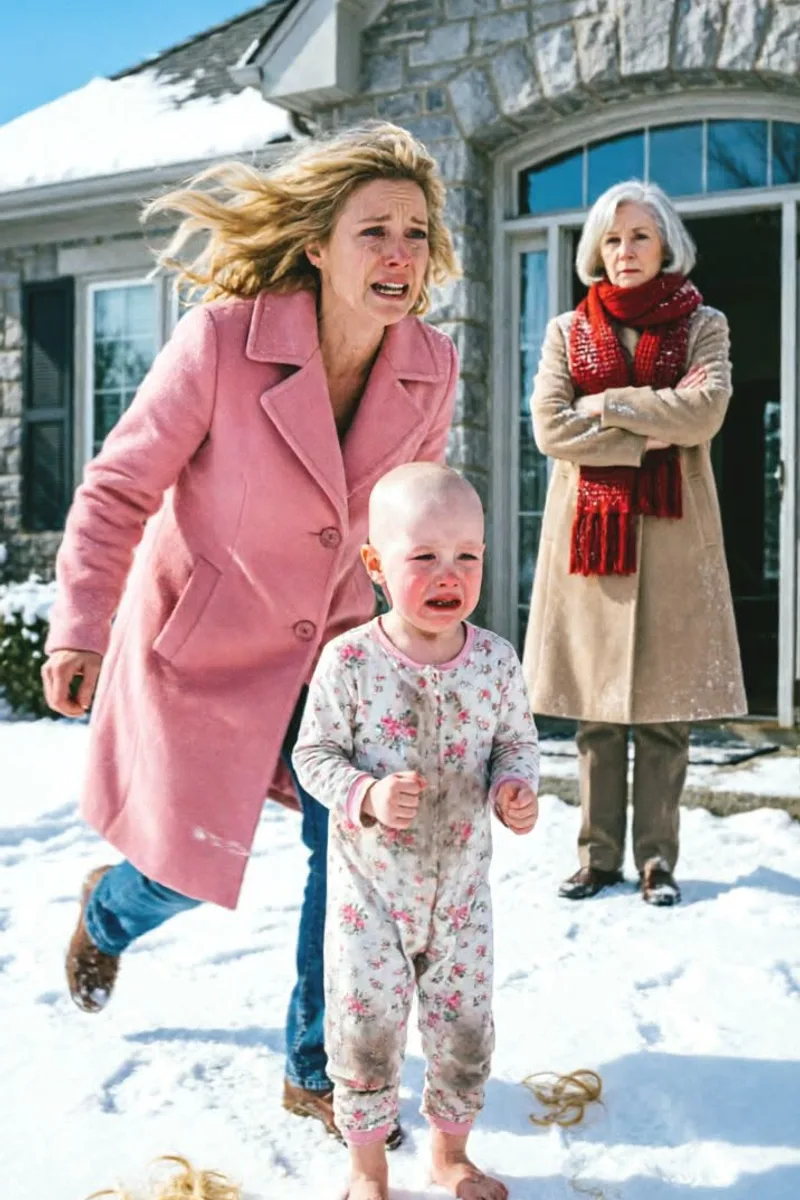
 When My In-Laws Shaved My Three-Year-Old Daughter's Head and Demanded an Apology, a Forgotten Camera Revealed the Truth
Chapter 8
What the Court Did Not Decide
The courthouse waiting area was warmer than I'd expected and crowded with people carrying folders much like mine. Rachel met me near a row of metal chairs and explained the order in which matters would be addressed. Mitchell arrived with his attorney. He nodded but didn't approach.
Raymond and Beatrice came later, and I felt my shoulders tighten when I saw them. Rachel noticed and suggested we sit farther down the corridor. I took the offered seat. I wasn't trying to prove I could look Raymond in the face without fear. I was trying to participate in a process that would protect Daisy.
The hearing focused on immediate arrangements and reported concerns, not an attempt to settle every family relationship in one morning. Documents were reviewed, questions were asked, and the adults were given an opportunity to respond through the proper channels. The court did not declare that one video file had solved the entire case.
It did recognize the need for a cautious plan while the relevant matters were addressed. Temporary contact conditions and boundaries were discussed and recorded according to the applicable process. Rachel made sure I understood what had been decided and what remained open.
Beatrice insisted she had been teaching Daisy a lesson about taking things that didn't belong to her. Her attorney presented that as a disputed family account rather than a proven justification. The room was quiet as the details of the shaved hair and cold balcony were described. Raymond said the slap had happened in a moment of anger.
Neither statement changed the fact that Daisy was three years old and frightened. I listened without interrupting. I wanted to argue with every excuse, but Rachel had told me there would be time to respond to questions through the process. I kept my attention on what the record actually showed.
The investigator's materials about the bracelet were introduced in the appropriate manner. They included the camera footage and later financial records connected to Brenda. I could not see Brenda's face from where I sat, but I heard her chair move when the records were mentioned.
Her explanation that she'd kept the jewelry safe had become harder to reconcile with what happened after she left the apartment. Questions about her conduct were being addressed separately. I felt no satisfaction in watching her struggle. The point had never been to punish Brenda in order to make the harm to Daisy understandable. The harm had been wrong before anybody found the bracelet.
Afterward Mitchell asked to speak with me in the corridor. Rachel stood nearby. He said he was sorry he'd sent the text demanding an apology. He'd heard Beatrice describe the haircut as discipline and had accepted the story because it spared him a fight.
Now he understood that he had abandoned Daisy when she needed him to ask whether she was safe. I told him the apology mattered, but it couldn't be the end. He had to protect her when his parents were disappointed in him, not only when professionals were watching. He nodded and said he knew.
The outcome left practical work ahead. Rachel explained the next steps for reviewing the temporary arrangement and the information we should provide as circumstances changed. I asked her to put the key dates in writing. At home I would need to explain to Daisy what tomorrow looked like without burdening her with legal language. I had learned that adults could spend hours debating categories and still leave a child waiting for dinner. The process mattered, but so did the ordinary life it was meant to protect.
I stopped at a shop for chocolate bears before returning home. Daisy ran toward me in the hallway, then stopped to ask whether I'd remembered. I held up the blue wrapper, and she laughed. Mom said they'd spent the morning drawing animals and had eaten lunch without trouble. I wanted to tell her every detail of the hearing, but I waited until Daisy was playing in the next room. Then I described what had been decided and what wasn't yet settled. Mom listened without asking me to call the outcome a victory.
The following week Brenda's attorney informed the appropriate parties that she would cooperate in resolving the bracelet matter. The investigation continued through its own channels, including questions about the short-term loan and the account she'd given Beatrice. I didn't receive a complete confession wrapped in a dramatic speech. I received a notice that the evidence was being addressed and that statements would be verified. I thought about the clip I'd watched in the Omaha hotel. That recording had started the truth moving. It had not finished the work of protecting Daisy.
Mitchell's visits continued under the conditions that had been established. He began arriving on time with books Daisy had chosen and asking what she wanted to do instead of setting the agenda. Once he forgot a toy he'd promised to bring. She looked disappointed, and he apologized without blaming his schedule. The supervisor watched him ask whether he could bring it next time. Daisy said yes. It was a small repair after an ordinary mistake. I wanted her to see adults make those repairs without anger or humiliation.
The clinician encouraged me to begin talking with Daisy about consent in age-appropriate ways: she could tell people when she didn't want a hug, ask questions before a haircut, and come to a safe adult if she felt frightened. I practiced the language at home during play. Sometimes Daisy treated the lessons like a game.
Other times she grew serious and asked whether I would always believe her. I told her I would always listen, take her seriously, and work to keep her safe. I tried not to promise a world where nothing bad would ever happen. I could promise what I would do when she needed help.
By evening, our living room smelled of tomato soup and the little plant Bean had put out a new leaf. Daisy insisted we measure it with a ruler. She announced it had grown "a hundred inches" and laughed at my doubtful expression. I let her draw a mark on a paper chart and write the first letter of her name beside it.
When she went to bed, I set the chart near the window. The court had addressed important questions that morning. At home, the evidence of recovery was less formal and easier to miss. A child was making plans for tomorrow without checking whether an adult would punish her for being wrong.
The End









