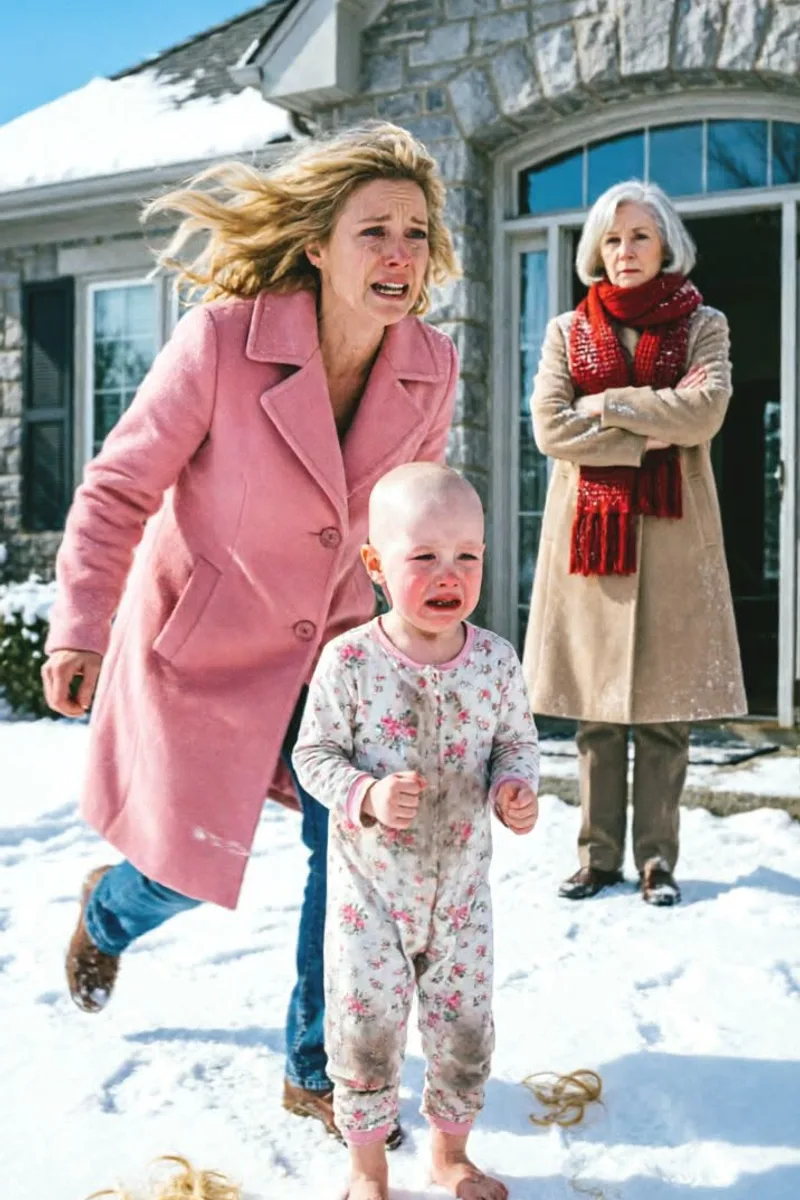
 When My In-Laws Shaved My Three-Year-Old Daughter's Head and Demanded an Apology, a Forgotten Camera Revealed the Truth
Chapter 2
What the Camera Could Prove
Rachel called after reviewing the preserved clip. She had watched it without sound, then again with the faint household audio, and she asked me whether the device had been recording continuously or only when it detected movement. I checked the app settings. It saved motion-triggered segments, so gaps between files could not be treated as proof that nothing happened.
She approved of my keeping the original files and asked me to preserve the device information and any cloud retention details. "We need to be precise," she said. "The video shows Brenda with the bracelet. It doesn't show every moment before or afterward."
I appreciated the warning even though I wanted certainty. I had been driving toward Nebraska with a frightened child and a face that hurt each time I swallowed. Finding the clip had felt like the universe correcting something unbearable. But Rachel was right. If I overclaimed what the camera showed, Beatrice could use the exaggeration to dismiss the rest. The record was strong enough without my pretending it contained a scene it had not captured. I wrote down exactly where the camera sat behind the books and which part of the living room it could see.
We arranged to return to Minnesota with safe lodging and support rather than going back to Beatrice's apartment. My friend Tessa lived outside Minneapolis and offered her guest room, provided I didn't share her address with people likely to show up uninvited.
Tessa had been my colleague before she changed jobs and knew Daisy from visits when she was a baby. She said I didn't need to explain everything over the phone. She would make up the bed, leave space for Daisy's rabbit, and meet us when we arrived. Hearing somebody offer practical help without demanding a full account made my throat tighten.
During the drive north I stopped whenever Daisy needed to stretch or eat. She slept for long stretches under a soft hat I had bought at the hospital pharmacy. In the rearview mirror I could see her touching its edge as if afraid it might slide off. At a rest stop she asked whether she'd been bad.
I pulled into a parking space before answering, because I wanted her to see my face. "No," I said. "A grown-up made a bad choice. That is not your fault." She studied me, then asked whether the chocolate bears were also hers. I said yes, and she ate one slowly while looking at the snowy fields.
Rachel had contacted the relevant authorities about the assault and the treatment of Daisy. I cooperated with the reporting process, supplying the timeline, photographs, medical paperwork, and the file showing Brenda with the bracelet. The person taking the report did not tell me what conclusions an investigation would reach. I didn't ask them to promise an arrest. I asked what safety measures were available and how to preserve communication. There were questions about where we had lived, whether Mitchell had been present, and whether anyone else had witnessed the shaving. I answered only what I knew.
At Tessa's house, Daisy walked straight to the guest room and asked whether the door could close. I said it could. Tessa had put a small lamp beside the bed and left a picture book about animals getting ready for winter. Daisy climbed under the blanket with her rabbit and asked me to read it twice.
When I finished, she wanted to know whether Grandma could come in. I told her no one could come into that room without permission. I sat in the hall for several minutes after she fell asleep, watching the soft strip of light beneath her door.
The next day Rachel met us at a family-services office to explain possible immediate arrangements and what a court would need to decide if Mitchell disputed them. She reminded me that allegations, even well documented, did not allow us to invent permanent legal outcomes. We reviewed how Daisy had been cared for before my trip.
Mitchell had often worked away from home; his parents watched her when I traveled. I told Rachel about comments Beatrice had made about my job and my background, things I'd dismissed as unkind but not physically dangerous. Rachel asked me to separate those incidents from the recent assault rather than blending them into one vague accusation.
Mitchell finally contacted Rachel after she sent a formal request for communication through counsel. His message said he wanted to see Daisy and that I was overreacting to "a haircut and a family disagreement." Rachel showed it to me and waited. I felt furious enough to call him directly, but I asked her to respond that Daisy's welfare and the reported events had to be addressed before any unsupervised contact with the people involved. She said he could receive appropriate medical information through the agreed channel. It was a boundary, not an attempt to erase him from his daughter's life.
When I told Daisy we might speak to people whose job was helping children feel safe, she asked whether they would cut her hair. The question nearly broke me. I explained that no one should touch her without explaining what they were doing, and that I would stay with her or tell her who would be there.
She nodded but kept one hand on her hat. At dinner she pushed peas into the shape of a circle and asked Tessa why snow was white. I was grateful for the ordinary question. Children could carry fear and curiosity in the same hour.
Rachel called again with a new detail. Brenda had told Mitchell she had handled the bracelet because Beatrice asked her to put it away. Beatrice still insisted Daisy had taken it first. The stories were compatible only if someone could explain where the bracelet had been found, when, and why Brenda hid it in her handbag.
The clip showed her closing the pouch and looking toward the hallway before moving the bag behind her chair. Rachel asked us to wait for official interviews rather than trying to corner the family ourselves. I agreed. I wanted the evidence examined where it couldn't be shouted down.
That evening I opened the saved video once more. I saw Brenda's hand, the gold clasp, the careful movement of the bag. I didn't feel triumph. Daisy had lost her hair, and I had lost the belief that my husband would automatically stand beside us when his family crossed a line. If the bracelet were returned tomorrow, it would not make the balcony warm or undo the slap. The recording could help establish what happened. Healing would require choices no camera could make for any of us.
The End









