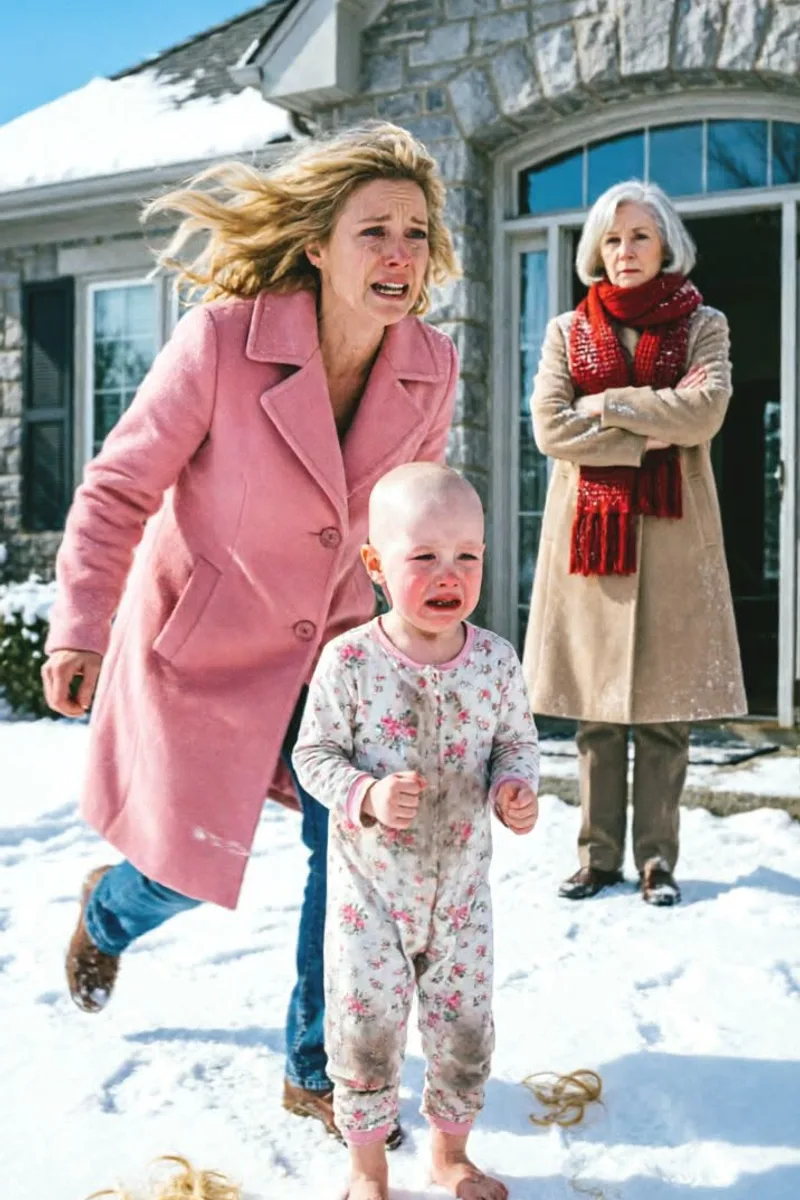
 When My In-Laws Shaved My Three-Year-Old Daughter's Head and Demanded an Apology, a Forgotten Camera Revealed the Truth
Chapter 6
The Next Morning's Answer
The morning after the visit, Daisy placed a blue sticker on her calendar and asked whether Daddy would come the next day too. I told her we had another date planned, but not tomorrow, and showed her where it appeared on the page. She seemed satisfied.
I made oatmeal while she arranged three toy animals in a row by her plate. I hadn't expected the first question after the visit to be about the schedule. Then I realized how many times she'd been surprised by adults doing things without explaining them. Knowing what to expect was part of feeling safe.
Mitchell sent an update through our agreed channel. He had attended his next parenting session and wanted to know whether Daisy had been upset after seeing him. I answered with the factual information I was comfortable sharing: she had eaten dinner, slept reasonably, and asked about the next planned visit. He thanked me. There was no demand for a photograph, no attempt to turn the question into a negotiation about returning to our old home. I noted that as progress without needing to tell him I'd graded it.
A report from the investigation arrived for review through the appropriate channels. It described the available evidence related to the bracelet and the accounts given by family members, including inconsistencies in Brenda's explanation. It also addressed concerns about Daisy's treatment and my report of Raymond's assault.
Not every issue was resolved, and Rachel explained what further steps could take place. I felt frustrated by the uncertainty until she reminded me that a truthful process did not necessarily move at the speed of my anger. My role was to provide reliable information, protect Daisy, and respond to legal requests rather than attempt the entire investigation myself.
Beatrice sent a letter through Mitchell's attorney. She said she was sorry the incident had caused so much trouble and that she wished I'd handled things privately. She did not acknowledge that shaving Daisy's head had been wrong. Raymond added a brief note saying he'd been provoked.
I read both once and put them in the legal folder. Rachel asked whether I wanted to respond. I said I had nothing to tell them that I hadn't already said the day I carried my daughter out of their apartment. Their refusal to understand did not require me to repeat the same sentence forever.
At preschool Daisy's teacher called me to discuss how she was settling back into the classroom. A few children had asked about her hair, and Daisy had become upset during dress-up time when someone offered her a pretend wig. The teacher had responded gently and wanted to coordinate with the clinician about what language might help.
I thanked her for calling before deciding what Daisy needed. We agreed that Daisy could choose whether to wear a hat, explain her haircut, or say nothing at all. No child was required to answer another child's curiosity about something painful.
That weekend I took Daisy shopping for a soft headband. She tried on a bright yellow one, then took it off and inspected herself in the mirror. Tiny stubble had begun to grow on her scalp. She touched it and grinned. "I'm fuzzy," she said. I laughed, and for a moment the word held only delight.
She chose a purple headband and wore it around her wrist instead of her head. The cashier asked whether it was a bracelet. Daisy said it was a crown for her rabbit. I paid and followed her out into the cool air, grateful for the freedom of a small choice.
Mitchell asked whether he could join a conversation with Daisy's clinician about supporting her after the incident. The clinician set guidelines and confirmed what information could be shared. During the meeting Mitchell described growing up afraid of his father's temper and said he had sometimes mistaken silence for peace.
He looked at me as though expecting a response. I told him the history mattered, but it didn't alter what Daisy deserved. He nodded and asked the clinician what behavior would help: predictable contact, respect for her pace, and no pressure to show affection. He wrote those things down.
Afterward Mitchell asked whether we might someday attend counseling together. I said we could discuss that separately from Daisy's care, but I wasn't ready to treat his parenting progress as an argument for reconciliation. He looked disappointed, then accepted the answer. A year earlier I would have rushed to make him feel better about my refusal. That day I went to collect Daisy from preschool and didn't spend the drive rehearsing an apology I didn't owe.
My mother called from Kansas City after hearing a careful version of what had happened. She wanted to come and stay with us for a week. She had never been close to Mitchell's parents, but she worried that I was handling too much alone. I said I would love help with meals and afternoon pickups, provided she understood that Daisy could decide when she wanted company.
Mom said she'd bring ingredients for soup and would not treat our home as a place where grown-ups could issue orders. I believed her. Even so, I smiled at the thought of telling my own mother the rules. I had spent so long feeling I needed permission to set them.
A few days later Daisy asked whether Brenda had found Grandma's bracelet. I told her an adult had had it and that people were working out what had happened. She said, "So I didn't take it." I looked directly at her. "You didn't," I said. "And even if a child had picked up something by mistake, nobody would have the right to hurt them like that." She thought about this, then asked whether her rabbit could keep the purple headband forever. I agreed, though I suspected the rabbit would lose it by morning.
I wrote the conversation down after she slept because I wanted to remember how quickly she had returned to her toys. She was not a case file or a symbol of what Mitchell needed to learn. She was a child who loved chocolate bears, purple things, and making toy animals sleep in her shoes. The adults were responsible for protecting that ordinary life. The morning after the first visit had begun with a sticker. It ended with Daisy asleep under her own blanket, knowing what the next day would bring.
The End









