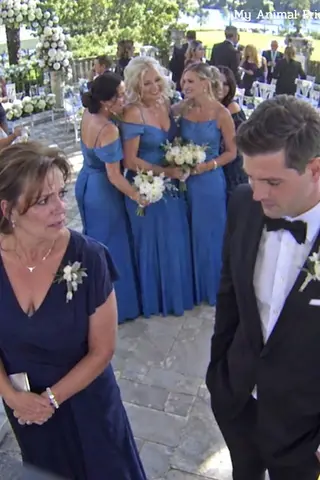
 My Son’s Bride Banned Me From Wearing Blue Because It Was "For Family Only"
Chapter 48
The Light on the River
In October, the City of Chicago celebrated the tenth anniversary of the downtown Riverfront Revitalization Initiative with a grand civic gala held inside the soaring, glass-domed Joan Mitchell Pavilion at the Riverfront Conservatory.
The event was unlike any corporate banquet that had ever taken place in the city’s history. There were no rented crystal chandeliers or exclusionary guest lists. The high glass arches were illuminated by thousands of warm, golden fairy lights, casting a radiant glow over five hundred guests: city aldermen, municipal workers, union tradespeople, university scholars, and dozens of young families from the surrounding neighborhoods.
The centerpiece of the evening was the graduation ceremony for the Joan Mitchell Engineering and Design Endowment. Over the past decade, the scholarship had funded full four-year degrees for forty-eight young men and women from single-parent, working-class households.
Every single graduate was present, seated at long banquet tables adorned with native blue hydrangeas and white prairie grass grown in Claire’s botanical nursery.
The Mayor of Chicago stepped up to the podium, adjusting his microphone as the immense crowd fell into an expectant, reverent silence.
"Ten years ago," the Mayor began, his voice echoing through the lush, verdant atrium, "this city was presented with two visions of the future. One vision was built on corporate shortcuts, speculative greed, and the exclusion of ordinary working people. The other vision was built on bedrock integrity, uncompromising craftsmanship, and an unshakeable belief that the people who build this city deserve to be honored within its halls."
He turned toward our front-row table, gesturing for me to rise.
"Tonight, it is my privilege to present the City of Chicago’s highest civic recognition—the Medal of Urban Honor—to the matriarch whose sacrifices inspired this sanctuary, Mrs. Joan Mitchell."
The entire pavilion erupted into a standing ovation that shook the glass walls. Five hundred people rose to their feet, cheering, whistling, and clapping with an emotional intensity that brought a flood of burning tears to my eyes.
Grant stood beside me, tall, broad, and unshakeable in his charcoal suit, his arm firmly supporting mine as he guided me up the steps to the stage. Elena was there, holding little Samuel in her arms, while seven-year-old Clara proudly carried the heavy bronze medal upon a velvet cushion.
When I stepped up to the microphone, looking out over the sea of faces, I did not see strangers. I saw my younger self in the eyes of the hospital orderlies, the bus drivers, and the clinic cleaners sitting in the audience.
"Fifty years ago," I said, my voice steady, clear, and resonant, carrying the wisdom of a long, faithful life, "I wore an apron that smelled of bleach and floor wax. I spent decades wondering if the world would ever see the value of a woman who cleans up other people’s messes in the dark."
The room was so quiet you could hear the soft rustle of the palm fronds in the greenhouse breeze.
"I learned that dignity is not something other people can give you," I continued, looking straight at the young scholarship graduates in their graduation blazers. "And it is certainly not something they can take away with a seating chart or the color of a dress. Dignity is the quiet choice to wake up every morning, tell the truth, do your work with all your heart, and refuse to let cruelty make you bitter. Never apologize for having calloused hands. Those hands are the ones that hold up the world."
The roar of applause that followed swept through the conservatory like a great wind, lifting my spirit into a place of complete, eternal peace.
The End









