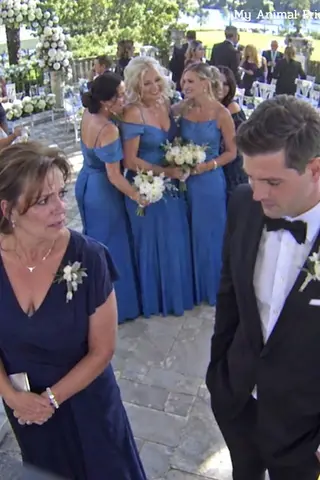
 My Son’s Bride Banned Me From Wearing Blue Because It Was "For Family Only"
Chapter 36
The Riverfront Conservatory
Spring returned to Chicago with an explosion of vibrant life, melting the ice along the river and filling the air with the smell of moist earth and warming asphalt.
With the municipal bascule bridge fully operational and praised as an urban masterpiece, the City of Chicago commissioned Sterling Civil Engineering, in exclusive architectural partnership with Elena and Claire’s firm, to undertake their most ambitious public project yet: the Southside Riverfront Public Conservatory and Botanical Gardens.
Unlike the elite country clubs that barricaded their manicured greens behind high wrought-iron gates and six-figure membership fees, this conservatory was designed specifically as an open, free civic sanctuary. Located in a historic, formerly neglected industrial neighborhood along the southern branch of the river, it was envisioned as a multi-acre greenhouse sanctuary filled with native Midwestern flora, quiet walking paths, reading atriums, and botanical education centers for public school children.
The groundbreaking on a sunny Tuesday in April was a celebration of community solidarity. Hundreds of neighborhood residents, school groups, and civic leaders gathered on the graded soil where old coal silos once stood.
Elena stood at the planning easel, her hair catching the golden sunlight, holding three-month-old Samuel in a soft linen carrier against her chest. She pointed to the architectural renderings with her laser pointer, her voice captivating the crowd.
"Architecture is a moral statement," Elena said, her eyes sweeping over the diverse crowd of families and workers. "When you build grand palaces behind guarded walls, you tell the public that beauty belongs only to the wealthy. But when you build a glass cathedral filled with sunlight and free flowers in the middle of a working-class neighborhood, you tell every child who walks through these doors that their dignity is sacred. This conservatory belongs to the people who keep this city alive."
Beside her, Claire beamed with pride as she unveiled the landscape biodiversity schematics. The botanical gardens would be tended in part by students enrolled in our scholarship endowment program, providing paid apprenticeships for young adults looking to break into commercial horticulture and ecological engineering.
When Grant stepped up to explain the structural steel trusses—graceful, sweeping iron arches designed to mimic the branching canopy of ancient oak trees—he paused, his eyes finding me in the second row, holding four-year-old Clara on my lap.
"We named the central botanical atrium the Joan Mitchell Pavilion," Grant announced, a warm, booming resonance filling his voice. "Because true growth requires a shelter that refuses to buckle under storms. My mother gave me that shelter, and today, we give it back to the city."
The applause that followed was not the polite, sterile clapping of high-society ballrooms. It was the thunderous, heartfelt roar of working men and women who recognized one of their own being honored in the light of day.
The End









