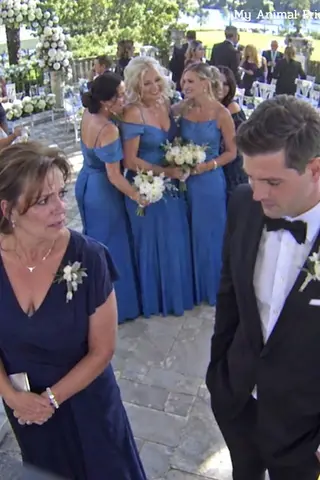
 My Son’s Bride Banned Me From Wearing Blue Because It Was "For Family Only"
Chapter 12
The Desperate Petition
Past shadows rarely disappear overnight; they linger along the edges of daylight like stubborn frost waiting for a draft of cold air. It was a bleak Tuesday in late November when the envelope arrived at Grant’s office via certified courier. It was addressed in a trembling, uneven script that bore little resemblance to the sharp, arrogant calligraphy that once adorned Robert Mitchell’s corporate letterhead.
Grant brought the letter to my house that evening. He didn't open it immediately. He set it on the worn kitchen table, right beside the ceramic sugar bowl, and stared at it while the kettle hummed on the burner. When he finally slit the envelope with a pocketknife, he read the contents aloud in a flat, neutral voice that masked whatever old aches still lived in his chest.
Robert’s letter was not an apology. It was a desperate, unvarnished confession of ruin. Following the out-of-court settlement and the public exposure of his corporate embezzlement, his firm had been completely dismantled by creditors. The grand Lake Forest estate had been sold at auction for pennies on the dollar, the country club had expunged his name from their historical rosters, and Patricia had filed for divorce the moment his remaining liquid assets were frozen by the federal bankruptcy court.
Even more devastating was Robert’s admission regarding Vanessa. According to the letter, Vanessa had stayed with her father in their cramped rental for less than three months before turning on him with the same venom she had once directed at Grant. She had blamed Robert entirely for her downfall, accusing him of failing to provide the limitless fortune she felt entitled to, before cleaning out what little cash remained in his private checking account and disappearing to the West Coast with an older, disgraced venture capitalist. Robert was now living alone in a subsidized senior apartment complex, his health failing from advanced cardiac disease, unable to afford his medication or his mounting legal bills.
"He wants to meet," Grant said quietly, looking up from the paper. "He says he is dying, Mom. He says he wants to look me in the eye and make peace before it’s too late."
I watched my son’s face closely. I remembered the boy who carried worms off the rain-slicked asphalt so they wouldn't die. That boy still lived inside him, but he was no longer an unprotected child.
"What does your gut tell you, Grant?" I asked softly, setting a mug of chamomile tea before him.
Grant picked up the letter, folded it carefully along its original creases, and placed it back into the envelope. "My gut tells me that Robert is still looking for a structural savior. He spent three years treating me like an inferior, and now that his roof has collapsed, he wants me to rebuild it for free. Forgiveness is something I can give him in my prayers, Mom. But reconciliation requires trust, and trust is a bridge that cannot be built on rotted wood."
He did not call. He did not arrange a meeting. Instead, he instructed Thomas Bradley to send an anonymous cashier’s check covering three months of Robert’s prescription medication directly to the medical facility, accompanied by a single, typed sentence: May you find the peace you never allowed others to have.
The End









