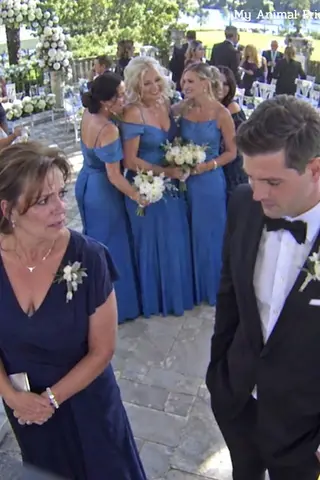
 My Son’s Bride Banned Me From Wearing Blue Because It Was "For Family Only"
Chapter 11
Foundations and Footings
The scent of fresh cedar sawdust and cool lake air became the backdrop of that first autumn after the wedding. While the legal aftermath had settled into the quiet ledgers of Thomas Bradley’s office, the real construction of my son’s life was only just beginning. Grant didn't simply return to his engineering desk; he threw himself into his work with an infectious, unburdened passion that had been stifled for years under Vanessa’s suffocating demands.
His firm, Sterling Civil Engineering, had rewarded his loyalty and brilliance by naming him the lead structural designer for the historic Chicago Riverfront revitalization project. It was a massive civic undertaking—restoring century-old iron bridges, reinforcing decaying retaining walls, and transforming neglected industrial docks into vibrant public boardwalks where everyday families could walk their dogs and push strollers. Grant spent his weekdays in steel-toed boots and a high-visibility vest, calculating stress loads and load-bearing concrete formulas. But on weekends, his drafting table at home was covered in entirely different blueprints.
He and Elena had purchased a gently sloping, two-acre plot of land just outside the city limits, bordered by a whispering grove of white birch trees and looking out over the endless blue expanse of Lake Michigan. Elena, whose architectural firm was expanding alongside Claire’s burgeoning landscape design studio, had taken the lead on drafting the concept. Watching the two of them bent over the wide drafting table in Grant’s loft was like watching two musicians composing a symphony without ever needing to speak aloud.
There was no talk of status symbols. There was no demand for six-car carriage houses or faux-marble columns designed to impress people they secretly despised. Elena designed with sunlight, reclaimed timber, and honest stone. She sketched wide windows that faced the morning horizon, an open kitchen centered around an expansive wooden island where bread could be kneaded and conversations could breathe, and wide wraparound porches that smelled of cedar oil and summer rain.
"Look at this, Mom," Grant said one Sunday afternoon, motioning me toward the table with an ink-stained hand. He pointed to the structural cross-section of the foundation. "Elena insisted on double-reinforcing the bedrock pilings. She said that a home has to withstand a century of storms before anyone worries about what color to paint the front door."
I looked at the drawing, then at Elena, who was smiling softly from the stove where she was boiling cinnamon sticks and apple cider. For thirty years, I had watched people build their lives like cheap theatrical sets—flimsy facades held up by two-by-fours and borrowed money, ready to collapse the moment a strong wind blew through. Seeing my son anchor his future into solid, immovable rock brought a lump to my throat that took several swallows to clear.
The End









