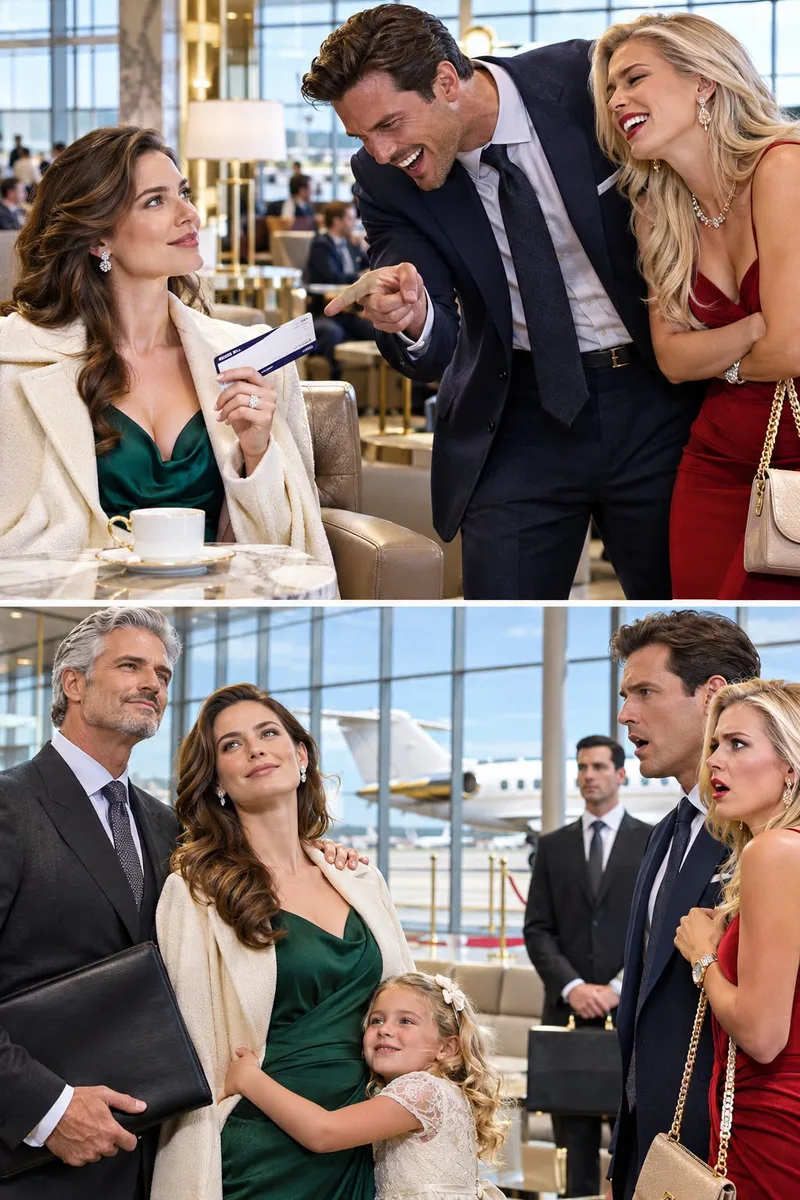
 Five Years After My Ex-Husband Left Me Broke, He Mocked My Airport Ticket
Chapter 7
The Work Below the Wing
I visited Caldwell's New Jersey maintenance facility on a windy Thursday in October, three weeks after the mediation agreement was executed. The visit had been scheduled by Aster's supplier team during a routine review and documented through Caldwell's operational office. I went with Mara and a quality inspector, not as Alexander's wife and not as Richard's former one.
Naomi met us at the gate wearing steel-toed boots and a yellow safety vest. She had been awake since four because a parts shipment was late. "Welcome to the part of aviation nobody photographs," she said, and handed me a visitor badge.
The hangar was immense, full of practical sounds: compressed air, metal tools set carefully on a bench, a radio asking for an updated inspection status. Naomi introduced an apprentice named Luis, who was studying electrical systems after finishing a late shift at community college. He showed us a checklist he had helped improve. The changes were small and sensible, clarifying which supervisor had to sign when a part was replaced during overnight service. I asked how the idea came about. "We kept getting the same question," he said. "It was wasting ten minutes on every shift."
I wanted to tell him about my mother, who believed the people doing a task usually knew something a manager didn't. Instead I asked Naomi whether her team had adopted the checklist across shifts. She said they had, though approvals for new equipment were slow.
The quality inspector took notes, and Mara asked for updated training records. We were conducting an actual supplier review; the process deserved the same attention we gave every other facility. It would have been easier to look around and see a symbol of Richard's arrogance. The people in front of me had their own stories.
During a break Naomi took us into a small room where the vending machine had been unplugged for repairs. "Employees think the sale will wipe out our night shift," she said. "Management insists nothing is decided." I asked what had been formally communicated.
She showed me a notice about the extended due diligence period, careful enough to reveal almost nothing. I couldn't promise an outcome. I could say that our contract extension was under review and that Luis's training records were excellent. Naomi thanked me, then shrugged. "Most people just want to know whether they'll be able to pay for next winter's heating."
On the drive back Mara suggested adding an apprenticeship incentive to our vendor scorecards. We had discussed a similar proposal before the Caldwell acquisition became public. I asked her to draft criteria that any supplier could meet: documented training hours, safe supervision, and evidence that trainees advanced to skilled roles. "No preference based on ownership or personal history," I said. She nodded. "That's what I wanted to hear." My company could make choices within its own contracts. It could not write a private ending for every stranger who worked near an aircraft.
Richard called that evening, but this time he left a message through Delia. His attorney confirmed that the first settlement payment had been initiated. Separately, Richard wanted to apologize for the airport scene. Delia asked whether I wanted to receive a written statement. I said yes, provided it contained no request about the acquisition.
The letter arrived the next day. It was brief. He said mocking my ticket had been cruel, that he had treated my ambitions as unserious, and that he now recognized the disrespect had begun long before our divorce. He did not ask to meet. I read it twice before setting it down.
A letter could be sincere and still insufficient. I had spent years hoping Richard would say precisely those things, and when he finally did, I felt no rush to forgive him. What I felt was sadness for the younger woman who would have built her entire week around receiving such a note.
I put it in a folder separate from the bank documents. His acknowledgment was part of my history; it did not belong beside evidence of payment. I told Delia I would not respond. She said silence was an option, not an obligation, and I appreciated the distinction.
At home Lily had invited three stuffed animals to a pretend aviation conference. Their name tags read RABBIT, BEAR, and OTHER BEAR. She asked whether I could give a speech. I stood in front of the kitchen counter and announced that all passengers deserved a safe trip and a decent snack.
Lily applauded with enough enthusiasm to frighten the dog. Alexander appeared from the hallway and demanded to know whether the conference offered continuing education credit. I laughed until I had to sit down. It was an ordinary, absurd evening and a much better measure of what I had gained than the expression on Richard's face at JFK.
Two days later Priya told me the settlement payment had cleared into the designated personal account under Delia's supervision. I did not transfer it to Aster or mix it with corporate cash. Instead I met with a nonprofit adviser about establishing a scholarship through an existing aviation training foundation. The adviser explained the costs, reporting requirements, and the importance of independent selection criteria. I liked that part best. A young person's future should not depend on whether someone knew my name or could flatter my family.
We visited the foundation's training center the next week. A group of students was practicing equipment inspections under an instructor who made them explain every step aloud. I recognized their concentration. It was the same expression I'd worn during the first year of Aster, when every successful shipment felt like a small miracle.
One student asked how I'd become the owner of a logistics firm. I told her about consulting from a rented room and making mistakes that cost me sleep. I did not tell her about Richard. He was not the central explanation for what I had built.
That afternoon, on the way back to the office, Mara received notice that our Caldwell contract renewal was ready for signature. The terms reflected updated service standards, payment timelines, and the new apprenticeship criteria applied across our supplier network. I read them carefully and asked two questions about spare-parts coverage. When the answers arrived, I signed. It was a commercial decision supported by the work at the facility. If the acquisition succeeded or failed, our contract would still have to be judged on performance.
After dinner Alexander told me that he had received a general governance update. The independent committee was considering several outcomes for Caldwell, including revised terms or walking away. He offered no privileged detail. "Whatever they decide," I said, "I hope someone remembers the people in those hangars."
He looked at me. "You met them." I nodded. I had wanted justice to arrive as a dramatic reversal, a moment when Richard could no longer laugh. Instead I was learning to value a slower result: policies that worked, records that endured, and people whose names were not written on the largest checks.
The End









