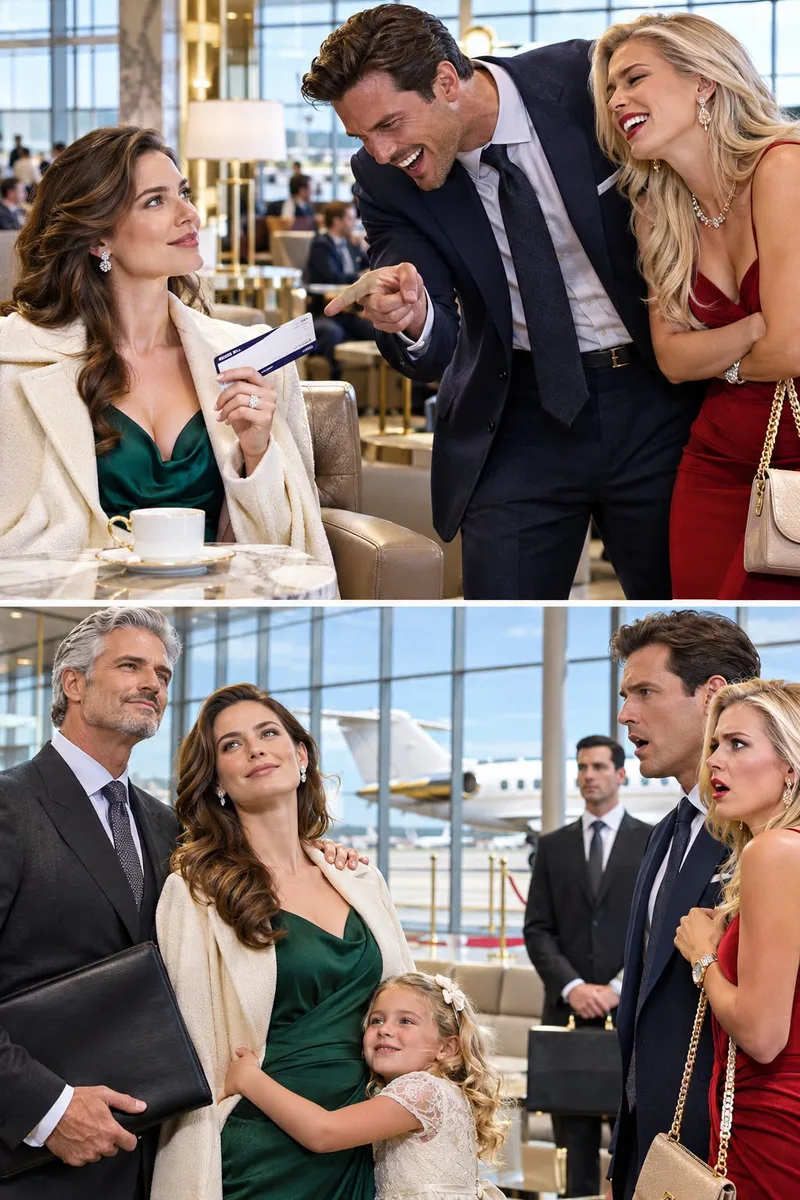
 Five Years After My Ex-Husband Left Me Broke, He Mocked My Airport Ticket
Chapter 10
A Place to Land
By the following spring, the acquisition had closed under the revised structure. The public announcement credited months of review and listed the facilities being transferred; Sterling Capital's independent committee had completed its work, and Alexander's recusal remained part of the governance record.
Caldwell Aviation continued to operate the divisions outside the purchase under its own management. Richard was still in business, though not in the form he'd predicted to me in the airport lounge. I had not spoken to him since mediation. The world had not required us to perform a final confrontation for the transaction to end.
At Aster we were preparing for another difficult season. Fuel prices had risen, a longstanding client had changed its distribution network, and we needed to decide whether to hire two more coordinators. Priya was cautious about cash flow. Mara wanted the staffing flexibility.
I asked them both to show their assumptions and listened until the disagreement became a usable plan. We approved one position immediately and set a threshold for the second. I went home content with an imperfect decision made carefully. It was the kind of ordinary responsibility Richard had once treated as evidence that I lacked vision.
The Ruth Bennett Aviation Skills Fund announced its first recipients at a training center, not a hotel ballroom. Five students received modest awards for fees, equipment, and required examinations. I had been invited to give a short address. I brought a photograph of my mother standing outside the public library where she worked. In the picture she wore a practical coat and smiled as though the photographer had interrupted something more interesting. I placed it near the podium. The image meant more to me than any portrait of a successful executive.
I told the students that my mother had believed skill deserved a fair chance. I spoke about the people who kept aviation moving safely: mechanics, dispatchers, ground crews, planners, and drivers who rarely appeared in glossy magazines. I did not describe my divorce or the dispute over her estate. Those stories did not belong to this room. "Whatever direction you choose," I said, "ask questions when something doesn't make sense. And give the people working beside you the same chance." My voice caught on the last sentence. I finished anyway.
Afterward a student named Alicia approached with her award folder pressed against her chest. She had been working nights while attending a technical program and was worried about the cost of a required examination. The scholarship would cover it. "I thought I'd have to postpone," she said.
I congratulated her and asked what work she hoped to do. Her answer was precise, full of systems I'd had to learn about years earlier. I listened. The point of the fund was not to make me feel generous. It was to let people like Alicia spend more time developing a skill they already cared about.
Naomi attended the ceremony with Luis, whose training record helped him earn a place in an advanced program. He was not a scholarship recipient; he came to encourage the others and speak about the value of apprenticeships. When he saw me, he shook my hand and thanked Aster for renewing the service contract. "Your crew earned that contract," I told him. "Keep asking questions."
He grinned. Naomi said he'd become so confident about his checklists that she was considering putting him in charge of making the next generation of them. We laughed, and then she asked about the summer schedule. Work, as ever, was waiting.
Alexander brought Lily near the end of the event. She wore a yellow dress and had carefully taped a paper airplane to the cover of a notebook she'd made for me. "It's for keeping plans," she explained. She asked to see the photograph of Grandma Ruth, whom she knew only through stories.
I knelt beside her and pointed out the library behind my mother's shoulder. "She helped people find books," I said. Lily considered this and asked whether the students could borrow airplanes the way people borrowed books. I told her planes were more complicated, and promised to explain on the drive home.
Later that afternoon, Delia emailed a final administrative note. The settlement documents were archived, the relevant obligations had been fulfilled, and she would close the matter unless I needed anything further. I read the message in my car before starting the engine.
Five years earlier, leaving Richard had felt like stepping off a ledge with too little money and no reliable map. Now a lawyer could close a file, and I could accept that closure without needing anyone to declare me the winner. The truth we could document was enough for the decisions we had to make.
Richard's words from JFK occasionally returned to me. First class? Who paid? I no longer rehearsed the clever answer I might have given. If I encountered him again, I hoped I would remain polite and continue on my way. That would not mean the humiliation had never happened. It would mean the memory no longer had authority over my afternoon. He had believed my worth could be measured by what I couldn't afford. I had spent years learning that the more important questions concerned what I chose to build, protect, and share.
At home Lily wanted to help prepare dinner, and Alexander gave her the task of washing strawberries. She insisted each berry needed its own inspection. I dried plates while she worked and listened to Alexander read a message from the pilot about next week's schedule.
We had a commercial flight booked for a family visit because its timetable was more convenient. Lily announced she preferred the private aircraft for its snacks. "You can bring snacks on this one," Alexander told her. She demanded a formal guarantee, and he wrote one on a sticky note.
I laughed and remembered the boarding pass Richard had picked up without asking, the object he'd used to decide what kind of life I led. It was only a ticket. A seat on a plane had never made me worth more or less. I thought of my first office, the hospital shipment, the people in Naomi's hangar, and the scholarship students taking their next examinations. All of those things had required work rather than permission. My mother's compass sat on the kitchen shelf, near Lily's paper planes, where everyone could touch it.
That night I carried Lily upstairs after she fell asleep halfway through a story. She was getting heavy, and I knew soon she would insist on climbing the stairs herself. I paused at her doorway and looked at the small shoes beside the bed, the rabbit under her arm, and the drawings taped crookedly to the wall. Alexander joined me and rested a hand at my back. "You seem happy," he whispered. "I am," I said. The answer was not a victory speech. It was a fact I could live inside.
I had left my first marriage with two suitcases and forty-three thousand dollars, convinced I had somehow failed to become the person Richard wanted. The second life I built was not a prize awarded for surviving him. It was mine because I had chosen its work, its people, and its ordinary obligations. I turned out Lily's light and closed the door gently. Tomorrow there would be invoices to review and breakfast to make, and I would be glad to be there for both.
The End









