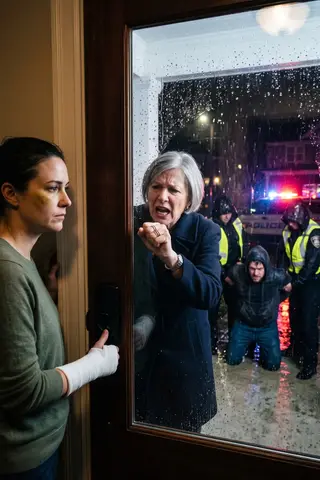
 My SIL Slapped Me at Dinner to "Teach Me the Rules"
Chapter 11
Whispers in the Marsh
The Lowcountry winter had arrived not with snow, but with a sharp, salt-rimmed chill that swept across the pluff mud and stripped the bald cypresses down to their silver skeletons. Inside the newly minted headquarters of the State Oversight Bureau for Coastal Land Protection on Cumberland Street, the heaters hummed quietly against the historic brick walls.
My desk was no longer the cramped cubicle on Broad Street. It was an expansive oak drafting table overlooking the slate rooftops of the French Quarter. As Division Chief, my authority was absolute when it came to coastal conservancy tax credits, and for six months, the peace had held. The Mercer conviction had sent shockwaves through South Carolina’s real estate circles; developers who once treated zoning boards like private dining clubs were suddenly filing meticulously documented paperwork down to the penny.
Then, on a frigid Tuesday morning in mid-January, an expedited petition crossed my desk: Docket 88-Kilo.
It was an application for a "Minor Boundary Rectification and Infrastructure Variance" along the Bohicket tidal perimeter. The applicant was listed as Apex Atlantic Logistics LLC, a newly registered entity based out of Wilmington, Delaware. They were seeking to decertify a ten-acre sliver of the maritime forest that bordered the Truth Keepers’ Trail—the very land returned to the descendants of Evelyn Pinckney.
I pulled up the accompanying land survey. On paper, the request appeared innocuous: a drainage culvert and an access road to mitigate flood risks for neighboring parcels. But when I zoomed in on the survey’s engineering coordinates, cold adrenaline surged into my bloodstream.
The proposed access corridor did not skirt the wetlands. It drove directly through an ancient freshwater spring that fed the entire tidal basin. If that spring was paved over, fifty acres of downstream marsh would dry into cracked dirt within eighteen months, legally nullifying its status as an active wetland and allowing Apex Atlantic to claim the surrounding acreage for commercial development.
Worse still was the signature at the bottom of the environmental assessment. It belonged to an engineering consultant named Garrison & Associates.
Ten minutes of forensic cross-referencing on my dual monitors revealed the truth. Garrison & Associates had shared a registered office address in Columbia with Robert Mercer’s primary tax shelter firm until three weeks before Robert’s arrest.
My phone rang. It was Julian.
"Claire," his voice came through the line, tight with an edge I hadn't heard since the night I first showed up at his Wadmalaw barn. "You need to come out here. Now."
"What happened?"
"I was out running timber lines along the eastern boundary of the preserve this morning," Julian said, the wind whistling into his microphone. "Someone drove heavy metal survey stakes into the soil fifty feet inside the Pinckney parcel. When Miss Evelyn’s nephew confronted them, two men in an unmarked truck flashed private security badges and told him the state was taking the easement back through eminent domain."
I pushed back my chair, grabbing my wool coat and my badge. "Don't touch the stakes, Julian. I'm on my way."
The Mercer dynasty had been decapitated, but the hydra’s hidden heads were already stirring in the dark.
The End









