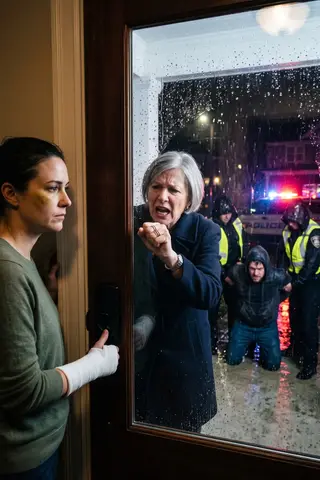
 My SIL Slapped Me at Dinner to "Teach Me the Rules"
Chapter 10
The Outsider’s Victory
One year later, the Charleston sun rose over an entirely new life.
I stood in the sun-drenched kitchen of my new home—a small, historic cottage on James Island with heart-pine floors, a wide front porch, and a lush backyard blooming with gardenias and wild jasmine. There were no white columns. There was no cold white china set for display. The wooden kitchen table had been built by hand from reclaimed cypress by Julian, bearing the rich, honest marks of genuine craft.
On the table sat my breakfast: warm buttermilk biscuits, farm-fresh eggs, and blackberry jam I had picked myself from the bushes along the marsh. Nobody slapped my hand. Nobody told me when I was allowed to eat.
At thirty-four, I had finally discovered what real peace tasted like.
My appointment as Chief of the Coastal Protection Division had transformed the South Carolina Department of Revenue into a national model for white-collar land reform. Over the past twelve months, my team had audited dozens of predatory commercial developments, recovering over forty-five million dollars in fraudulent tax credits and returning three major coastal heritage tracts to historical preservation trusts. The press had taken to calling me "The Iron Auditor of the Lowcountry," but to the local families whose ancestral lands were now safe from corporate vultures, I was simply Claire.
My phone chimed on the kitchen counter. It was an email alert from the Charleston County Probate Court, confirming the final discharge of all legal proceedings relating to the dissolution of the Mercer estate.
The Sullivan’s Island mansion had been purchased at federal auction by a coastal marine biology institute to be converted into a public research laboratory. The high iron gates that had once kept the world out were being torn down to make way for a public nature access ramp. Where Robert Mercer had once plotted corporate theft and Vanessa had sneered over heirloom silver, school children would soon gather to study tidal ecosystems and marine preservation.
The poetry of justice was exquisite.
A gentle knock sounded at the front door.
I set my coffee mug down and walked through the airy hallway, pulling open the screen door. Julian stood on the porch, wearing a clean linen shirt, his sleeves rolled up, holding a wicker basket filled with fresh peaches from the roadside market on Johns Island.
Over the past year, Julian and I had become inseparable. What had begun as an alliance forged in the fire of shared survival had blossomed into something steady, profound, and wonderfully calm. There was no drama between us, no games of status or legacy, no unspoken tests of obedience. He was a man who worked with his hands, spoke with his heart, and respected my strength as an equal partner.
"Brought you the good ones," Julian smiled, holding up the basket. "Mrs. Brown said these were picked at dawn."
"Come in," I laughed, taking the basket and stepping aside. "You're just in time for biscuits."
Julian kicked off his work boots by the door—a simple, respectful habit that always made me smile—and walked into the kitchen, taking a seat at the cypress table. As I set a plate and a mug of coffee in front of him, he looked up at me, his hazel eyes filled with a quiet, lingering warmth.
"I had a letter yesterday," Julian said, pulling a folded envelope from his pocket.
I sat down across from him, sipping my coffee. "Daniel?"
"Daniel," Julian nodded. He didn't open the letter, just set it gently on the edge of the table. "He’s still up in Asheville. Working for that timber modular firm. He said he got promoted to junior drafter last week. He’s living in a studio apartment, cooking his own meals, doing his own laundry."
"How did he sound?" I asked, feeling only a gentle, detached empathy.
"Humble," Julian replied. "For the first time in his life, he sounded like an actual human being instead of an echo of Dad. He asked me to tell you that he finally understands why you slapped Vanessa back. He said he spent thirty years waiting for someone to do it, and he hated himself for being too weak to stand beside you when you did."
I looked at the folded letter for a moment, then reached across the table, covering Julian’s hand with mine.
"I hope he finds his peace, Julian," I said honestly. "I really do. But some lessons can only be taught by the fire."
"And you brought the thunder," Julian grinned, squeezing my fingers gently.
We ate breakfast together in the warm autumn light, the French doors open to the garden, the gentle sea breeze rustling the curtains with the rhythm of the rising tide.
Looking around my home, I thought back to that Sunday evening five days into my marriage—the cold, terrifying moment when a bitter woman struck my hand and hissed, You’re new here. Learn the rules.
They had thought the rules belonged to them. They had believed that wealth, pedigree, and intimidation were the immutable laws of the universe, and that anyone entering their world had to surrender their dignity to survive.
They had been wrong.
Dignity wasn't something granted by a family name or purchased with an offshore trust fund. It was forged in the moments when you refused to grovel, when you stood your ground in the face of tyranny, and when you tore down the golden cages built to keep you small.
I had entered their house as an outsider.
I had left it as the storm that swept them away.
And as I sat at my table, surrounded by love, truth, and the endless expanse of the Lowcountry sun, I knew with absolute certainty that I would never be an outsider in my own life ever again.
The End









