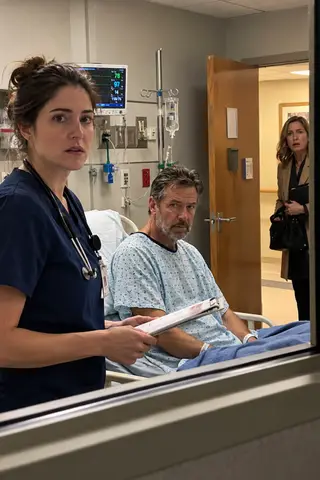
 My Husband Had a Medical Emergency
Chapter 5
The Code in Room 412
The next twenty minutes were a blur of coordinated chaos that I had lived through a hundred times before on the other side of the stethoscope, but never with my own husband lying on the table.
The medical team swarmed into Room 412. The charge nurse—a sharp, veteran ICU nurse named Sarah whom I had worked alongside for six years—shot me one quick, empathetic look before sliding into professional mode.
"What do we have?" Sarah asked, her hands already flying over the leads.
"Nonsustained VT running into short bursts of ventricular tachycardia, heart rate pushing 150," I rattled off, my voice steady and clinical, though my hands were shaking slightly out of view. "He's got a history of undiagnosed cardiomyopathy, acute syncopal presentation today, and extreme emotional distress triggering catecholamine release."
"Pushing 150 milligrams of amiodarone IV stat," the attending physician ordered, stepping up to the bed. "Let's prep for synchronized cardioversion just in case the rhythm doesn't chemical-convert."
I stood at the foot of the bed, watching the monitors, my heart hammering against my ribs like a trapped bird. In the hospital, you learn to compartmentalize. You have to. But when the patient on the table is the man you loved for nearly a decade—the man who betrayed you with a secret courthouse marriage—compartmentalization feels like trying to hold back a tidal wave with a kitchen sieve.
Declan’s eyes fluttered open, wide with sheer terror. He looked straight at me through the flurry of doctors and nurses, his lips moving silently.
I'm sorry, he mouthed.
I didn't smile. I didn't nod. I just watched the monitor as the amiodarone entered his IV line, slowly working its way through his bloodstream to quiet the electrical storm raging inside his heart.
Ten seconds.
Twenty seconds.
The jagged green spikes on the screen began to widen. The rate dropped from 150 down to 120, then 100, and finally stabilized into a clean, predictable sinus rhythm at 82 beats per minute.
The room let out a collective breath.
"Good," the doctor said, wiping a bead of sweat from his forehead. "Rhythm converted. He's stable for now. But we're transferring him directly to the cardiac intensive care unit for continuous monitoring over the next forty-eight hours."
As the team began wheeling Declan's bed out toward the ICU elevators, Sarah paused beside me, placing a warm hand on my shoulder.
"You okay, Maris?" she asked softly.
"No," I answered honestly. "Not even close."
"Go home, change your scrubs, get some air," Sarah urged gently. "I'll cover his bedside tracking for the next few hours. He's stable now. He's not going anywhere."
"I'm not going home, Sarah," I said, my jaw tightening. "My name might not be on the emergency contact list anymore, but I still have unfinished business to take care of."
I walked down the corridor toward the visitor's lounge where I knew Dana was likely sitting, waiting for news. It was time to clear the air once and for all—not with tears or screaming, but with cold, hard reality.
The End









