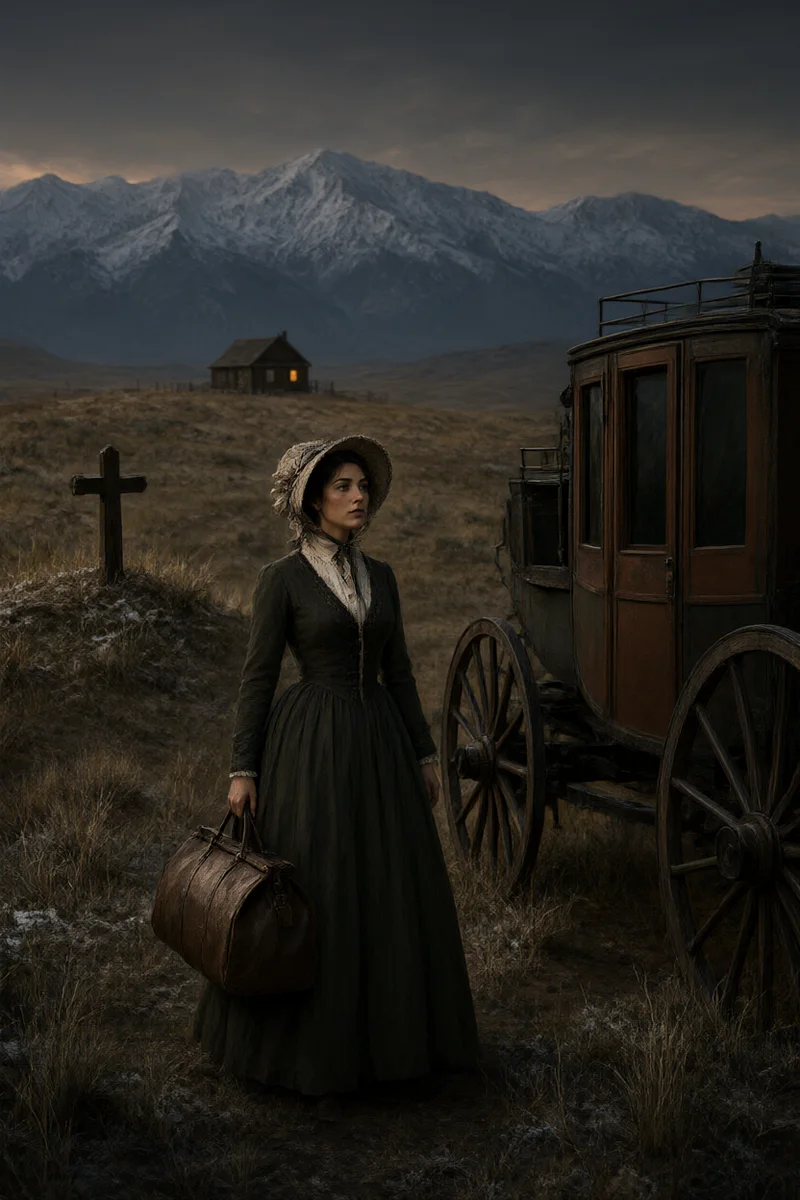
 Bride for a Buried Man
Chapter 4
The Baking Powder Tin
She read the rest sitting on the doorsill, because her knees had made the decision for her.
“Dr. Venn in Cheyenne listened to my heart in March and gave it till the snow. I have not told Eben. He would sell the place to pay doctors and it would not buy me a week.
“My brother would sooner lose a hand than ask a thing of anybody. He will work this claim alone until it kills him and never say a word except to the mare and the stove. So I went looking on his account. I signed my own name because he would have burned the letters, and because a man can say true things about his brother that he would choke on about himself.
“All that you liked was him. I cannot whistle. The catalogue, the two notes for the mare, the salt in the coffee, the way he will stand in a doorway rather than crowd a person. I only put my name to it.
“I mean to meet your stage and tell you this to your face, and let you choose with your eyes open. There is forty dollars in the baking powder tin behind the flour if you choose to go. Forgive me if you can. J.T.”
She read it to Eben that night at the table, every word, because she had been lied to by mail and would not do the same by silence. He listened with his hands flat on the boards.
When she finished he got up, took the baking powder tin from behind the flour, and looked inside. Then he set it down in front of her very gently, the way a man sets down something he would like to throw.
“He picked me a wife out of the newspaper,” Eben said. “Like a harrow.”
“He picked you a correspondent. I picked myself.”
“You picked him. On my account, with my—” He could not say what. Color had come up his neck. “I read to that stove because I thought nobody heard. Now there's a woman in Massachusetts had it in writing since May.”
“She's in Wyoming.”
“Till Thursday. That money's yours and the stage is yours. I'll not have anybody kept on this place by a dead man's trick.”
“There are three loads left,” Mina said to his back, “and you cannot pitch and tramp both.” He went out to the barn. He did not bang the door, which was worse.
They hauled the three loads without ten words between them. She wore Jonas's gloves. He whistled up the mare each dawn and then seemed to hear himself do it.
On the first of October Eben counted two hundred and twelve dollars onto Amos Lyde's desk in the back of the land office. Lyde counted it again, slower. “I heard you'd taken on a bookkeeper,” he said.
“She's taken on herself.” Mina laid a paper beside the money. “Received of E. Tarrant, payment in full. You'll want to sign that, Mr. Lyde. I find people remember a debt so much better than they remember being paid.”
He signed. The creek stayed where it was.
Thursday came the next morning all the same. Eben hitched the wagon in the dark, loaded her trunk, and drove the six miles looking at the mare's ears. At the depot the eastbound stood ready.
Eben set the trunk down in the dust where it had sat three weeks before. He took off his hat. Whatever he had planned to say on the road, it did not come. “Safe journey, Miss Aldous,” he said, and walked back to the wagon.
Mina looked at the ticket in her glove. She looked at the agent's window. And she had what her overseer at the mill used to call, with real dread, an idea.
The End









