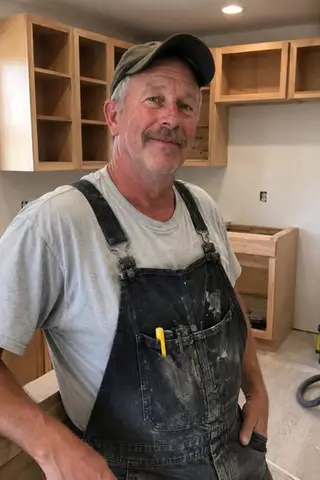
 "You're Just One Old Carpenter"
Chapter 95
The Art of the Trunnion
A sudden, sharp metallic report echoed down the vertical shaft. One of the massive high-pressure relief trunnions on the bronze dome below had sheared its locking bolt under the backed-up head of water.
A jet of icy, mineral-black water shot forty feet into the air, striking the steel catwalk where we stood.
"The bypass flume is completely choked!" I yelled, shielding my eyes from the spray. "If that bronze head blows, the water won't go out to the creek—it’ll blow straight up the borehole shaft!"
"Right under the Sterling estate," Frank noted with terrifying calm. "The hydraulic pressure will lift the foundation of that fifty-room mansion like a cork in a bathtub."
"We have to open the bottom sluice gate," Gabe said, pointing down the rusted spiral staircase that hugged the caisson wall. "There’s a manual handwheel on the lower manifold!"
"You can't turn that wheel with human muscle," Frank said, already moving down the iron stairs with the surefooted balance of a high-steel rigger. "It’s been dry-seized since the Korean War. Iron binds to bronze when it sits in mineral water; the galvanic corrosion welds the threads together."
"Then what the hell do we do?" Gabe shouted, following Frank down three flights of slick, vibrating metal.
We reached the lower catwalk five feet above the boiling surface of the subterranean sump. In front of us sat an eight-foot-wide cast-iron gate valve, its threaded bronze stem thicker than a man’s thigh, choked with white calcite and rust.
Frank pulled a small glass bottle from his tool pouch—pure clove oil and neatsfoot oil, the ancient mixture carpenters use to preserve fine bench planes and soften hardened leather. He dumped the entire bottle directly onto the calcified threads of the rising stem.
"Oil won't break that rust in five minutes!" Gabe yelled over the roar of the geyser.
"Clove oil has an acid index that eats through lime deposits faster than commercial solvent," Frank replied without stopping. "Now give me your tow strap from the truck—the four-inch nylon recovery strap!"
I unclipped the strap from my belt. Frank wrapped the nylon three times around the cast-iron spokes of the valve wheel, then ran the bitter end through the eye of a massive iron snatch block attached to the chamber’s central support column. He took a heavy white-oak off-cut, four feet long, and slipped it through the loop of the strap, creating an improvised Spanish windlass—a medieval torsion machine used to tighten heavy rigging on wooden ships.
"Grab the lever, both of you!" Frank roared. "Walk it around! Use the mechanical advantage of the winding loop!"
Gabe and I threw our entire body weight against the oak bar. The nylon groaned. The wood bowed, straining under hundreds of foot-pounds of torque.
"Heave!" Frank commanded, slamming the flat of his hammer against the cast-iron collar to shock the frozen threads.
*CRACK!*
A sound like a gunshot echoed through the iron chamber. The calcite shattered off the stem in a shower of white dust. The wheel lurched forward two inches.
"Keep turning!" Frank yelled. "The threads are cutting clean!"
We drove the windlass around. One turn. Two turns. With every revolution, the massive sluice gate inside the pipe rose, and the ear-splitting roar of pressurized water changed from a scream to a deep, gut-rumbling thrum.
***
The End









