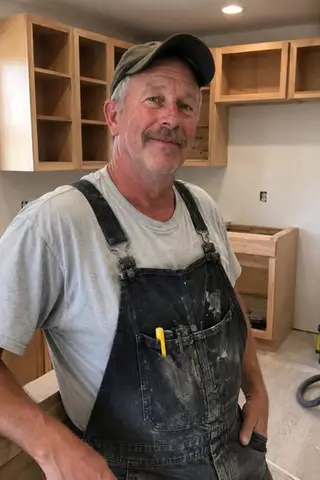
 "You're Just One Old Carpenter"
Chapter 16
The Council Chamber Ambush
The Oakridge County Municipal Building was packed to the gills on Tuesday evening. Word had leaked through the grapevine that the school board and the zoning committee were holding a joint session regarding the "redevelopment" of the vocational technical school’s south parcel.
Over two hundred people crowded into the oak-paneled chamber—teachers, apprentices in work boots, local tradesmen, and concerned parents.
At the front of the room, sitting behind a polished mahogany dais, were the five county commissioners, chaired by Harold Higgins—a man with a permanent smirk and ties to every commercial developer in the region.
Sitting in the front row of the gallery, flanked by four corporate lawyers in matching navy suits, was Gregory Vance. When he saw Frank walk in the back doors—dressed in clean pressed denim, his work boots freshly oiled, and a canvas tool roll tucked under his arm—Vance smiled with icy amusement. He tapped his lead attorney on the shoulder, whispering something that made both men chuckle.
"Item four on the docket," Chairman Higgins declared, rapping his gavel with sharp finality. "Resolution 204: The acquisition of the Oakridge Vocational Center’s agricultural and trades annex for the purpose of the Blue Ridge Transportation Corridor. Public comment is limited to three minutes per speaker. We have one registered speaker in opposition: Mr. Frank Miller."
A murmur rippled through the gallery. The tradesmen stood on their toes to see.
Frank walked slowly down the center aisle. He didn't carry a binder of legal briefs, nor did he have an attorney at his side. He climbed the steps to the podium, unrolled his canvas tool kit, and set two items on the marble ledge: a brass-bound plumb bob and an ancient six-inch try-square.
"Mr. Miller," Chairman Higgins said condescendingly, leaning toward his microphone. "We know your sentimental attachment to the school, but this is a matter of county growth, economic progress, and modern infrastructure. Sentiment cannot stop the march of progress."
Frank looked up at the five commissioners, his voice quiet, deep, and carrying to every corner of the room without the microphone's aid.
"Fifty-two years ago," Frank began, "I helped my father lay the cornerstone of that vocational building. We used local limestone, properly dressed, laid plumb and true. For half a century, that school taught farm boys and girls how to frame a wall that wouldn't lean, how to wire a circuit that wouldn't burn, and how to measure a board so that when they gave their word, it stood."
"Three minutes, Mr. Miller," Higgins interrupted, checking his gold watch. "We don't need a history lesson."
"You don't need a history lesson, Harold," Frank replied, his eyes shifting directly to Gregory Vance. "You need an inspection report."
Frank reached inside his jacket and pulled out a stack of high-resolution architectural prints, slamming them onto the clerk’s desk with a resounding crack that echoed like a rifle shot.
"These are the structural foundation plans for the Blue Ridge Ridgeview Complex, submitted by Apex Crest Developments," Frank said, his voice rising with unyielding power. "And behind them are the sonic resonance tests conducted forty-eight hours ago on the limestone shelf beneath the site."
The End









