 The Bakery on Marrow Lane
Chapter 5
Sundays
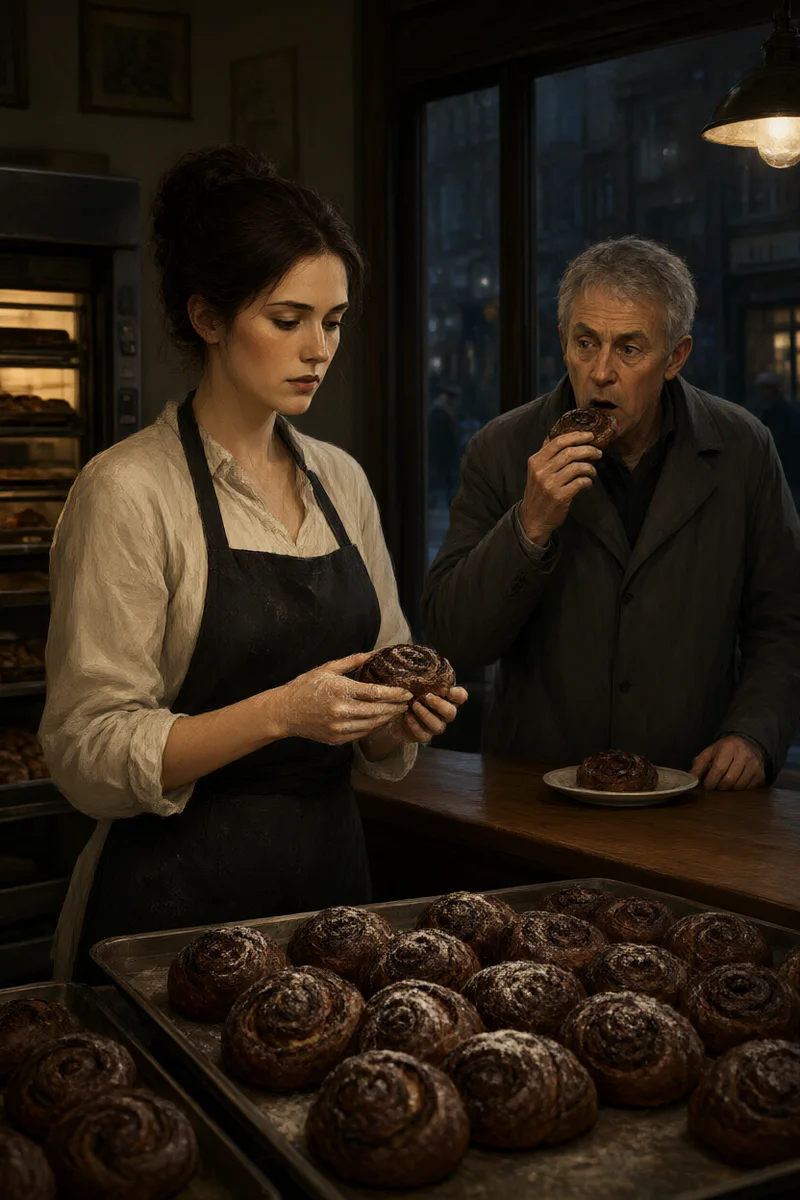
The surveyor was a young man called Pym with a laser measure, who apologized to the furniture. Mrs. Kasten stood by the door in the camel coat while he put red dots on Wren's walls. Wren set a plate on the counter. One roll, near black.
“Thank you. I've had my roll.”
“You had my mother's. She changed it, because it wouldn't sell. This one is off your mother's card. Lard and burnt sugar, baked last, in the bottom of the heat, the way a girl would bake who had to wait for the oven.”
Mrs. Kasten looked at her son. “Is this the better idea?”
“No. That's in the folder. This is only a roll.”
She took off one glove. She did not bite it; she broke it, and at the smell of the crumb her head went back a little, as if from a raised hand. Then she ate. Mr. Pym, sensing weather, measured the doorway a second time.
“Who gave you that?” It came out furious.
“She did,” Wren said. “Twice. Once to Mrs. Pell, who told my mother. Once to you, in a tea tin.”
Mrs. Kasten sat down on the chair by the window, which was there for customers who had to wait. “Sundays,” she said. “She made them on Sundays, and stood at the sink with her back to us while we ate. I thought she didn't care to watch.” She turned the half roll over on the plate. “She hated this house. I am sure of that. And she made its bread every week of her life and wrote it out on its own card. I have no idea what to do with that.”
“You don't have to do anything with it. I only thought you ought to have one that was right.”
For a while Mrs. Kasten said nothing. Then she held out her hand without looking, and Emil put the folder in it. She read it the way she had eaten the first roll: all of it, unhurried. The old boarding-house kitchen upstairs, shut since Mrs. Pell's day, reopened as a second bake room. The four cafés in Kasten buildings, which bought their bread from a factory forty miles away, supplied from Marrow Lane. A new lease for Abbott's at double the rent, rising after that.
“That is two-thirds of the pharmacy.”
“For the first year,” Emil said. “By the third it's more.”
“If she can bake for four cafés.”
“I can bake for four cafés,” Wren said. “I can't shape for them. I'd need a second pair of hands, and the only ones I've trained are his.”
Mrs. Kasten considered her son's hands. “He was a perfectly adequate property manager.”
“He's a poor baker. But he turns up.”
“Mr. Pym, I've wasted your morning. Send me the bill.” Mrs. Kasten closed the folder and put her glove back on. “One condition. The black ones go in the window. Sundays only, with her name on the ticket. Not the house's name, and not mine. Marta's.”
“They won't sell,” Wren said.
“No. I don't expect they will.”
On the first Sunday the street was dark at six and the lamps were on. Mr. Adeyemi was at the head of the line. Third in it, queuing like anyone else, stood a small woman in a camel coat. Wren slid a black roll across the counter. “On the house.”
“Don't be absurd,” said Mrs. Kasten, and paid.
The End









