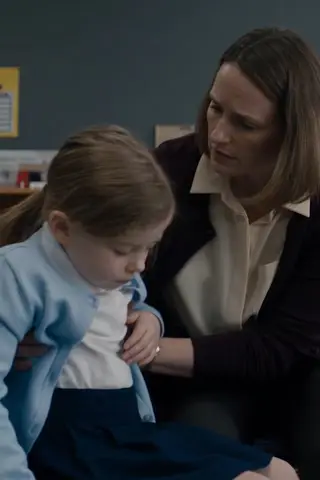
 : She Thought It Was Just a Normal School Morning
Chapter 19
The District Workshop
By early spring, the superintendent’s office formally requested that I lead a specialized professional development seminar for new teachers across the entire school district. The topic assigned was mandatory student reporting, behavioral observation, and recognizing non-verbal signs of distress in elementary school classrooms.
Standing at the podium in the large district auditorium on a rainy Saturday morning, I looked out over rows of eager, fresh-faced educators who had just entered the profession. Many of them held crisp notebooks and pens ready, looking much like I had years ago—eager to teach math, reading, and science, but perhaps largely unaware of the heavier hidden burdens children sometimes carry behind closed doors.
“When we think of teaching,” I began, my voice echoing clearly through the auditorium microphone, “we usually think of textbooks, spelling tests, and daily lesson plans. We tend to think of the loud kids who demand our immediate attention and the high achievers who make our jobs easy.”
I paused for a moment, letting my gaze sweep across the rows of attentive, listening faces.
“But the hardest part of our job—and arguably the most important part—happens in the quiet moments. It happens when a child sits a little too still, when a polite smile looks a little too rehearsed, or when a simple walk across a classroom floor looks like an impossible, agonizing journey.”
I shared the vital lessons I had learned in Room 204—not focusing excessively on the darkness of the crime itself, but rather on the immense power of active attention, empathy, and moral courage. I explained how listening carefully to what children don't say is often the most critical skill an educator can possess.
When I finally finished my presentation, the auditorium erupted into sustained, heartfelt applause. Several young teachers approached me afterward to ask questions, share their own classroom anxieties, and thank me for opening their eyes. Stepping off that stage, I realized that Lila’s story had created a powerful ripple effect, transforming a tragedy into a protective shield for countless children.
The End









