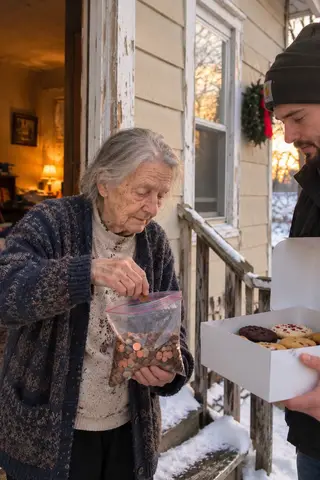
 She Paid For A $14 Pizza With A Bag Of Pennies
Chapter 9
The Town Rallies Behind the Cafeteria Lady
Within two hours, Elm Street had transformed from a forgotten, decaying alleyway into a bustling media circus and community mobilization center.
When I pulled up to Margaret’s house alongside Greg in his truck, we found three television news vans parked haphazardly along the shoulder. Dozens of local residents, former Jefferson Elementary students, parents, and local business owners had crowded onto the rotting porch and front lawn, carrying grocery bags, heavy blankets, space heaters, and handmade greeting cards.
A local plumbing contractor named Dave, whom I vaguely remembered from high school, was already kneeling outside near the side foundation wall with a massive toolbox.
"Hey, Daniel!" Dave called out, wiping grease from his forehead. "Heard the furnace was on the blink! Me and my crew are ripping out this old dinosaur and installing a brand new, high-efficiency heating system right now. Free of charge. Nobody freezes on Mrs. Ellis's watch!"
My chest tightened with overwhelming emotion. I pushed my way through the crowd on the front porch and gently knocked on the door.
Margaret pulled it open a moment later. She was wearing a clean woolen sweater, looking bewildered, startled, and deeply moved as she stared out at the sea of familiar and unfamiliar faces cheering on her lawn.
"Daniel... what is all this?" she whispered, her hands trembling as she clutched the new prescription bottle in her left hand.
"It's your kids, Margaret," I smiled, stepping inside and closing the door against the commotion outside. "All six hundred of them grew up."
Within minutes, local news crews were inside the modest living room, interviewing Margaret about her thirty-four years of service in the school cafeteria. She spoke with eloquence, grace, and unwavering dignity, explaining how she had always viewed every hungry child who crossed her line as her own flesh and blood. She never once complained about her hardship; instead, she thanked the community for remembering her.
By noon, a massive digital crowdfunding campaign organized by the local journalist had shattered its initial goal of five thousand dollars in less than four hours. Donations were pouring in from all across the country—hundreds, then thousands, then tens of thousands of dollars—earmarked entirely for Margaret’s medical care, home repairs, and a lifetime of security.
Local grocery stores sent truckloads of fresh food. The head pharmacist from St. Jude’s personally drove out to hand-deliver a full year's supply of her heart medication, refusing to accept a single penny ever again.
As the television cameras flashed and the town rallied outside her windows, Margaret sat comfortably in her recliner, wrapped in her warm quilts, sipping hot tea from a brand-new mug. She looked over at me, standing by the kitchen counter, and motioned me over.
I walked over and knelt beside her chair.
"You started all of this, didn't you?" she asked softly, a bright, radiant smile lighting up her face.
"I just delivered a pizza, Margaret," I replied, smiling back. "You're the one who built the foundation."
The End









