 She Paid For A $14 Pizza With A Bag Of Pennies
Chapter 1
The Bag of Copper and the Empty Fridge
The freezing winter wind tore across the asphalt as I pulled my battered sedan into the driveway of 142 Elm Street. The house looked like it had been swallowed by the dark decades ago—paint peeling like sunburnt skin, the porch boards groaning under my boots, and no light shining from any window. On the receipt, the instructions were brief and cryptic: Back door. Please knock loud.
I knocked twice, my knuckles stinging from the sub-zero air. A frail, cracked voice called out from the gloom, bidding me to enter. Inside, the temperature plunged so sharply that my breath plumed into white clouds. An elderly woman sat huddled in a massive, worn recliner wrapped in old quilts. There was no TV murmuring, no radio humming—just the agonizing, rattling rhythm of her labored breathing and the single, weak pool of light cast by a corner lamp.
She looked at the pizza box in my hands as if it were a chest of royal treasure.
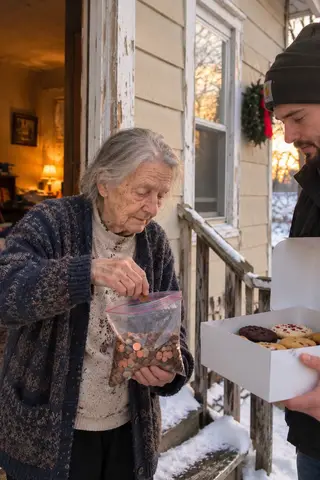
"I’m sorry it’s so cold," she whispered, her voice trembling as she reached for a heavy plastic bag resting on a side table. "I try to keep the heat off until December to save for my heart pills."
She extended the bag toward me. It clinked heavily, bulging with copper.
"I counted it twice," she said, her eyes welling with moisture. "It’s mostly pennies and some nickels I found digging deep in the couch cushions. Is it enough?"
The total on the receipt was $14.50. I looked at the bag, then at her translucent, shaking hands. Without thinking, I told her it was covered. She instantly shook her head, stubborn pride flashing in her cloudy eyes.
"No, young man. I ordered it. I pay for it."
"My name’s Daniel," I said, trying to soften my tone.
"All right, Daniel. Then take the money."
I smiled gently. "I already did."
She frowned, narrowing her eyes. "No, you didn't."
"I paid for it before I knocked." That wasn't entirely true yet, but I knew it would be as soon as I returned to the pizzeria.
She studied me, suspicion and exhaustion warring on her face. "You're a terrible liar."
"People have said worse," I replied.
That rare, genuine statement cracked a tired smile across her face. She took the pizza box with both hands, clutching it like a lifeline. And that was when my gaze drifted past her into the adjacent kitchen.
The refrigerator door stood slightly ajar, casting a feeble line of light onto the linoleum floor. I peered inside. There was practically nothing. Half a jug of cloudy tap water. A small, open box of baking soda. Three crumpled plastic packets of fast-food ketchup. And a pharmacy bag, tightly stapled shut, sitting right on the top shelf.
No milk. No eggs. No bread. No leftovers. No vegetables.
Nothing.
My heart seized. I looked back down at the elderly woman. "Ma'am, is this dinner?"
She nodded slowly.
"And tomorrow?"
She kept silent. She didn't have to answer; the hollow look in her eyes spoke volumes. Carefully, she lifted the lid of the pizza box. A plume of steam drifted up into the freezing room.
"Oh," she breathed softly, as if she had just been handed the keys to paradise.
She picked up a single slice, her hands shaking so violently that the melted mozzarella threatened to slide off entirely. I stood there, rooted to the spot, torn by a fierce internal war. I had four other hot deliveries waiting in the backseat of my freezing car. My shift manager already thought I was too slow, and my bank account balance sat stubbornly at fifty-six dollars until my next payday. I was twenty-four years old, struggling through community college classes whenever my meager paycheck allowed, and definitely nobody's hero.
Yet, I couldn't unsee that desolate refrigerator. I couldn't unsee the stark, brutal reality of her survival.
The End









