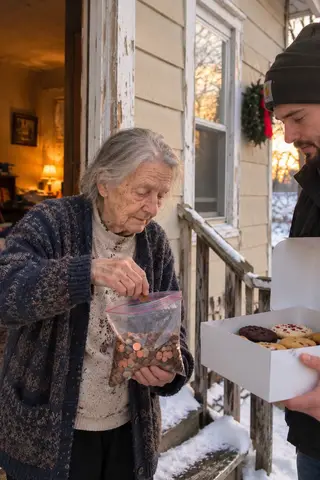
 She Paid For A $14 Pizza With A Bag Of Pennies
Chapter 3
The Ghost of Jefferson Elementary
For thirty-four years, Margaret Ellis hadn't just lived in this town—she had worked. She had spent over three decades standing on her feet in the cafeteria at Jefferson Elementary School, serving hot meals to thousands of local kids.
My breath caught in my throat. I had gone to Jefferson Elementary.
I stared hard at her weathered face, then shifted my gaze to a cloudy, framed photograph resting on a dusty bookshelf nearby. It showed a much younger woman wearing a crisp white apron, smiling brightly behind a gleaming stainless-steel cafeteria counter.
My stomach dropped into freefall.
"Mrs. Ellis?" I breathed, my voice cracking.
She squinted through her thick glasses, tilting her head. "Yes?"
"You... you used to give kids peanut-butter crackers if they forgot their lunch money."
She stared at me blankly for a second, processing my words.
I let out a sudden, disbelieving laugh, the memories rushing back like a tidal wave. "You gave me crackers. Third grade. Mrs. Parker's class. My mom was between jobs and our account was flagged."
I hadn't thought about that cafeteria in fifteen years. But sitting here in the freezing dark, I could see it with terrifying clarity: the divided plastic trays, the aroma of canned green beans, and a quiet, compassionate woman standing behind the register who made sure children walked away with food without ever letting them feel humiliated or exposed.
Margaret studied my face intensely, tracing the lines of my jaw and forehead through the wrinkles of old age. Then, recognition sparked in her eyes, and a profound, gentle smile bloomed across her face.
"You were the skinny boy with the unruly cowlick," she whispered.
"I had a name, you know."
"I had six hundred children every single day, Daniel."
I laughed, but my eyes immediately began to burn with hot, stinging tears. For over three decades, Margaret had fed hundreds of children who couldn't afford their lunches, shielding them from shame. And now, here she was—forgotten by the system, sitting in a freezing house, trying to pay for a single hot meal with a Ziploc bag full of pennies.
I stood up abruptly from the wooden chair.
"Where are you going?" she asked, her voice dipping in disappointment.
"To finish my deliveries," I said, grabbing my jacket.
Her face fell slightly, a look of quiet abandonment settling back into her features. But before she could speak, I added: "And then I'm coming back."
"You don't need to do that, Daniel."
"I know," I smiled. "That's the important part."
I left the pizza box safely on her lap. As I turned toward the front door, her frail voice called out one last time: "Daniel?"
"Yes, Margaret?"
"Don't buy me anything."
I nodded, offering a reassuring smile. Then I walked out into the freezing night, got back into my car, and drove straight back to the restaurant to do exactly what she had told me not to do.
The End









