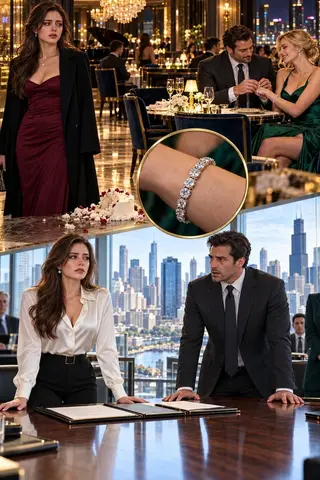
 His 27-Year-Old Mistress Laughed at Me in Manhattan's Most Expensive Restaurant
Chapter 43
The Grand Foyer of Nations
The Palais des Nations stood in austere neoclassical splendor, its massive stone pillars and manicured gardens facing the French Alps. Within the Grand Foyer, the air was dense with the low, multilingual hum of ambassadors, central bankers, and delegates representing the world's most powerful economies.
As Marcus, Clara, and I walked through the security perimeter into the central concourse, heads turned with immediate recognition.
Two years ago, in Manhattan, I had been an ignored divorcee whose husband believed he could discard me in public view. Today, as I stepped across the marble floors of the League of Nations' historic home, European ministers stepped aside with deferential bows, and delegates from Asia, Africa, and Latin America looked upon our delegation with profound respect.
Standing beneath the towering murals of the Assembly Hall was Count Henri de Montmirail.
He was a man in his late sixties, impeccably groomed in a Savile Row three-piece suit with a silk pocket square and silver hair brushed straight back. His posture radiated dynastic superiority—the demeanor of a man who believed his family had financed the Treaty of Vienna and would finance the world forever.
Surrounding him was an entourage of Swiss private bankers and legal counsel. As I approached, Montmirail turned, his pale blue eyes narrowing slightly before assuming a veneer of aristocratic charm.
"Ms. Emily Whitmore," Montmirail said, speaking with an impeccably modulated Oxford accent. He did not extend his hand, choosing instead a slight, formal nod. "The American phenomenon arrives in Geneva. The financial journals have written endlessly about your maneuvers in Tokyo and Oslo."
"They were not maneuvers, Count Montmirail," I replied evenly, my posture tall and relaxed, meeting his gaze without the slightest hesitation. "They were structural corrections. Long overdue."
A patronizing smile touched the corners of his mouth. "Structure is a delicate European science, Madame. It requires centuries of diplomatic nuance, not the brash, publicity-driven syndication of New York. In Geneva, sovereign balance sheets are handled in private libraries, not through public spectacle."
"If by private libraries you mean opaque mezzanine credit facilities designed to strip sovereign assets while bypassing parliamentary scrutiny, then yes—I am aware of your traditions," I countered, my voice quiet, clear, and perfectly carrying through the surrounding foyer.
A hush fell over the listening delegates. Montmirail's entourage stiffened visibly.
The Count's smile vanished, replaced by a cold, appraising stare. "Sovereign nations require capital, Ms. Whitmore. When they falter, they turn to those of us with the courage to impose discipline. Your talk of public transparency will dry up liquidity overnight. The assembly will not trade three hundred years of Swiss institutional stability for an American experiment."
"The assembly is no longer interested in paying dynastic tributes, Count Montmirail," I replied smoothly. "And tomorrow morning at the plenary session, Whitmore Capital will show them that genuine stability is built on transparency, not indenture."
I gave him a serene nod and walked past his phalanx of bankers, not looking back once.
***
The End









