 Fifty-Two Dog-Ears
Chapter 9
The Crank
Compact shelving moves slowly. That is the one thing to be said for it. A steel range loaded with forty years of newspapers weighs more than a car, and a hand crank turns it about an inch a revolution, so there is time to think, if you are the sort of person who thinks instead of screaming.
I am that sort of person. I also screamed, briefly, for form's sake.
The aisle was thirty inches wide. Then it was twenty-eight. I dropped the 1979 Beacon to the floor, stood it on its end across the rail, and shoved it hard into the gap with my foot. It was four inches thick and bound in brown buckram, and it was the first time in its history that newspaper ever stopped anything.
The range came on, met the book, and groaned. The crank kept turning for a moment. Then it stopped.
"Mavis." Delmer's voice, from the end of the aisle, mild as milk. "I only want the book."
"Which one?" I said. "You've already got Bookkeeping Made Plain. You paid for it in 1980. I wrote you a receipt."
Nothing for a while. I could hear him breathing hard, an eighty-three-year-old man who had just cranked a ton of steel.
"She came to the back door after the dance," he said. "In her good dress. With your book and a column of figures on a shirt cardboard. Dilaudid. Six months of it. She'd matched my invoices against my dispensing log, all on her own, at nineteen. She said she was taking it to the state board Monday morning, and she said it kindly, Mavis. That was the worst part. She said she was sorry."
"And then?"
"There was ice on the steps." His voice wobbled. "I took hold of her arm. I only meant to keep her there till I could think. She pulled away and her heel went and she hit the rail. That's all it was. One bad step."
"And then you called the deputy who owed you."
"Verlin had his own troubles with my back room. He'd have lost his badge." A creak; he was leaning on the crank. "The form for the bandstand was dug and the gravel was down. They poured Monday. I had two kids and a license and Ardis. Nobody needed to lose two lives over one bad step."
"Three," I said. "Her mother kept the porch light on until 1996. Count her."
He began to crank again. The book shrieked against the rail. I put my back against the shelf behind me and both hands flat on the steel in front, which accomplished nothing, but I wanted him to hear that I was not sitting down.
Then the stair door banged open, and a voice I had read Frog and Toad to at story hour in 1998 shouted, "Delmer, let go of that," with no respect whatsoever, and the crank stopped.
Searle had not gone to the sheriff. He had called her from the parking lot and waited, because, he said later, he had seen Delmer's car turn into the alley and he knew that tone of voice in the board meetings.
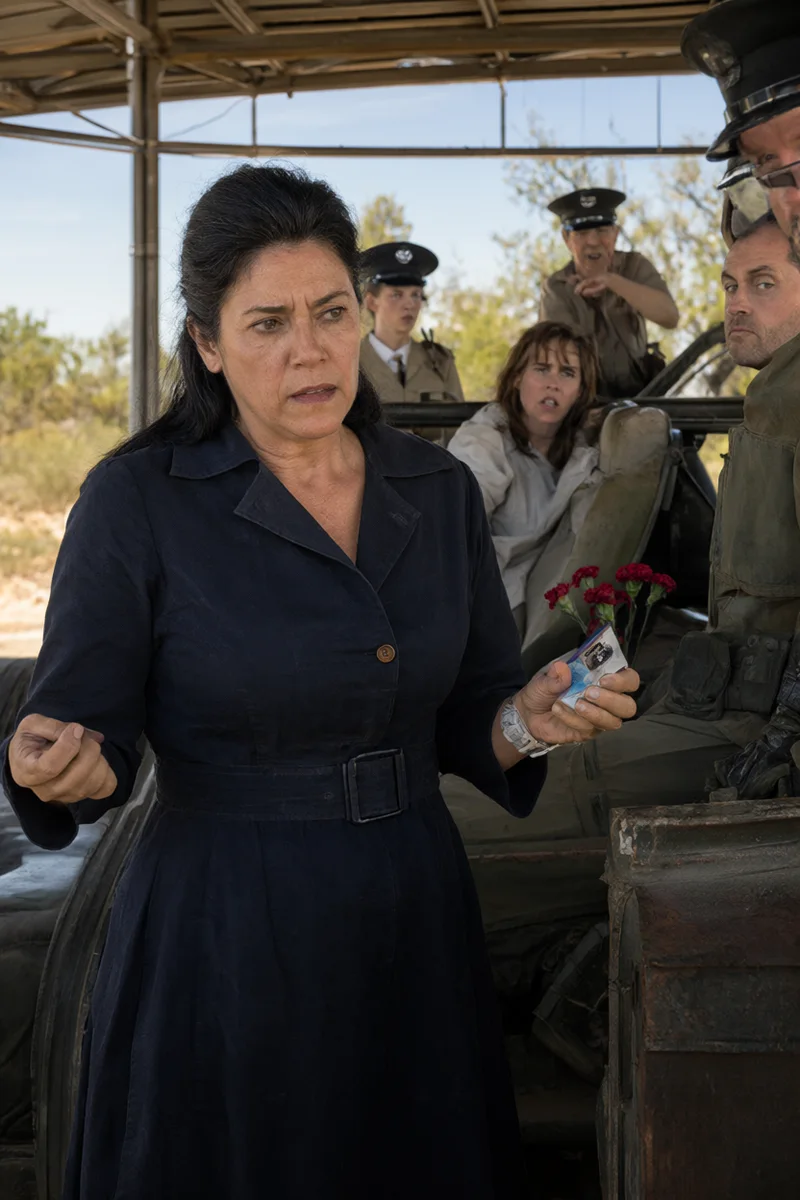
Petrine Mundt came down the stairs thirty seconds behind him. She cranked me out herself.
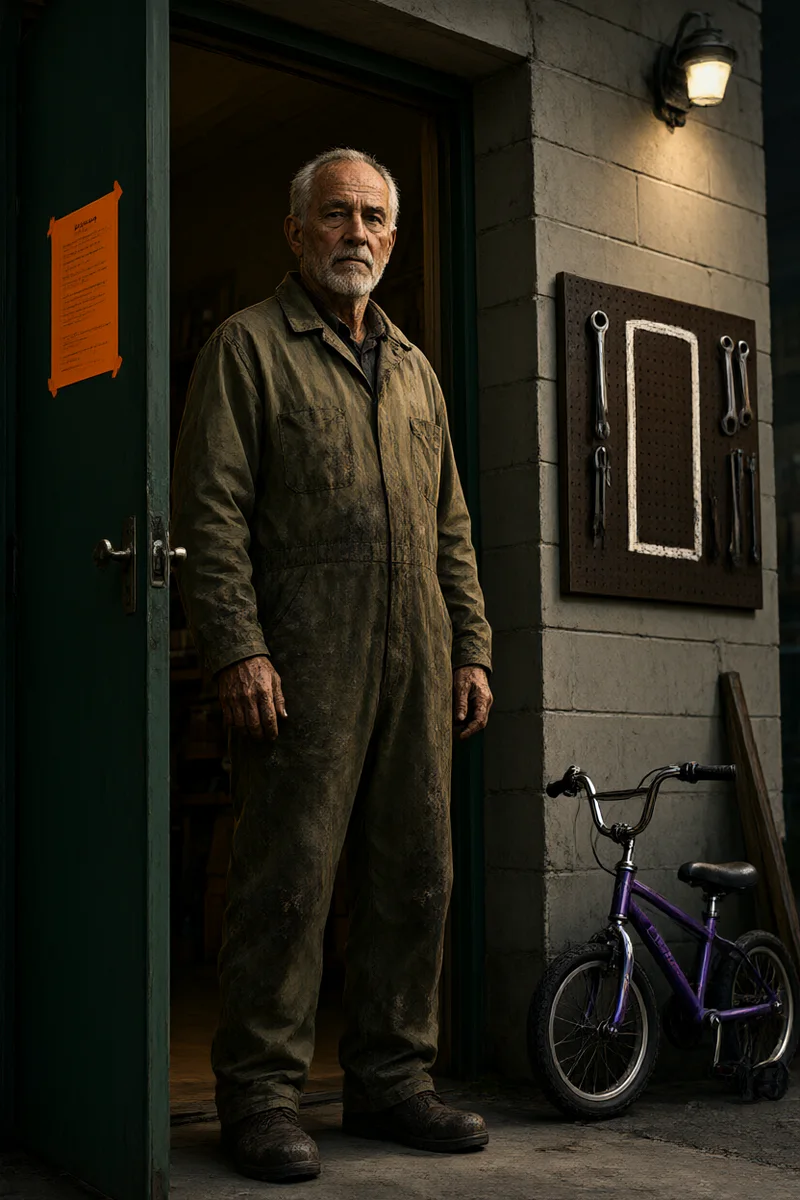
Delmer Hallimore stood by the wall with his hands at his sides. He looked old, which he was, and smaller than I had ever seen him.
"Mr. Hallimore," the sheriff said. "Verlin Dask's tackle box."
He reached slowly into the inside pocket of his tweed jacket and held it out to her. A silver oval on a broken chain.
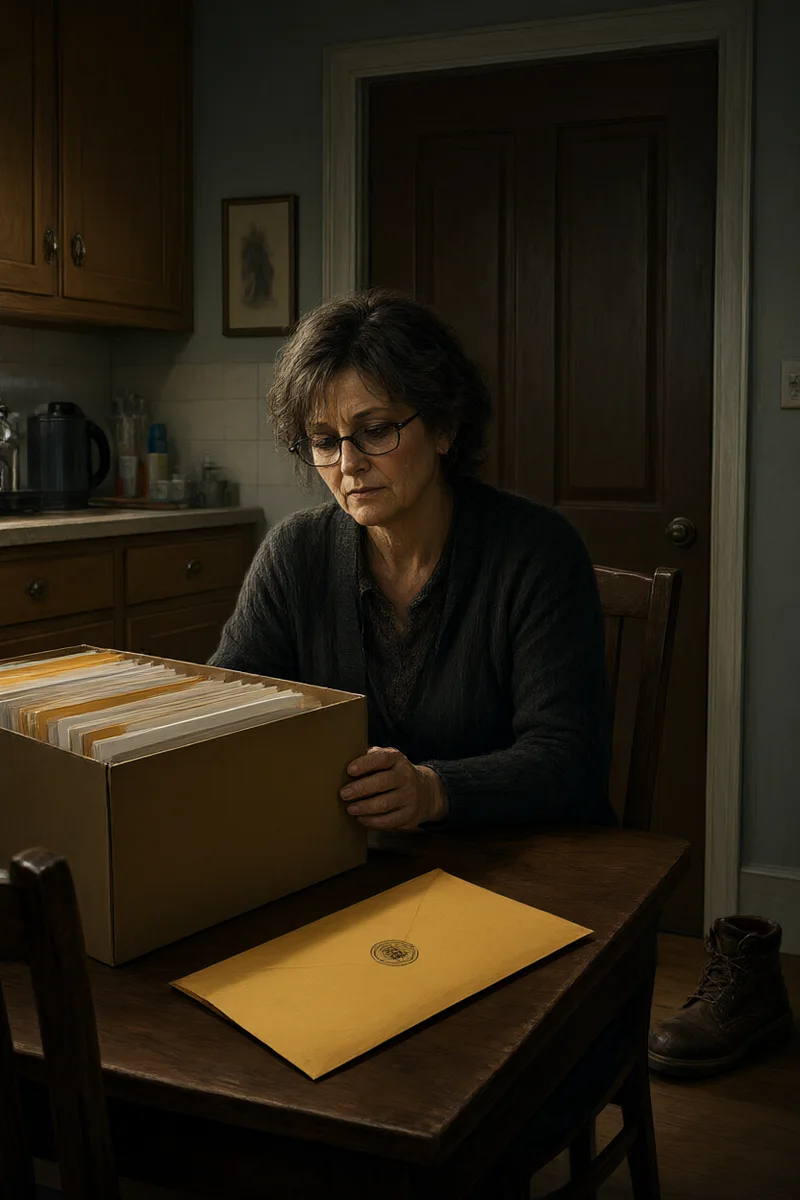
She opened it under the bare bulb. On one side, Mrs. Sterrett. And in the side her mother had been saving, folded to the size of a stamp, was a scrap of shirt cardboard covered in a nineteen-year-old's numbers.
The End