 Fifty-Two Dog-Ears
Chapter 10
Overdue
The Wittenmyer town board met on the following Monday night in the Grange hall, because the town office seats twelve and two hundred and six people came. Twyla brought four trays of kolaches and would not take money for them. Imre Zuehlke brought his heating pad and an extension cord.
The only business was whether the county could break up the Hallimore Bandstand.
The board chair read the motion. There was a long pause, because the board had one empty chair in it, Delmer's, and everyone was looking at it.
"So moved," said Eskil Beckwith from the third row, who is not on the board.
"You can't move, Eskil," the chair said.
"Then I'll second," said Imre, who isn't either. The board voted five to nothing, and the hall did not clap, which I thought was right.
The county brought a ground-penetrating radar unit on the first Wednesday in December, a lawn mower with a laptop on it, pushed by a young woman from the state crime lab in a pompom hat. It took her eleven minutes. Then they brought saws.
They found Ilona on the second day, under the north side of the slab, where the gravel had been laid. I did not go into the square. I sat in the library at the front window, at my old desk, where Searle had put me back without asking the board, and I watched Twyla stand at the tape in her flour-dusted apron with the sheriff's hand on her shoulder.
There was a silver chain clasp in the gravel. The rest of the chain was in Petrine Mundt's evidence room, with the locket.
Delmer Hallimore was charged in Ostby County with Ilona Sterrett's death and with hiding her body. His lawyer talked about his age, and the district attorney talked about the bandstand plaque. The sheriff found my Grievance Ledger in his desk at home, under Bookkeeping Made Plain, with Ilona's pencil checkmarks still in the margins. In February he pleaded guilty. The shirt-cardboard figures, checked against old state records, matched to the pill.
Verlin was not charged. A judge found he could not understand the proceedings, which was true; he had moved to the memory care wing in Ostby by then, and on good days he asked the nurses if the library was open. Sidonie gave the sheriff a statement four hours long. She had her niece drive her, and the niece, I am told, waited in the hall without honking.
Sheriff Mundt let me make a new statement for the file. It was about bookkeeping.
They buried Ilona beside her mother in the Lutheran cemetery on Doane Road in the middle of December, under a sky the color of an old nickel. Afterward, in the church basement, Twyla came across the room with a white bakery box tied with string and put it in my hands.
"Cardamom," she said. "You always bought the cardamom. Before."
"I didn't think you'd remember that."
"I was fourteen. I remember everything." She looked at the box and not at me. "Thursdays. I'll bring them by the desk. You can frown at them."
"I will," I said.
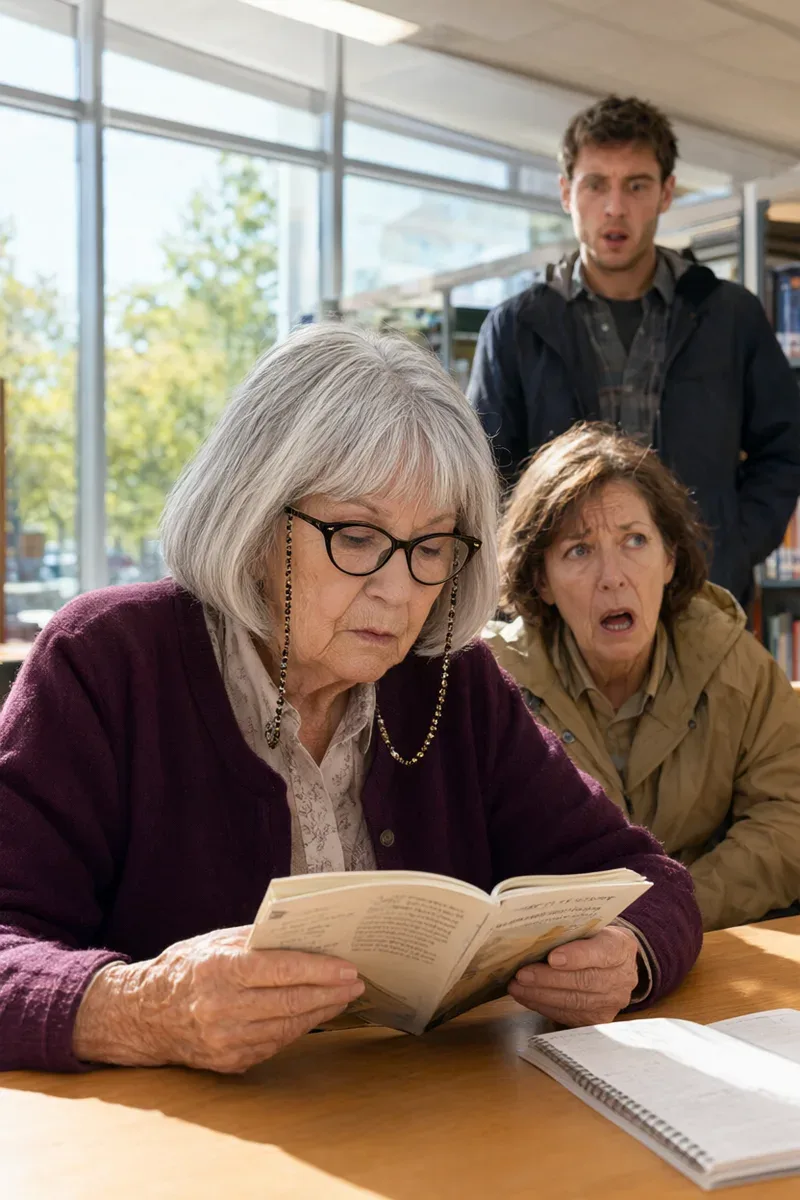
On the second Thursday in January, at two minutes past ten, Sidonie Dask came through the front door on her walker, by herself, with snow on her shoulders. Her niece's car idled quietly at the curb.
She put a novel on my desk. A thick, foolish one with a foil cover, which I did not say a word about.
I opened it. Every corner lay flat. Tucked at page 211, where she had stopped, was a strip of brown bakery paper from a cardamom bun, folded neatly in half.
I opened the Grievance Ledger and wrote the date, and under it, S. Dask. Bookmark.
The End