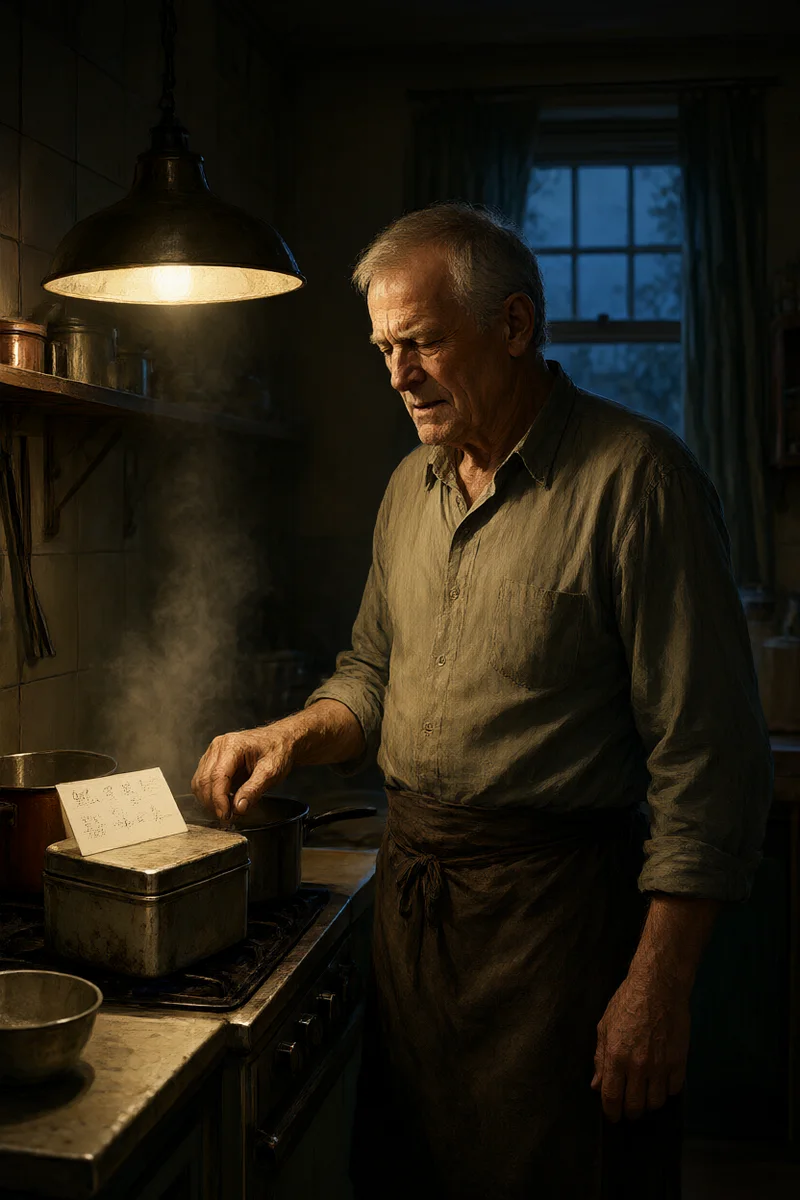
 Effie's Recipe Tin
Chapter 1
Hot as August
For seven weeks after the funeral Lorcan Pettigrew lived on toast.
He was seventy-four. He had surveyed half the roads in the county with a theodolite and a measuring chain, and he could tell you the grade of any hill within half a percent by walking up it, but in fifty-one years of marriage he had never cooked anything that did not come out of a slot. Effie had done it. Effie had done it because, she said, the one time he tried, in 1979, he had put a whole tin of curry powder in a shepherd's pie and the dog had refused it.
So: toast. Toast with butter, toast with cheese on it, toast with a tin of beans on it when he felt reckless. His trousers began to hang off his hips. His neighbor, Sunniva Kask, a large Estonian widow from number 31 who had brought him four casseroles in May and been sent away with three of them uneaten, said through the fence that he was beginning to look like a coat on a hook.
“Nobody asked you,” Lorcan said.
“Nobody ever does,” said Sunniva, and went in.
It was the bread that did it. He woke on a Saturday in July wanting Effie's soda bread so badly that he stood in the kitchen in his vest and said so, out loud, to nobody. Then he got the step stool and took down the recipe tin.
It was a battered red cake tin, the paint worn through to silver at the corners where her hands had held it. Inside were index cards in alphabetical order, soft as cloth from handling, spotted with fifty years of butter and gravy. Her handwriting on them changed as he flipped through, from the round careful letters of a young bride to the quick slant of a woman feeding a teenage boy.
SODA BREAD, he found. Flour, the blue bag. Buttermilk till it looks right. Salt, some. Oven hot as August. Don't fuss it.
He read it three times. Till it looks right. Hot as August. What temperature was August? He had spent his life with instruments that measured to the thousandth of a foot, and his wife had left him a recipe that said some.
Then he turned the card over.
On the back, in blue ballpoint, in a hand he barely recognized because it was shaking so much, she had written:
Lorcan. 220 on the dial. Looks right means like porridge that's been left out. You will make a mess. Make it anyway. Love, E.
He had to sit down on the step stool.
That ink was new. That shake was new. It was the hand of the last six months, after the diagnosis, when she could barely sign the forms at the hospital. She had sat somewhere in this house, while he was out at the hardware shop or asleep in front of the cricket, and gone through her tin, card by card, writing to him.
He flipped through. They all had notes. Every one.
He made the soda bread. It came out the shape of a cow pat and the texture of a paving slab, and he ate half of it standing at the counter with butter, and wept, and ate the other half.
Then he went back to the tin. At the very end, behind Z, behind a card for ZUCCHINI FRITTERS that he had always hated, there was one card turned to face the wrong way, its blank back toward him. Clipped to it with a paperclip was a slip of paper.
SUNDAY STEW, it said on the slip. Do this one LAST, Lorcan. Not before you've done the others. I mean it. I'll know.
The End









