 Day-Old Bread at Six
Chapter 9
What He Knew
I gave it a day. The bakery was open on the twenty-sixth, and grief has always made me knead harder. By noon I had sold out, and I drove to the Varrow House with flour still on my jeans.
Imelda Paskow met me at the door herself. She didn’t pretend anymore. “He’s in the library. Since yesterday afternoon. Orsolya keeps bringing him tea and he keeps not drinking it.”
He was sitting under the photograph of the two boys, with papers across the long table: the watercolor plan, the map, a laptop with its cord still wrapped. He hadn’t shaved.
“Tell me what ‘hold’ means,” I said. “It means stop. I wrote it the day Barnabas’s schedule came. I wanted the bakery left out until I decided. I didn’t tell him why. I didn’t tell anyone anything.” He pressed his palms flat on the map. “He read it as wait. And he went to your mother.”
“Did you pick my lot because I was a holdout?”
“I picked your lot because at five in the morning it was the only lit window on the street, and it smelled like my grandmother’s kitchen, and I was ashamed of what I was going to do to it.” His voice stayed level, and I could see what that cost. “I came to Tamsack fourteen months ago to look at the waterfront before I signed phase two. I told myself I was deciding. I was hiding, and the company kept moving while I hid, and Fenno closed.”
“You lied to me in that kitchen. Not about your brother. I asked you about my father’s building with buttercream up to my elbows, and you looked at the floor and said no.”
“I know.” “Why?”
“Because you were going to look at me the way you’re looking at me now,” he said. “And I wanted one more night of you not looking at me like that.”
It was the truest thing he had ever said to me, and it didn’t make anything better.
“Barnabas says you won’t kill it. He says you don’t have the stomach to kill your brother’s idea.”
He looked up at the photograph. The smaller boy was missing a front tooth and laughing at something off camera.
“Tobin drew a boardwalk,” he said. “A place people could walk along the water for free. That’s all he ever drew. The glass buildings were Barnabas’s. I signed them because the plan had Tobin’s name on it, and I couldn’t stand to change anything with his name on it.”
“So change it.” “If I go back, I go back all the way. The board, the press, Barnabas, the lawyers. Everything I ran from.” He rubbed his face. “There’s a board meeting on the twenty-ninth.”
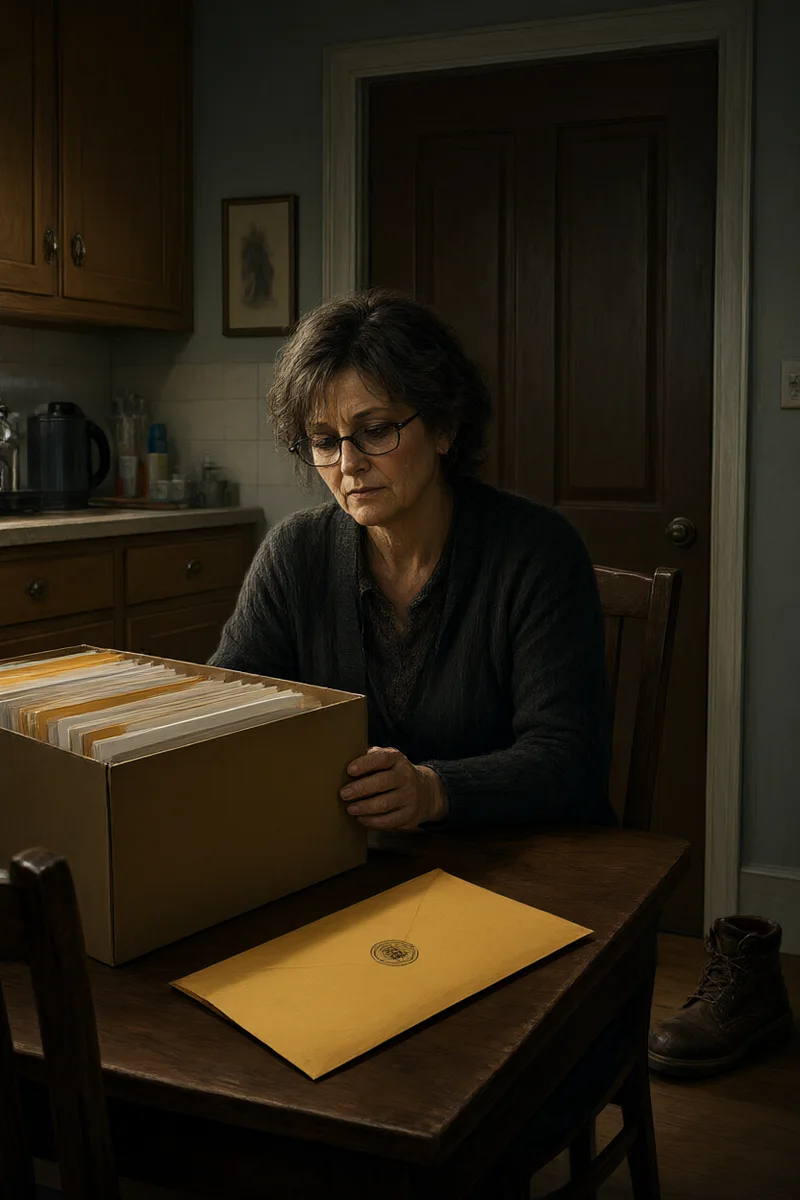
I put Barnabas’s offer on top of the map. Then I put the bakery envelope on top of that, still sealed. He must have slipped it into my van in the hotel lot that night; I’d found it on the passenger seat.
“I’m not deciding about you today,” I said. “I don’t know if I can. But I’m not selling.”
I left him there. The next morning at six I lay awake in the dark, listening. The lot behind the bakery was silent. For the first time since November ninth, nobody came to shovel.
At seven, Mrs. Ilka from the laundromat banged on my glass in her nightgown and parka, waving a sheet of Varrow House letterhead. “Carys! Every door on the street got one!”
CORWITH THORNE GROUP, SPECIAL MEETING OF THE BOARD. DECEMBER 29, 10 A.M., THE VARROW HOUSE BALLROOM. OPEN TO THE PUBLIC. RESIDENTS OF PINCHOT STREET ARE INVITED TO SPEAK.
At the bottom, one line in blue ink, copied onto every sheet: Ask me anything. —Q.T.
The End