 Day-Old Bread at Six
Chapter 7
Marrow Creek
At six on Christmas morning I heard the shovel: the scrape, the pause, the soft thump of snow thrown onto the pile by the dumpster. I counted forty-one scrapes before I got up.
He was in the olive parka again. The suit was gone. He had cleared the whole lot and was starting on the sidewalk.
“It’s Christmas,” I said from the doorway. “It still snowed.”
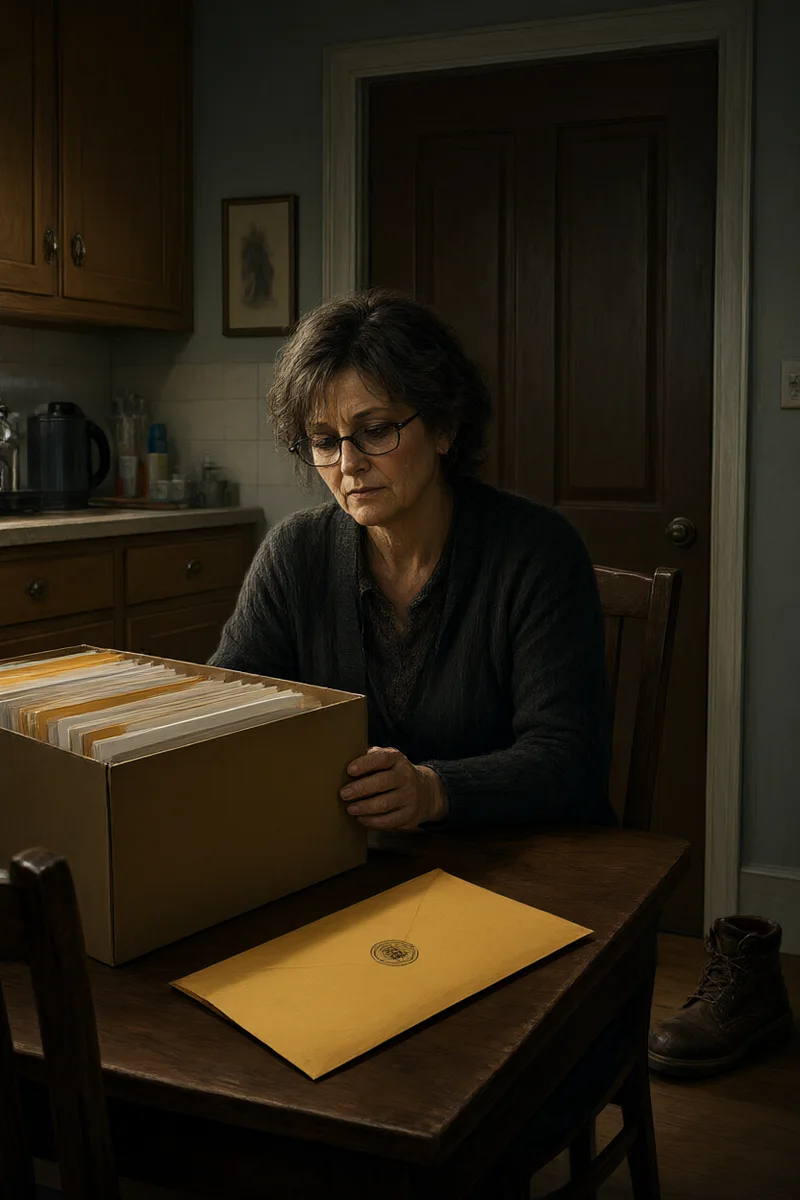
I held up the manila envelope. He read it under the light over the back door, snow collecting on his shoulders, and when he got to the word partition he folded it in half very carefully, the way you fold something you want to tear.
“She signed it Wednesday,” I said. “While you were separating eggs.” “I’ll fix it.”
“With money?” I took the paper back. “I don’t want you to buy my bakery from my mother, Quentin. I want to know who you are. You can tell me in the snow or you can come inside, but you are going to tell me.”
He came inside. I made coffee. He sat at the little table by the proofing rack where my father used to do the books, and he talked to his hands.
He had a brother, Tobin, nine years younger, the boy in the smaller life jacket. Their father had built Corwith Thorne Group, hotels and waterfront development across three states, and left control of it to Quentin. Their father’s brother, Barnabas, had been president for twenty years. Two winters ago, on a project at a place called Marrow Creek, the environmental reports turned out to be falsified. The signatures on them were Tobin’s.
“I fired him in front of the board,” Quentin said. “I didn’t ask him a single question. I read the papers Barnabas put in front of me and fired my brother in a conference room in Grand Rapids like he was a stranger.”
Tobin drove north that night, toward the lake, toward this hotel. The county road was black ice. He was twenty-five.
“Three months later I found the emails. Barnabas wrote the reports and used Tobin’s login. Tobin never saw them.” He turned his cup. “My lawyers said I could probably prove it in four or five years. I couldn’t sit in that building with Barnabas for four or five years. So I came to the one place that was mine and not the company’s, rented a room over the bait shop, and tried not to be anybody.”
“And the shoveling?”
“I walked past here every morning at five. It was the only thing open. It smelled like—” He stopped. “I couldn’t keep walking past.”
I didn’t say I forgave him, and he didn’t ask. But I put a slice of Augustine sourdough in front of him, toasted, with butter, and he ate it.
At eight there was a knock on the front glass. It was Junie, in a Varrow House bathrobe under her parka, holding the top tier of her own wedding cake in a pastry box.
“You’re supposed to freeze that for your first anniversary,” I said.
“I wanted you to have half.” Her chin was wobbling. “I let Mom seat you by the kitchen. I let Thayer stand up. I let you make my cake after she said you weren’t good enough to. I was a coward the whole time, Carys.”
I pulled her inside and held her, cake box and all, until she stopped shaking.
Behind her, a black Mercedes pulled into the lot Quentin had cleared. A tall man in a camel coat got out, silver at the temples, with Quentin’s exact jaw.
Quentin stood up so fast his chair went over.
The man knocked on the glass and smiled at me. “Ms. Odell? Barnabas Thorne. I think my nephew owes you an explanation.”
The End