 Day-Old Bread at Six
Chapter 10
Warm Bread
The ballroom still had Junie’s wedding garland on the windows. By ten o’clock on the twenty-ninth, all two hundred folding chairs were full. Fenno came in his good cardigan. Mrs. Ilka brought her sister. My mother sat alone in the back row in the cream coat. Junie sat beside me and held my hand the way she had on the cake knife.
Thayer stood against the wall by the doors, without Marjolaine. I heard later that her father had made two phone calls about the condemnation story and uninvited him from New Year’s in Palm Beach.
The board sat at a long table on the stage, seven people in dark suits, Barnabas at the center.
Quentin walked in at 10:02 in a navy suit, new, and shaved. He did not sit at the table. He stood at the lectern and put both hands on it.
“My name is Quentin Thorne. I control fifty-four percent of Corwith Thorne Group through my father’s trust. For fourteen months I let other people use that vote. That ends today.”
It took nineteen minutes. I timed it on my phone, because I needed something to do with my hands.
Phase two was withdrawn. Lakeline would not close on any Pinchot Street agreement, including the one for half of number 18. Fenno’s building and the laundromat would be sold back to their owners at the price Lakeline had paid. Kettering Commercial’s contract was terminated, and a complaint had gone to the state licensing board about statements made to sellers regarding a condemnation no one at the county had ever discussed.
Thayer left before that part was finished. Then Quentin handed each board member a folder. “These are the Marrow Creek emails. They show who wrote the reports signed with my brother’s login. I’m asking the board to remove Barnabas Thorne as president, effective today.”
Barnabas didn’t raise his voice. He stood, buttoned his coat, and walked down the center aisle, and nobody on Pinchot Street moved their feet to let him by.
The vote was six to one. The company would write off the thirty-one million it had spent on phase two. Quentin asked that it be recorded under his name. Only the boardwalk would be built, free and public, on land the company already owned south of the marina. It would be called what Tobin had written on the napkin: the Long Walk.
When he asked for questions, I stood up.
“Mr. Thorne. Is there anything you want to say out loud?” The whole room turned. He looked at me the way he looked at the lot before he started.
“I lied to you,” he said into the microphone, in front of two hundred people. “In the kitchen, on the twenty-fourth, at about five in the morning. You asked who was buying your street, and I said I didn’t know. I’m sorry.”
I sat down. Junie squeezed my hand until it hurt.
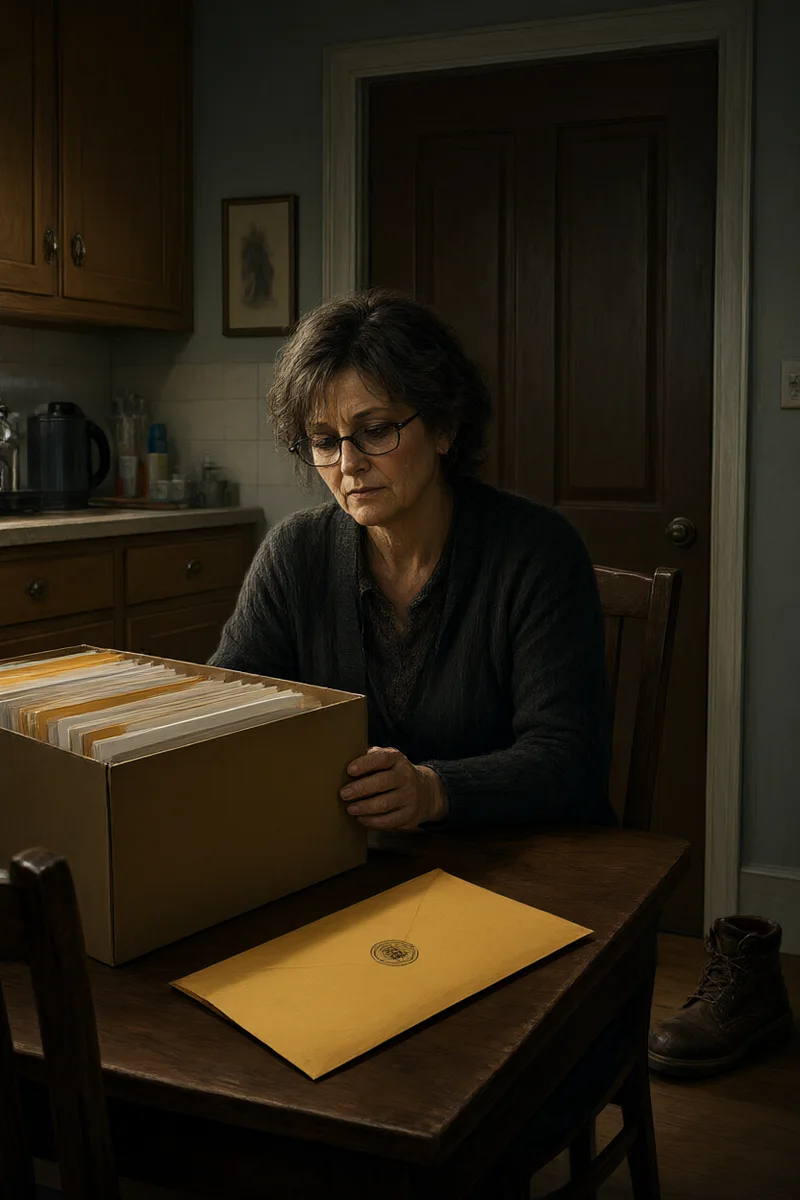
My mother caught me in the lobby afterward. She had lost her deposit in Naples. She didn’t mention it.
“Your father would have been proud of the cake,” she said to the antler chandelier. It was further than she had ever gone.
“I’ll buy your half,” I said. “Fair price. Every month, slowly.”
She nodded once, and I noticed her hands shook too.
The first Monday in January it snowed four inches overnight. At six I heard the shovel.
I went out with a paper sack. Rye, too hot to slice, steam coming off it in the cold.
He took it in both hands. “That isn’t day-old.” “No.”
He waited, the way he always did, at the edge of the doorway. Inside, on the hook beside mine, I had hung a second apron. I stepped back and left the door open.
The End