 Care of Langstrom's
Chapter 5
Blue Ink
The head office of Langstrom's took up two floors of a mirrored building in an office park called Meridian Commons, eleven miles from anything a person could buy. Everett had approved the lease six years ago and had been inside perhaps a dozen times. The receptionist asked whether he had an appointment.
Lyman Stuyvesant did not get up. He was fifty, exact and tired, and he had run fourteen stores for nine years on behalf of a man who returned signed papers by courier. "The Courier had the story," he said. "A reporter called at noon. I wasn't going to let a hundred and twenty people read it in tomorrow's paper, so I told them myself. You could have been there."
"Brightwater isn't signed."
"It's a letter of intent. We sign the purchase agreement on the eighteenth, and we want to, Everett. Corliss Street loses $1.4 million a year. It has lost money six years running, and the bank that holds our credit line has been polite about it for five."
"Show me the seasonal cuts. November."
Lyman found the page in under a minute, which was its own rebuke. Forty-one positions, Corliss Street gift wrap and floor support, projected savings $96,000. On the approval line at the bottom, E. Langstrom, November 17, in the blue ink of the pen that was in his breast pocket now.
He did not remember it. That was no excuse; it was the offense. The stacks came up the hill on Mondays with yellow tabs, and he signed at the tabs, and the courier took them away.
"You haven't read a stack since she died," Lyman said, not unkindly. "Somebody had to run it. I'd have liked to run it with you. I got the tabs."
"What do we pay for this building?"
"This one? Seven hundred eighty thousand a year. Why?"
Everett took the napkin from his pocket and flattened it on the desk. Lantern Diner, it said in the corner, and under that in blue ink: floors 3 and 4, Rt 9 lease, lunch.
"That isn't a plan," Lyman said. "That's a napkin."
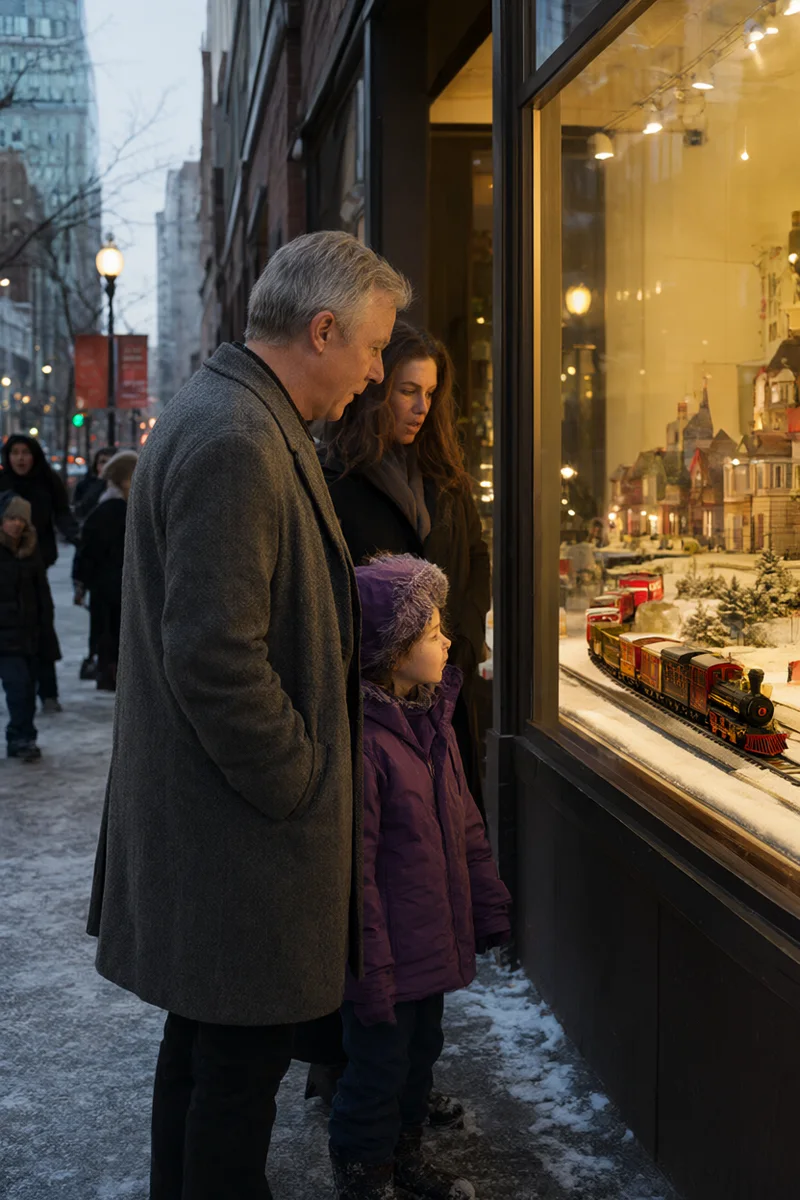
"I know what it is. What happens to the window? The train."
"Fixtures go with the building. Brightwater's liquidator will sell it as a lot." Lyman rubbed his eyes. "If you don't sign on the eighteenth, the bank will want something with numbers in it by the twenty-third. Real ones. And they'll ask what you personally intend to put behind it, because they have noticed where you've been."
It was past seven when he got back downtown. Through the Lantern's window he could see Josie stacking chairs on tables, alone, quick and angry about it. He sat in the car with the engine running and composed the sentence four ways. He had delivered bad news to bankers, to unions and once to a governor, and he could not get out of a parked car. Tomorrow, he decided. In daylight.
He slept very little. On Saturday he was at the diner door at half past three because his feet took him there. The bell rang. Nobody called him booth four. Lucinda, at the register, looked at him the way she would look at a spill.
That morning's Wexford Courier lay on the counter, folded to the story. LANGSTROM'S TO SHUT CORLISS ST. FLAGSHIP DEC. 26. Beside it ran the company's photograph of its founder, taken two springs ago for the website, in a gray coat because he had refused to take it off.
Josie stood behind the paper with the coffee pot. She did not pour.
Tilly popped up over the back of booth four, delighted to see him. "Ev! You're in the newspaper. But they spelled you wrong."
The End









