 The Seal Room
Chapter 10
0431
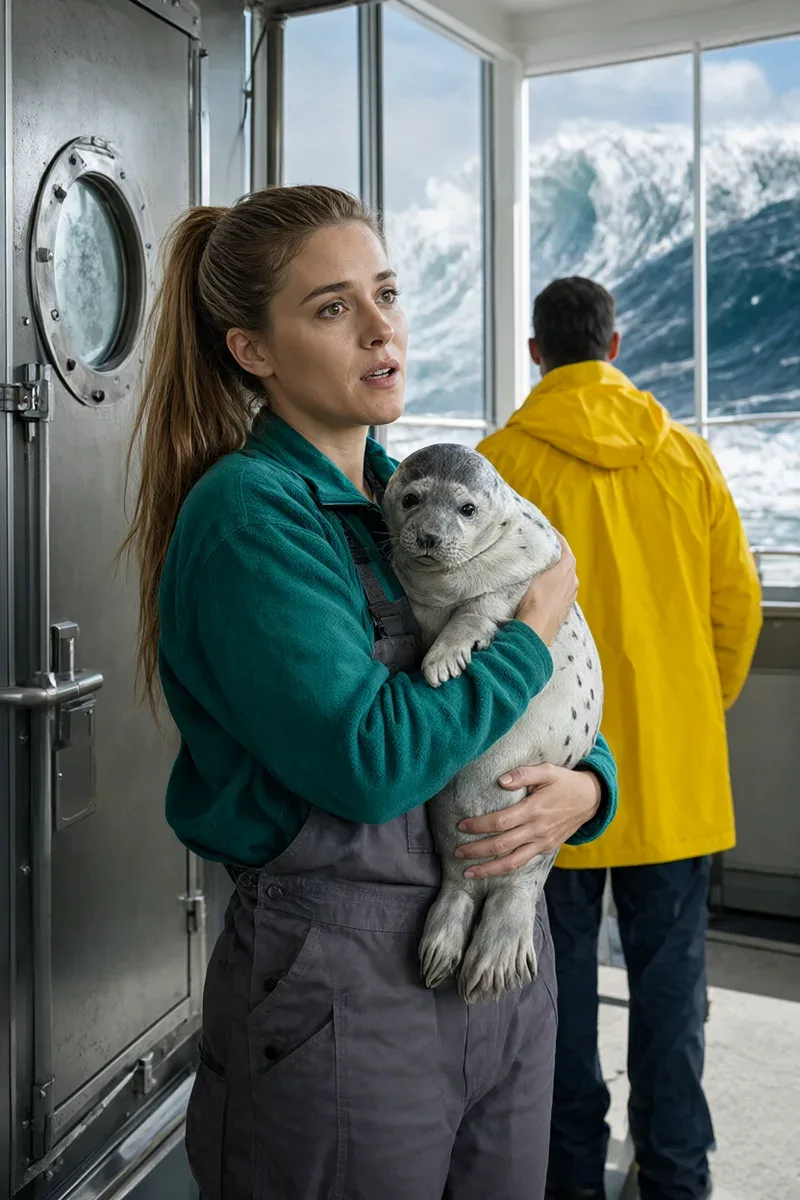
The sea took until dark to finish. At six the next morning, at dead low water, Deputy Imada walked out along what was left of the causeway with a county photographer, and Wynter watched from the bluff through borrowed binoculars, with Pebble asleep in a laundry basket at her feet.
The roof of the seal room was gone. The windows were gone, frames and all. But the Navy had poured those walls two feet thick in 1958, and they stood, and in the landward wall the steel door stood shut in its frame with its porthole unbroken.
The photographer took a long time over the outside of it. The bolt was shot home in its bracket, and a strand of kelp had wound itself three times around the handle.
A jammed door did not need a bolt. A woman shut inside could not have reached one.
After that it went slowly and in order. A dive team pumped the shaft, and the tanks and crates were where she had said. A federal fisheries agent from Seattle laid the eleven tags beside the release log and beside eleven wires into Tideline Husbandry, which turned out to have one member and one bank card. In August, agents walked into Marazul Reef. All eleven seals were alive. They were too used to people ever to be released, and they went to an accredited aquarium in Tacoma, where Wynter visited Limpet twice that winter.
Pebble went back to the sea in October at fifty-four pounds, off North Spit, with nine people on the sand to see it.
Merrick Lofthus pleaded guilty in Grays Harbor County Superior Court to attempted murder in the second degree and was sentenced to twelve years. A federal judge added thirty months for the sales and the false records, ordered $203,500 repaid, and barred him for life from holding any marine mammal under permit.
Dane pleaded too: one count of making a false record, two years of probation, $4,400 to pay back. The Coast Guard revoked his captain's license, which was the only thing he had ever wanted to hold. He testified against Merrick for most of a day and did not once look to see whether she was watching.
She spoke at his sentencing. She said he had left her at that door. She said he had also gone to a deputy and put his own name in it before he knew there was anyone left to save, and that both things were true. Mrs. Eskildsen did not speak to her for four months afterward.
She had moved out of the duplex by then. He carried her boxes down to the car, and neither of them pretended it was anything other than what it was.
The new center opened in the spring on county land eighty feet above the water, paid for in part by the restitution, and the stranding network asked Wynter to run the pup program. She wrote its first rule herself. No animal left without two people on the beach.
The first release was a male pup in June, fifty-three pounds, with Mrs. Eskildsen signing as witness. Wynter had texted Dane the date. She had not known whether she would until it was sent.
He came. He stood at the top of the beach with his hands in his jacket pockets, thinner, with sawdust in his hair from the boatyard in Hoquiam where he sanded other people's hulls.
The pup went down the sand and into the surf without looking back.
“There's one hauled out on the rocks,” Dane said. “Tagged.”
She walked up and gave him the binoculars. “You have to actually look.”
“I'm looking.” He worked the focus. “Orange. Zero, four, three, one.”
Out on the feeding rocks a silver yearling with dark spots lifted her head toward the beach, yawned, and laid it down again in the sun.
The End