 The Quarantine Kennel
Chapter 4
Transfers
The ledger was the green cloth kind sold in office stores, and it was written in block capitals she knew. Burl Cobb wrote up the maintenance board in the staff room in that hand every morning. He had run the sanctuary's buildings and grounds for twelve years. He called her kid.
Each line had a date, a species, a column headed IN and a column headed OUT, a price, and a last column that split the price in two. Sixty percent sat under the letters TH. Forty sat under DC.
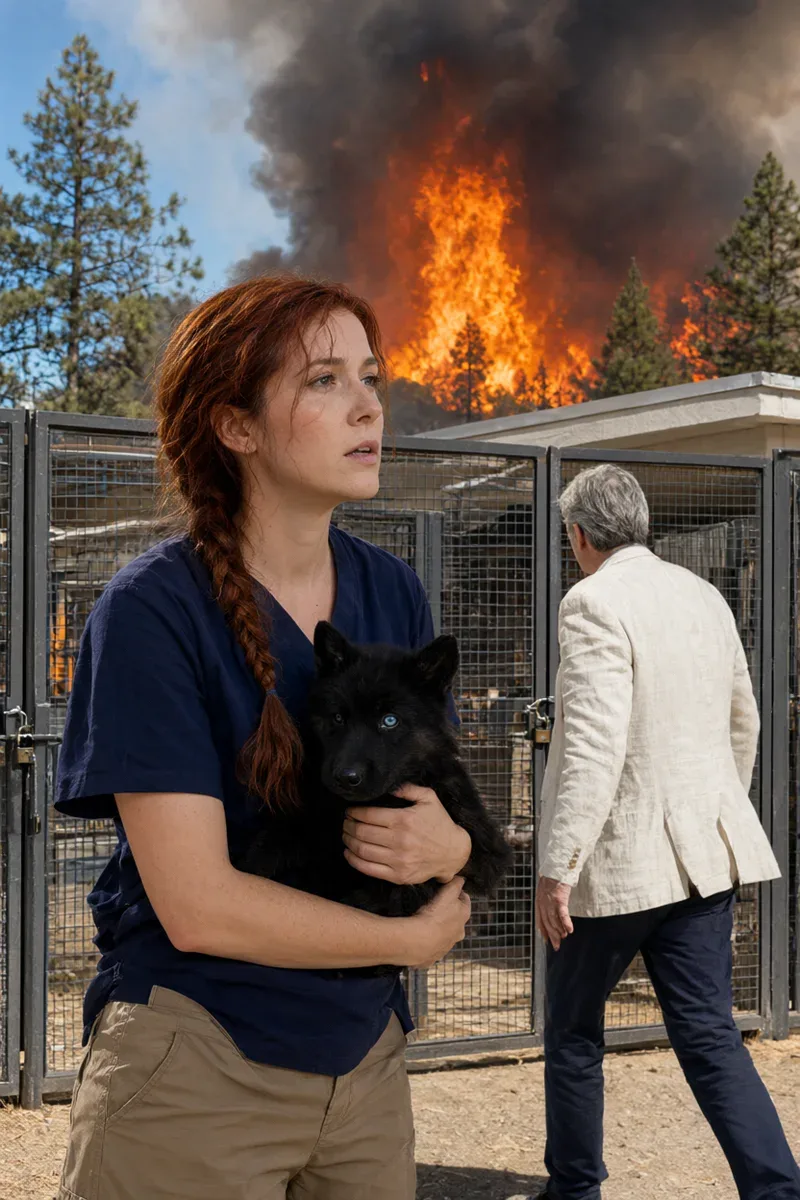
She read it standing, with the pup asleep against the chain-link and his mother asleep on the other side.
The animals came in at the top, through quarantine, as rescues and seizures and surrenders, with stories that made the donors cry. Some of them stayed. The ones worth money went down the hatch at night, were written off upstairs as dead or as transferred to an accredited facility, and left by the tunnel. A clouded leopard cub, $28,000. Four lemurs. A pair of ocelots she had bottle-fed herself and been told had gone to a zoo in Ohio.
BLK WOLF F, BLUE L EYE. OUT: ELKO, BREEDING LEASE. Then, a year on: LITTER 5. 4 SOLD @ $6,500. 1 HELD, ODD EYES, ASK TH. And six weeks ago, two days before the federal raid: BLK WOLF F BACK IN. HOLD FOR BUYER.
Somebody had known the raid was coming. The fifth pup had been left behind for the agents to find, and he was asleep at her feet.
At the bottom of the last full page Cobb had totaled the year. $412,000.
She photographed every page. Her phone said 5:12 p.m., thirty-one percent, no service. Then she slid the ledger down the back of her waistband and pulled her scrub top over it, where it sat flat and cold against her spine.
After that there was nothing to do but wait, and waiting let her brother in.
Their mother had died when Liesel was twelve and Soren was nineteen. He had gone to the county office in his one good shirt and signed the papers to keep her. He had taught her to drive on fire roads. And at every Thanksgiving since he joined the service he had said the same thing about the job, until she could say it with him: you never spend the six you have for the one you want.
She had always nodded. It had always been about strangers.
She did his arithmetic for him now, on the cellar floor. Bolt cutters from the compartment. The perimeter gate, forty yards uphill. The kennel, the lock, the run back. Three minutes, or four. The radio had given him two. Seven people in that truck, and six of them were somebody else's son or sister.
It came out the same every time she ran it. She hated him anyway. She found that she could do both.
At nine she climbed the ladder and could not hold her palm near the plate. At midnight it was only warm. By now people down the mountain had been told she was dead, and he was one of them. Let him, she thought, and was ashamed, and then was not.
On a post at the tunnel mouth was a stencil with an arrow: HAULAGE LEVEL. PORTAL 1,900 FT. She knew where an old mine on this ridge would have come out. The mill flat, at the bottom of the east side, where the donor shuttles parked.
She slept a little, sitting up. At 4:05 she cut a length of nylon cord off a crate, tied a slip lead, and opened the pen.
Sable stepped out and stood over her pup. Nothing was between them now but air.
Then the work lights browned and went out, all of them at once, and the dark in the cellar was total.
The End