 The Firehouse Bell
Chapter 5
Midnight
Teddy was on his feet. “Wade,” he said, low. “Don't.”
Wade didn't look at him. He looked out at the folding chairs, at the faces he had known for sixty-six years, and he took off his cap. “That flyer,” he said. “The truck was mine. I was driving it. I'd been drinking since six o'clock. Teddy Tibbet was sitting in the passenger seat, sober as a judge, and he slid behind the wheel before the deputy came so I wouldn't go to prison with a baby on the way. And I let him.”
There wasn't a sound in the firehouse.
“That's all,” Wade said. “I should've said it in 1981. I'm sorry it took my sister to make me.”
He put his cap back on and walked out the way he had come, and Loretta went after him, and then, more slowly, so did Corey.
People said afterward that it was the quietest forum in the history of Ludlow Gap, because nobody could think of a single question to ask.
Wade did not speak to Hazel for the rest of that week. She had expected that. She had not expected it to feel the way it did, like a tooth gone. She called twice and Loretta answered and said, give him time, honey. The county attorney, who was thirty-one, let it be known that he would look into the matter, and in the spring let it be known that he had.
On Tuesday, Ludlow Gap voted. Hazel voted for Teddy. The count came in at a quarter to ten, posted by the clerk on the firehouse door. Tibbet, 212. Penrose, 97. She looked at that ninety-seven for a while. Nearly a hundred people had voted for a woman who'd asked them not to.
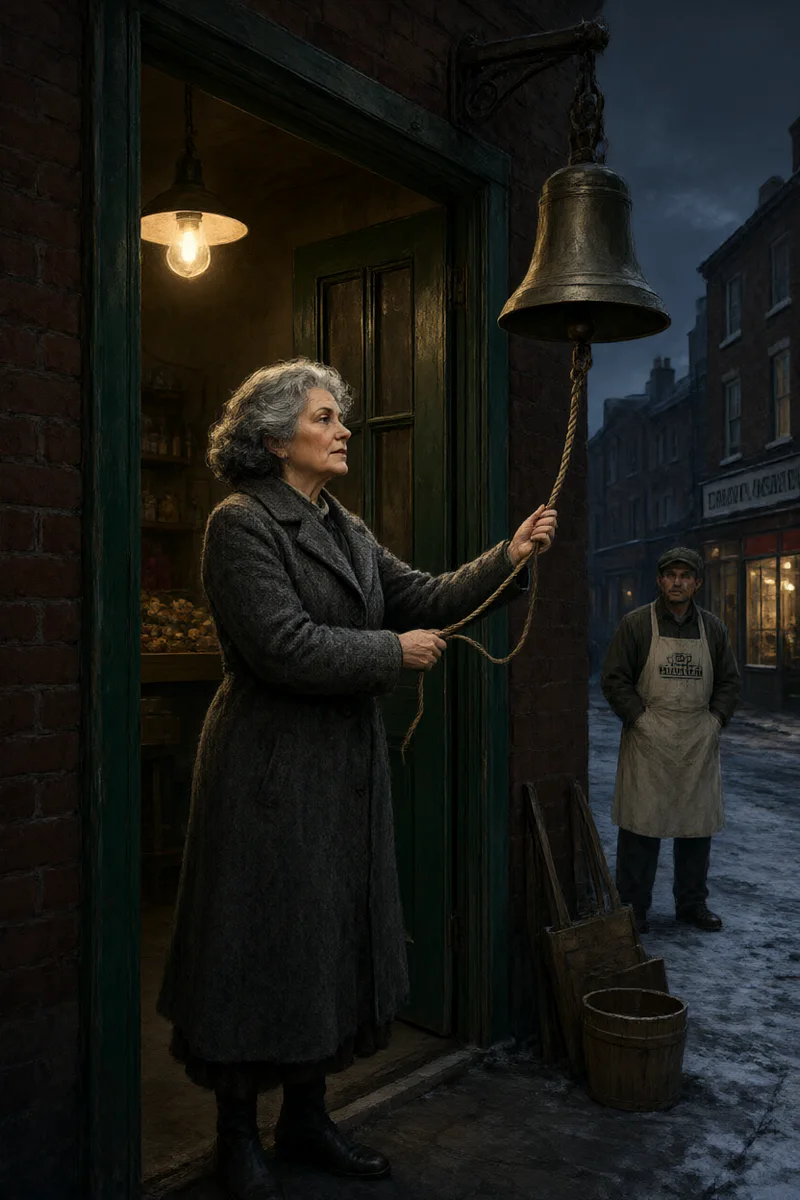
In Ludlow Gap, since 1902, the loser of the mayor's race rang the firehouse bell at midnight on election night, once for every year of the winner's term. Nobody remembered why. It was just done.
At five minutes to twelve Hazel walked down Main Street in her wool coat with her hands in her pockets. The frost was coming up white on the street. A single bulb burned over the firehouse door, and the old iron bell hung in its frame above the apron, with the rope tied off to a cleat on the wall.
There were more people waiting than she had expected. Patsy Ritter. The Ritter brothers. Dustin, standing well back with his hands jammed in his jacket. Teddy, in his grocer's apron under his coat, as if he'd come straight from closing out the register.
And on the far side of the apron, with his cap pulled down, Wade.
She untied the rope. It was colder and heavier than she had thought. She pulled, and the bell swung, and the sound went out over the town and came back off the ridge.
Once. Twice. On the third pull she felt the rope go easier, and looked, and her brother's hands were on it under hers.
They rang the fourth together, for the fourth year of Teddy's term, and let the rope go.
In the ringing quiet afterward Teddy crossed the apron. He did not say anything to Wade for a while. Then he put out his hand, and Wade looked at it a long time and took it.
“I'm putting the water sale to a town vote,” Teddy said to Hazel. “In the spring. I'd like you to run the other side.”
“I'd like you to lose,” Hazel said.
“I imagine I will.”
On Wednesday at noon she went into Tibbet's Market. Teddy was behind the deli counter, slicing bologna. He laid out white bread and too much mustard.
Then, without asking, he laid out a second sandwich beside hers.
The bell on the market door jingled. Hazel didn't turn around. She knew the sound of her brother's boots.
The End









