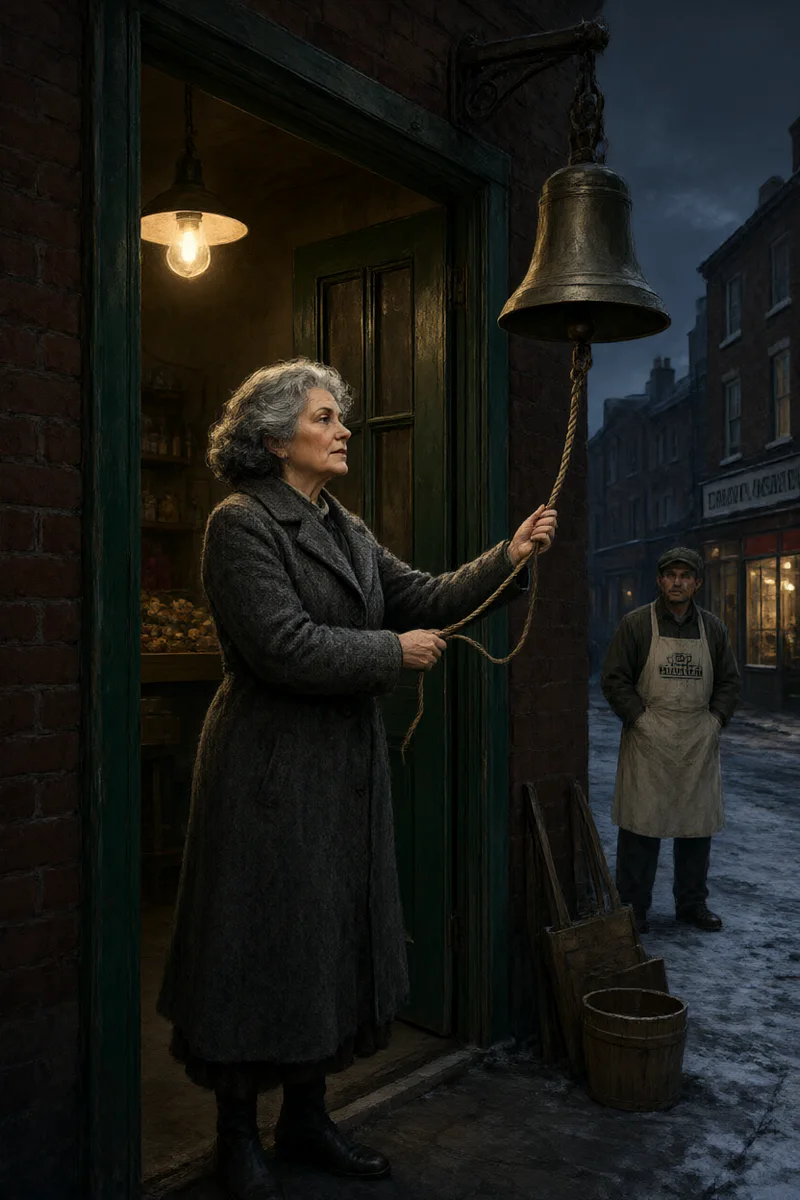
 The Firehouse Bell
Chapter 2
Concerned Citizens
It took her eleven minutes to find out who Concerned Citizens of Ludlow Gap was, because there was only one copy machine in town that left a gray stripe down the left margin, and it was in the county library annex, and the librarian had seen Dustin there on Monday with a roll of microfilm. He did not even try to deny it. He stood in her kitchen looking proud and frightened at once.
“It's public record, Hazel. It's true. People deserve to know who they're voting for.”
“People knew,” Hazel said. “Everybody over fifty in this town knew. They decided a long time ago it was paid for.” She held out her hand. “Give me the campaign checkbook, and the key to the feed store.”
He gave them to her. She typed a statement on Clay's old typewriter and walked it to every door on Sycamore and Main herself, and to the county paper. It said she had not known about the flyer and did not approve it. She did not say she had fired her daughter's husband. Ludlow Gap would know that by suppertime.
Then she walked to Tibbet's Market.
Teddy was in the canned goods aisle with a pricing gun, stocking green beans. The store was empty, which on a Thursday afternoon it never was. He did not stop when she came down the aisle.
“Teddy, I didn't—”
“I know you didn't.” Click, click went the pricing gun. “I saw Dustin's car at the library. It's all right, Hazel.”
“It's not all right.”
“Every word of it's true.” He set a can on the shelf with its label facing out. “I was nineteen and I did a stupid thing on Shiloh Bend, and a girl named Sharon Ellery didn't get to be twenty. I did my time. I'm not going to stand here and argue about it with you or anybody.”
“It was Wade's truck.”
The pricing gun stopped. “I borrowed it,” Teddy said.
“Wade never lent that truck to anybody. He wouldn't let Clay drive it to the dump.”
Teddy turned around then. He looked older than she had ever seen him, older than at Clay's funeral, and very tired.
“I borrowed it,” he said again. “Go home, Hazel. Win your election. You'll be a good mayor. You were always better at saying no to people than me.”
Her brother Wade lived four miles out on Spring Run Road, on what was left of their father's farm. He was sixty-six and still ran a few beef cattle. He was in the barn lot when she drove up, forking hay off the back of the truck, and he did not come to the fence.
“I've seen it,” he called. “Leave it alone, Hazel.”
“Was Teddy driving your truck?”
He stuck the fork into the hay and left it there. He looked at her across the lot, and then he went into the barn and pulled the door shut behind him.
She stood by her car with the keys in her hand. The kitchen door of the farmhouse opened, and Loretta, Wade's wife of forty-six years, came down the back steps in a cardigan and house shoes, out into the cold, without a coat.
She came right up to Hazel and took hold of both her arms.
“Teddy wasn't driving,” Loretta said.
The End









