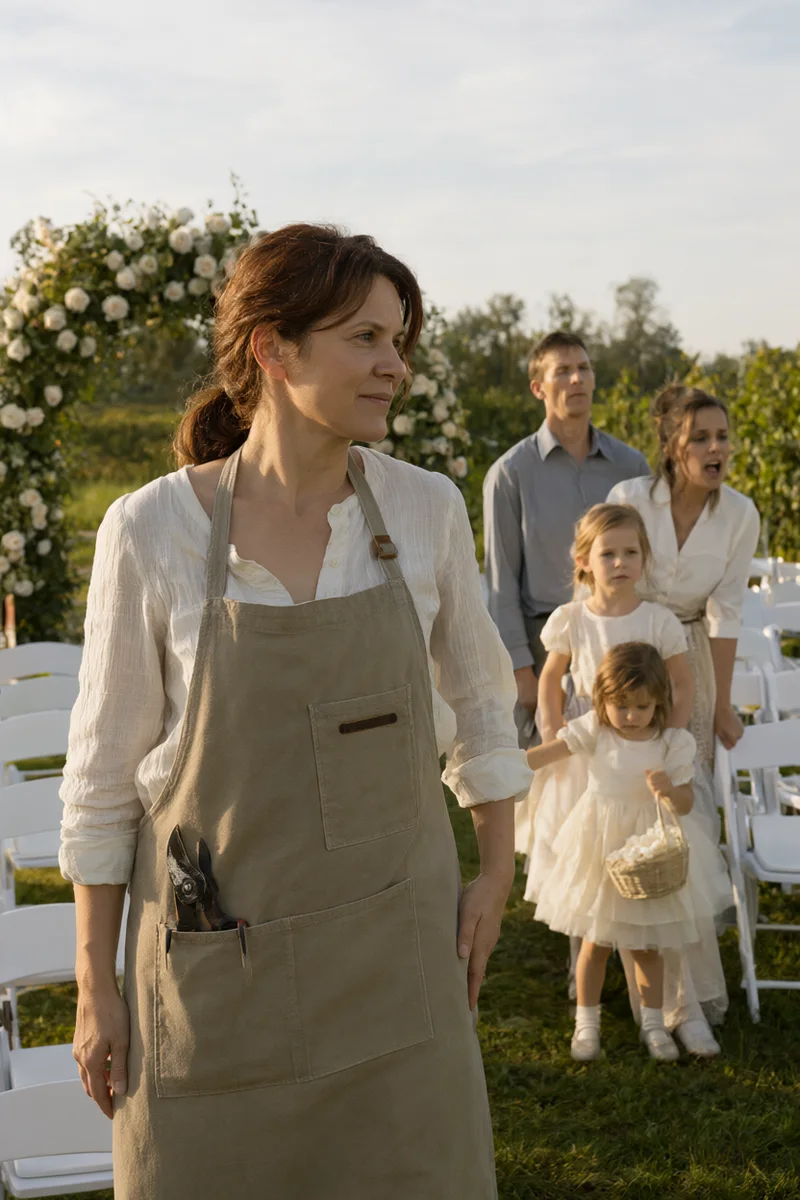
 The Borrowed Flower Girls
Chapter 7
Terms
I have never lied to them about anything bigger than the tooth fairy. I sat down on the edge of Elodie's bed and woke Margot, the only time I have ever woken a sleeping child on purpose.
"Margot's right," I said. "He's your dad. He didn't know about you until the wedding. A long time ago I sent him letters to tell him, and the letters never got to him."
Elodie thought it over. "Did you put stamps?"
"I put a lot of stamps."
"Does he know our birthday?"
"He does now."
Margot, mostly asleep, wanted to know whether this meant he would have to get a real dog. Then she wanted to know why he went home. I said grown-up paperwork, that it had nothing to do with them, and that I didn't know yet when they would see him. "But you're mad at him," Elodie said. I said yes, some. She nodded as if that squared with her own findings and went to sleep holding my sleeve.
Eight days later Thandiwe called me upstairs and put three things on her desk.
The first was a file-stamped notice. The petition had been withdrawn in full, by the petitioner.
The second was a letter from a Charlottesville lawyer I had never heard of, a Ms. Ottoline Reyes. She now represented Mr. Ashworth; Pellam and Stroud did not. Her client would sign an acknowledgment of paternity and pay support under the state guidelines, reaching back to the girls' birth, on whatever schedule my counsel cared to draft. Visitation, she wrote, was "at Ms. Castle's sole discretion until she decides otherwise."
"I've done this nineteen years," Thandiwe said. "Fathers' lawyers don't write that sentence. He must have made her."
The third was a plain envelope with my name on it in his left-leaning hand. One page.
"I read all nine pages after you held them up. I should have read them on Thursday. I should have read a great deal six years ago, and asked you one question, and I did neither. I fired Horace. I'm not asking you to forgive the petition or the hotel. I'm asking what the terms are. Whatever they are, I'll read every word. B."
I read it twice and was annoyed to find my eyes stinging.
"You don't owe him an answer," Thandiwe said.
"No." I turned his page over and wrote on the back with her pen. Saturdays at Linden Park, one hour, me present. No Ashworth lawyer anywhere near my children, ever. Nobody in his family contacts me or the girls except through him. Nobody tells them to call him Dad; they'll do it when they decide to, or they won't. One missed Saturday without a phone call and we start again from nothing.
Then I added a sixth line. He finds out who sent my letters back.
He signed it the next morning in front of Thandiwe, after reading it for four minutes by her desk clock. He rented the room over Dunleavy's Hardware by the month. That Saturday he was at the park at 9:49.
He called that afternoon from the road north. "The house letter," he said. "Four people lived at that address. I'm going to ask my mother to her face."
I had barely hung up when the phone lit again with a Hartford number I didn't know. A text.
"It's Sloane. I shouldn't send this and I'm sending it. Ask Bennett who the trustee of the Winslow Ashworth Grandchildren's Trust is. Then ask him what day Winslow died."
The End









