 The Borrowed Flower Girls
Chapter 1
Eleven Rows from the Altar
Margot stopped walking eleven rows from the altar, which was not in the instructions.
The instructions, as delivered that afternoon by a wedding planner on her knees in the gravel, were simple: walk slow, drop petals, do not eat the petals, keep going until you reach the lady with the clipboard. Elodie was following them to the letter. Margot had been, until she drew level with the groom and looked up.
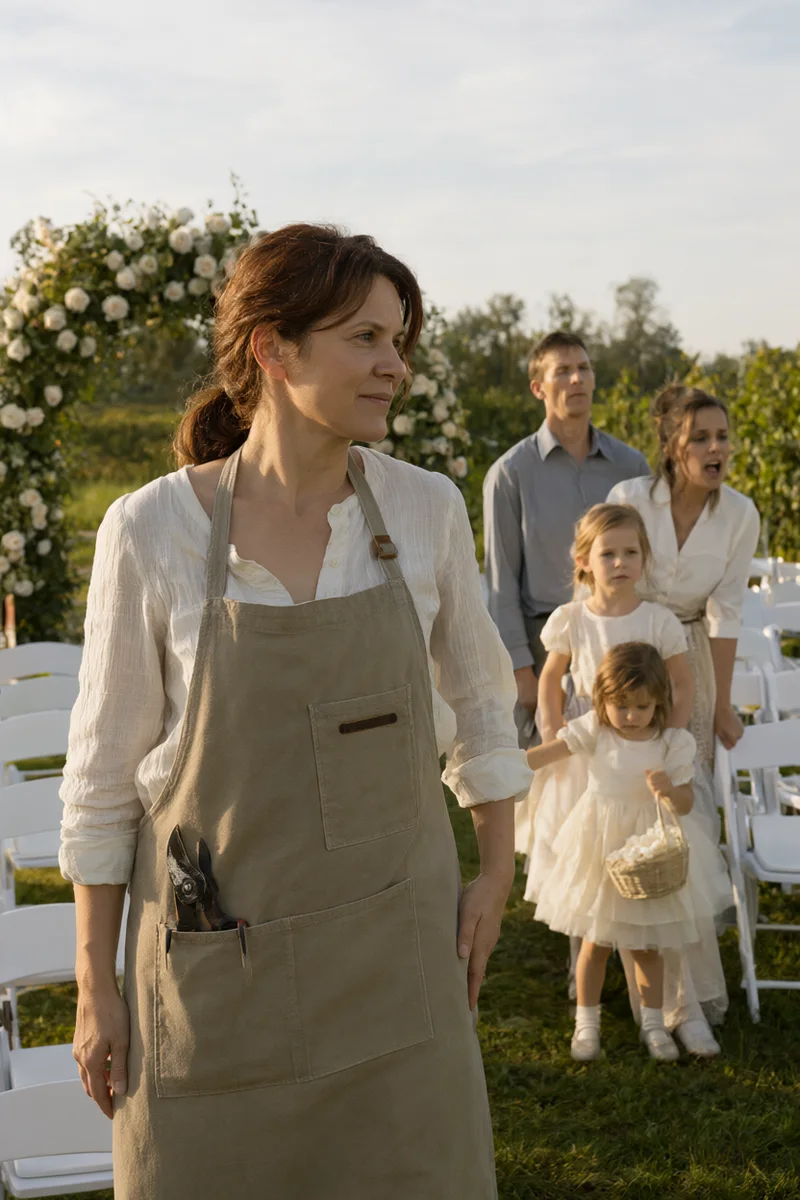
I was forty yards back, behind the last row of white chairs at Quillfeather Vineyard, with floral shears on my belt and a plan to be on the highway before the recessional. I saw her basket tip. I saw her point at his face.
"You have a brown piece in your eye," my daughter said, in the voice she uses for reporting spilled milk. The string quartet picked that second to finish a phrase, and two hundred and twelve guests heard her. "I have a brown piece in my eye. Mine's on this side."
Somebody laughed, kindly. The groom bent a little, the way tall men do with small children, and then he quit moving altogether.
"Mama says I got it from my dad," Margot went on. "Are you somebody's dad?"
"Margot," Elodie hissed, six steps ahead and furious. "We're supposed to keep going."
Here is what I knew, and when. Until 7:40 that morning I had known the job only as the Harkavy wedding: $6,800 of garden roses and smilax for Fenella Ferrant, the planner who sends me a third of my income. On Thursday the bride's nieces came down with chickenpox and Fenella called me close to tears. She needed two little girls, any two, to fit ivory dresses in a size five that were already paid for. I owned two little girls. I said yes.
At 7:40 I was up a ladder wiring the arch when the calligrapher set the welcome sign on its easel. Sloane and Bennett. Under that, in smaller script, Harkavy and Ashworth.
I climbed down and sat on the bottom rung. Six years and four hundred miles, and I had built my ex-husband's wedding arch.
Then I got back up, because the arch was half done and a florist who walks off a job at eight has cost her planner a reputation by noon. Finish, stay behind the hedge, collect the twins at the clipboard, go. He would see two flower girls from the side for about nine seconds.
It was a good plan. It did not account for Margot.
Bennett Ashworth crouched now, slowly, until his face was level with hers. He has gray eyes, and in the left one, down near four o'clock, a wedge of brown like a slice taken out of a pie. So does she. Elodie's are plain gray, and she will tell you this is unfair.
"How old are you?" he asked. The officiant's lapel microphone carried it over the whole lawn.
Margot held up one hand with the fingers spread. "Five. We're six in October. That's my sister. She's nine minutes older and she never stops saying it."
I watched him do the arithmetic. He used to count by touching his thumb to his fingertips when he thought nobody was looking, and his left hand was doing it now, against his knee. Nine months back from October put him in a January when we still shared a bed. We had signed the papers in March.
He looked up, past Margot, past Elodie, down the whole length of the aisle, and he found me standing by the hedge with my shears.
Beside him the bride lowered her bouquet, my bouquet, forty-one stems, and followed his eyes to me.
"Bennett," Sloane said quietly, "who is that?"
The End









