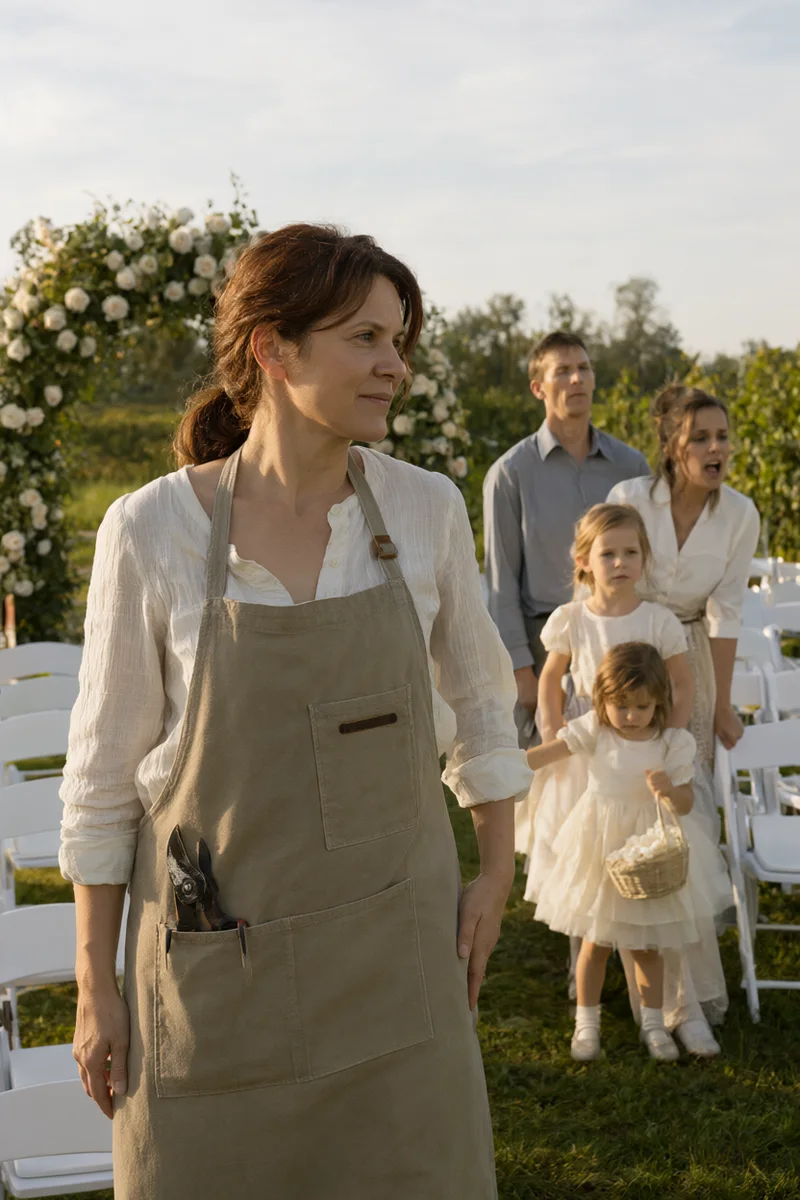
 The Borrowed Flower Girls
Chapter 6
Nine Pages
Ashworth v. Castle. Petition to Determine Parentage, Custody and Visitation. I read all nine pages standing in the flower cooler with the door shut, because it's the one place in the shop the girls aren't allowed and nobody can see into it from the street.
Paragraph 11 said the Respondent had "concealed the existence of the minor children from the Petitioner for a period exceeding five years." Paragraph 14 asked for joint legal custody. Paragraph 15 asked for a schedule "to include extended periods at the Petitioner's residence in Wexcombe, Connecticut." His signature was on the last page, leaning left, dated Thursday. Two days before the park.
He had sat on that bench and let my daughter draw him a dog.
Thandiwe Brill's office is above the bank on Tannery Row. She was the only family lawyer in Pennock Falls I had ever heard anyone speak well of, and her retainer was $3,500. I had $5,100 in the account I'd been feeding for two years to replace the van. I wrote the check.
She read the petition, then my photographs of the envelopes, tapping her pen against her teeth.
"I'll tell you the truth, since you're paying for it. No judge in this county is going to take two five-year-olds from the only parent they've ever had and ship them to Connecticut. That's the fear, and you can put it down." She turned a page. "But if he's the father and he's fit, he will get time. Eventually overnights, eventually holidays. A court won't punish a man for being absent if he didn't know."
"He'd have known if—"
"That's what these are for." She tapped the photographs. "'Concealed' is an ugly word, and it's sitting in a filed pleading. Those envelopes are how we answer it. Where are the originals?"
"In a box under my bed."
"Today they go in the bank downstairs."
Bennett had called fourteen times by the time I came out of the bank. He was standing in front of my shop in the same jacket as Saturday, and he started talking before I had crossed the street.
"I didn't know they'd serve you like that. Horace said it was a formality. He said it's how a father gets his name on the birth certificates, he said every—"
I held up the last page. "Is that yours?"
"Yes."
"Did you read the nine pages in front of it?"
He opened his mouth. I watched him go looking for an answer that was both true and bearable, and come back without one.
"It says I hid them from you. It asks a judge to send them to Connecticut for 'extended periods.' You signed it on Thursday, and on Saturday you sat in a park and smiled at me." I wasn't shouting. I would have preferred shouting; my voice had gone small and flat. "Horace Pellam put a paper in front of you and you signed it without reading. That's the whole story of us, Bennett. You just told it twice."
"Rhi—"
"My lawyer's name is on the door above the bank. Talk to her." I went in, turned the lock and flipped the sign to CLOSED at one in the afternoon. He stood on the other side of the glass for a while, and then he wasn't there.
There was no park that Saturday. I said Mr. Bennett had to go home. Margot took it personally and Elodie took it quietly, which is worse.
That night Elodie waited until her sister's breathing slowed. She had the covers up to her chin and her eyes on the ceiling. "Mama. Margot says Mr. Bennett is our dad, because of the eye. I told her you'd have said. You would have said, right?"
The End









