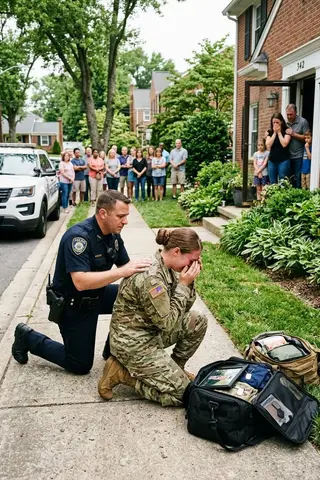
 "She’s An Escaped Convict!" Parents Call 911 When Their Deployed Soldier Daughter Returns Home In Uniform
Chapter 7
Justice at the Courthouse
Three weeks later, the municipal courtroom of our county seat was packed to capacity. The air inside the wood-paneled room smelled of polished mahogany, old paper, and intense public curiosity. Reporters from regional newspapers occupied the front rows, their notebooks open and pens poised.
My mother and father sat at the defendant's table. My mother no longer wore her immaculate pale cardigans; instead, she wore a simple, dark jacket, her hair pulled back into a severe bun, refusing to look toward the gallery. My father stared straight ahead at the walnut judge's bench, his jaw clenched tight in stubborn humiliation.
When Judge Thomas entered the courtroom, everyone stood in unison.
"State versus Thomas and Eleanor Parker," the bailiff announced loudly, his voice echoing off the high ceiling. "Docket numbers for mail interference, financial exploitation of a protected military service member, and filing false police reports."
The trial itself was remarkably swift. Mr. Greer took the stand first, presenting the meticulous logs, the stamped postal refusal notices, and the physical evidence of every letter my parents had rejected over the course of four years. Next, Sheriff Daniels presented the financial audit of my military accounts, proving conclusively that my deployment pay had been systematically diverted into a private savings account controlled exclusively by my parents under the fraudulent power of attorney.
When it was my turn to take the witness stand, the courtroom fell into absolute, reverent silence. I walked up the wooden steps in my crisp Class-A military uniform, my medals catching the overhead courtroom lights, and took my seat behind the microphone.
Prosecuting Attorney Miller stepped forward, adjusting his glasses. "Sergeant Parker, during the four years you were deployed overseas in defense of your country, did you ever receive any indication from your parents that they were rejecting your correspondence or accessing your funds?"
"No, sir," I answered clearly, looking directly toward the jury box. "Every month, I sent letters home sharing updates from my unit, my missions, and my hopes for the future. I believed they were keeping them safe for me until I came back. When I called them on satellite phones from Kuwait, they played the role of loving, grieving parents who were simply 'worried sick' about my safety."
"And when you returned home in uniform, expecting a welcome, what did they do?"
"They called 911," I replied steadily, "and told the authorities that I was an escaped violent convict, locking their doors to prevent me from speaking the truth to my community."
A low murmur rippled through the gallery. Judge Thomas struck his gavel once, restoring immediate order. He looked down from the bench, his gaze fixing sternly upon my mother and father.
The End









