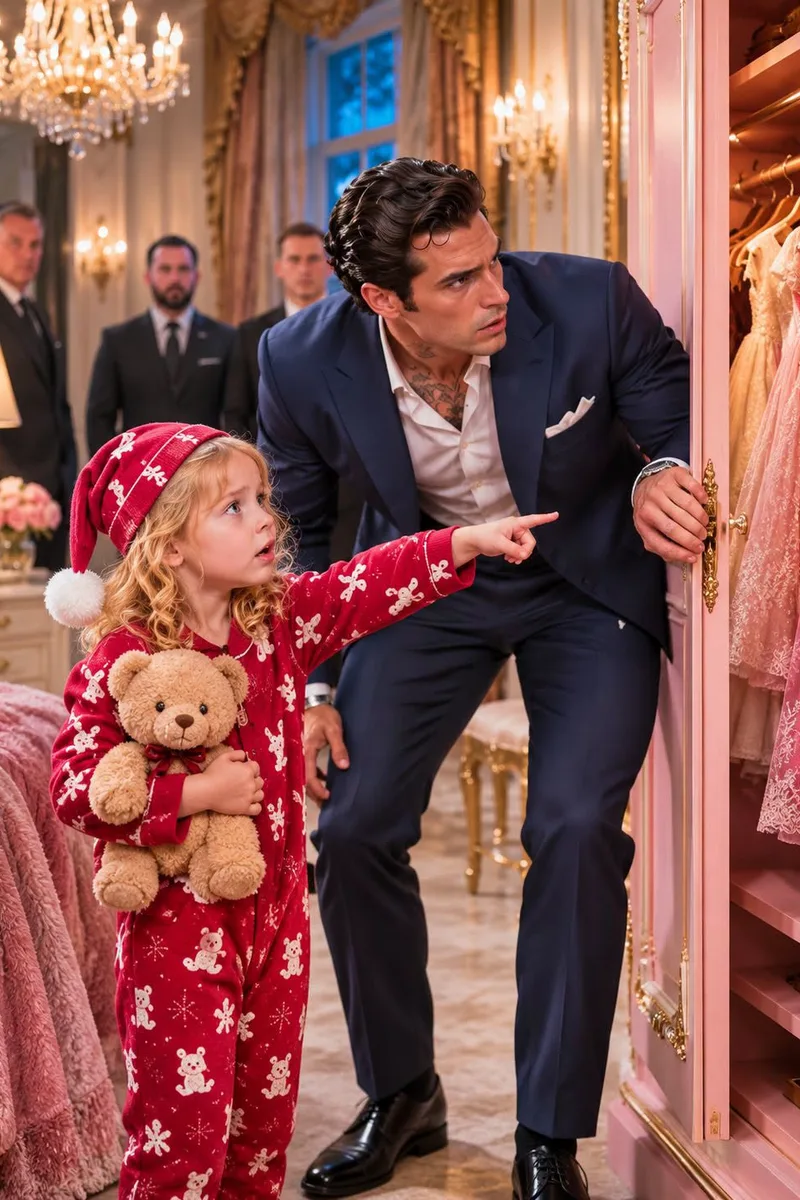
 My Five-Year-Old Daughter Told a Mafia Boss Someone Was Hiding in Her Closet, and He Believed Her
Chapter 2
The Road to My Mother's House
The drive to South Bend should have been familiar. I had made it at holidays when my work schedule allowed, sometimes arriving so late that my mother left soup in the refrigerator and went to bed.
This time I kept checking the rearview mirror, not because I saw someone following us but because I was frightened of what I could not see. Sophie slept for almost an hour. When she woke, she asked whether we were going to Grandma's for Christmas. I said we were going because we needed a place to rest.
At a gas station I bought milk, crackers and a small notebook. Sophie chose a pencil with a purple eraser and announced she would draw the man from the closet so the police wouldn't get confused.
I sat with her at a table and asked her to draw only what she remembered, not what she thought adults wanted to see. She made a tall black shape with a round red mark near the face. Beside it she drew a small door. I did not ask her to make it more frightening or more precise.
My mother, Evelyn Bennett, opened her front door before I reached the porch. She looked at Sophie's tired eyes, then at the suitcase. "You don't have to explain anything until you've eaten," she said. I had been preparing a speech about why I left a good job and a comfortable place to live.
Instead I followed her into the kitchen and let her take Sophie's coat. Sophie ran straight to the old wooden train set in the living room. Watching her play, I felt the first small relief of the day.
After lunch I told my mother what had happened. I tried to keep my voice even, but when I described the disturbed service panel I started shaking. She came around the table and held my shoulders. "You didn't know," she said. I told her that was not an excuse for dismissing Sophie's fear. My mother didn't argue. She said I could apologize, listen better next time, and make sure the adults investigating knew what the child had reported. I wrote those three things in the notebook.
The direct phone Dante had given me rang that afternoon. I let it go to voicemail before answering because I wanted to know who was calling. Vincent had left a short message saying the police were continuing their work and that he needed to confirm an address for returning our personal belongings.
I called back and asked him to send anything through my mother or a courier, with a written inventory. He agreed. I then asked whether the device had been identified. He said the investigators had not yet provided a conclusion.
I appreciated his restraint, though I wanted answers immediately. Vincent told me the mansion's maintenance records were being reviewed and that staff had been instructed not to discuss the investigation outside official channels. I asked whether he knew how long the passage had been accessible. He said no. "That's the part that makes me angry," he admitted. Vincent had spent eleven years protecting Dante. He sounded less frightened of disappointing his employer than of having missed a risk to a child.
That evening I called my supervisor at the mansion's household office. I said I needed emergency leave and would not return with Sophie while the investigation continued. She asked whether I wanted to resign. I said not yet; I wanted the employment terms in writing before deciding. I was trying to make a safe choice without throwing away the income that paid for Sophie's clothes, school supplies and doctor visits. My supervisor promised to follow up and did not pressure me to return.
Sophie refused to sleep alone in my mother's guest room. We made a bed for her beside mine, using quilts she'd loved since she was small. She asked if Grandma's closets had monsters. I opened the closet with her, showed her the shelves and coats, and said we could check it again whenever she wanted.
Then I asked what would help her feel safe. She wanted the door left open and the hallway lamp on. The requests were simple. I had been foolish to treat simple requests as proof that nothing serious could be happening.
In the morning my mother took Sophie to feed the birds while I called a family counselor recommended by our pediatrician. The counselor explained that children who experience fear may need predictable routines and chances to tell their story without being repeatedly questioned. We arranged an appointment. I asked whether the drawings Sophie made should be sent to investigators. She advised me to follow the police officer's instructions and avoid turning play into an interrogation. I wrote that down too.
A message arrived from the household office confirming my leave and continued pay for a limited period, with benefits unchanged while they reviewed the situation. I read it twice. Dante's wealth made it easy for him to offer money; I needed to know whether there were conditions attached. The statement included none about silence or returning to the mansion. I saved a copy and replied that I would consider future arrangements only after obtaining independent advice.
My mother and I discussed what would happen if I did not go back. She offered us her spare room, but I knew we could not remain indefinitely without making choices about work and school. I had experience in kitchens and household management; there were jobs outside the Moretti estate.
I felt frightened of leaving the security of a familiar paycheck even while recognizing how little protection familiarity had given us. My mother asked me what I would advise Sophie to do if she were grown and afraid in her own bedroom. I did not answer quickly.
Later that day Vincent called again. The police had asked for Sophie's drawing and a summary of the times she'd mentioned the closet. I told him I would send them through the investigating officer, not through the household office. He gave me the case reference and the officer's contact information. I checked both independently before sending anything. It was the first time I had asked a question of Vincent without assuming his answer was enough.
That night Sophie fell asleep with her hand on the teddy bear's missing eye. I sat beside her, thinking of the people who had drawn guns when she opened a study door and the one man who told them to lower them. I was grateful Dante had listened. Gratitude, however, was not a reason to return to a house where someone had been able to frighten my child. The harder part of leaving was just beginning: I had to build the safe place I had promised her.
The End









