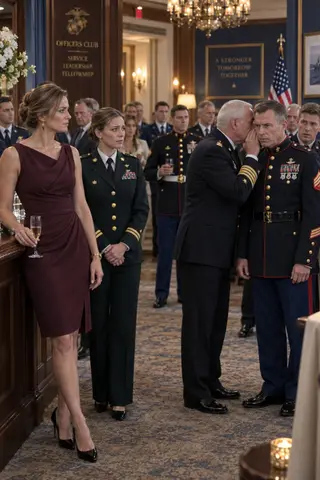
 He Laughed At The Woman In The Bar And Said 'Ladies Fly Desks.' Then The Admiral Walked Over, Whispered One Sentence, And The Colonel Turned Ghost White Before Dropping…
Chapter 9
The Panel and the Pivot
The auditorium acoustics were crisp, carrying every syllable of my briefing across the tiered rows of seating. For forty-five minutes, I broke down the tactical realities of carrier-strike operations in contested electromagnetic environments, drawing from real-world deployment data rather than theoretical white papers.
I didn't pull any punches. I pointed out the flaws in current procurement timelines, criticized bureaucratic redundancies that slowed down mission-critical software updates, and laid out a clear, actionable framework for integrating unmanned systems without compromising pilot situational awareness.
When I opened the floor for questions, hands shot up across the auditorium.
The first question came from a grizzled Navy captain from the Atlantic Fleet who looked like he had spent half his career sleeping on a flight deck.
“Commander Jenkins,” he began, his voice gravelly with respect. “Your assessment on sensor degradation during high-threat jamming is spot-on. But how do we push that tactical awareness down to the junior officer level faster? Too many squadron leaders still treat tactical decision-making as a top-down monopoly.”
It was a brilliant question—one that went straight to the heart of the cultural shift the military desperately needed.
“By trusting the people we put in the cockpit, Captain,” I answered immediately, looking out toward the front row where Keira Lin was listening intently. “We stop treating junior officers like guests in our community and start treating them as what they are: primary operators who will make the critical split-second calls when our systems fail. If someone has the skill, the discipline, and the guts to strap themselves into a multi-million-dollar tactical jet or command a surface combatant through hostile waters, their gender, their background, and their pedigree are entirely irrelevant. Capability is the only currency that matters in combat.”
A low murmur of approval rippled through the auditorium. Even the contractors in tailored suits were nodding furiously, scribbling notes as if my words were scripture.
As the Q&A session wrapped up to sustained, genuine applause, I stepped away from the lectern, feeling a profound sense of closure settle over my shoulders. The military I had left five years ago was changing—slowly, painfully, but undeniably—into something stronger, sharper, and far more worthy of the people who wore its uniform.
The End









