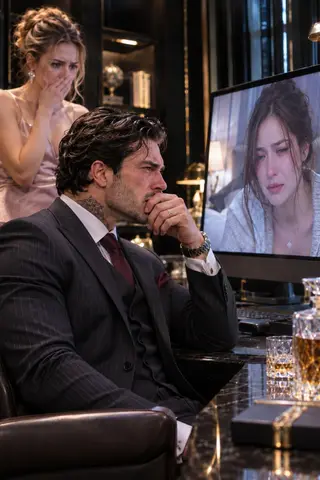
 Billionaire Husband Laughs Off Wife’s Depression
Chapter 29
The Venice Biennale Commission
The invitation arrived by official courier to our villa in Lucca during the third week of the Italian fellowship.
It came from the Board of Directors of the Venice Biennale, the oldest and most prestigious contemporary art exhibition in the world. They had selected me to design the central pavilion for the International Arts and Human Rights exhibition at the Arsenale—a historic shipyard turned cultural cathedral.
The commission was titled simply: *The Sanctuary of the Self*.
Instead of bringing finished canvases from my Oregon studio, I decided to build something immersive, something that could not be bought by private collectors or locked away in corporate vaults.
For four months, I worked in a vast, vaulted brick warehouse along the Venetian canals, collaborating with Murano glassmakers, traditional shipwrights, and three of our resident fellows from the Lucca villa.
We constructed a circular sanctuary suspended above a basin of shallow, reflective black water. The walls were made of thousands of hand-blown, textured glass tiles ranging from dark, smoky obsidian at the entrance to clear, prismatic crystal at the center. In the heart of the circular chamber, natural light descended from a single, high aperture, refracting through the glass into an infinite dance of rainbows upon the water.
Visitors did not simply view the art; they walked through it. They entered through the dense, heavy darkness of the outer perimeter, feeling the claustrophobic weight of confinement, and emerged step-by-step into blinding, weightless clarity.
On the opening afternoon of the Biennale, thousands of patrons, critics, and international delegates stood in a silent queue along the edge of the Venetian canal, waiting to enter the pavilion.
I stood quietly in the shadows near the exit, watching people leave the chamber.
Hardened international critics walked out with tears streaming down their faces, completely speechless. Strangers turned to one another, reaching out instinctively to clasp hands. Women who had carried untold, invisible burdens through their daily lives emerged into the Venetian sunshine, took deep, shuddering breaths, and wept in quiet, liberating relief.
"You didn't build an art installation, Claire," a celebrated French philosopher remarked as he exited the glass pavilion, his voice thick with emotion. "You built a cathedral where people can leave their ghosts behind."
"The ghosts don't belong to the art," I answered softly. "They belong to the past. The light belongs to today."
***
The End









